Educational notice: This site provides independent educational information only. Content about disasters, safety, health, survival, weapons, ecology, or environmental risk is not professional, medical, legal, engineering, emergency-response, or safety advice. Consult qualified professionals and official local authorities before making decisions.
The Mechanics of Crustal Movement and Seismic Triggers
Earthquakes are the direct result of sudden energy release within the Earth’s crust, creating seismic waves that shake the ground. This phenomenon is primarily driven by plate tectonics, where the Earth’s lithosphere is divided into massive plates that are in constant, albeit slow, motion. When these plates interact at their boundaries—convergent, divergent, or transform—stress accumulates over decades or centuries.
Understanding Fault Lines and Elastic Rebound
The accumulation of tectonic stress leads to the deformation of rocks. When the accumulated stress exceeds the frictional strength of the rock along a fault line, the rock fractures or slips, causing an elastic rebound. This sudden release of stored potential energy is what we perceive as an earthquake.
- Focus (Hypocenter): The precise point inside the Earth where the rupture begins.
- Epicenter: The point on the surface directly above the focus, where the shaking is typically most intense.

The Surprising Connection Between Earthquakes and Volcanoes
While often studied as distinct geological events, earthquakes and volcanoes are deeply intertwined, both serving as manifestations of the Earth’s internal heat and pressure dynamics. Many of the world’s most active volcanic arcs are located along subduction zones, which are also the sites of the most powerful megathrust earthquakes.
Magma Movement and Volcanic Tremors
Volcanoes can trigger earthquakes through the movement of magma beneath the surface. As molten rock forces its way through the crust, it creates fractures and stresses the surrounding rock, resulting in volcanic tremors. Conversely, large seismic events can destabilize volcanic chambers, potentially triggering eruptions.
| Factor | Earthquake Impact | Volcanic Impact |
|---|---|---|
| Primary Cause | Tectonic plate slippage | Magma migration/pressure |
| Warning Signs | Foreshocks/Ground deformation | Gas emissions/Swelling |

Historical Perspectives: Disasters That Shocked the World
Throughout human history, major earthquakes have reshaped landscapes and altered the course of civilizations. Analyzing past events, such as the 1960 Valdivia earthquake or the 2004 Indian Ocean tsunami, provides critical data for modern disaster mitigation and structural engineering.
Lessons from Catastrophic Events
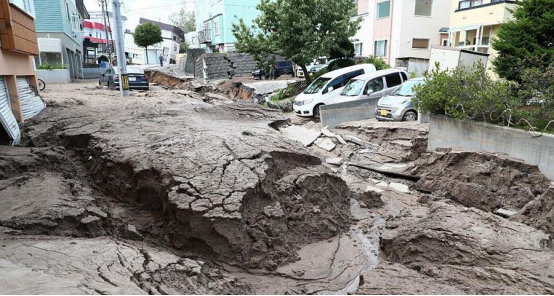
Historical data shows that the death toll and economic destruction are not solely dependent on magnitude. Factors such as building codes, population density, and the presence of secondary hazards like tsunamis or landslides play a critical role in the final impact of the disaster.

Impact Analysis and Emergency Response Strategies
The aftermath of a major earthquake requires a multi-layered response approach. Immediate actions focus on life safety, while long-term recovery involves infrastructure reconstruction and psychological support for survivors. Establishing a resilient community requires proactive planning before the ground begins to shake.
Critical Response Phases
- Search and Rescue: The first 72 hours are crucial for locating survivors trapped under rubble.
- Infrastructure Assessment: Engineers must inspect bridges, power grids, and water systems to prevent secondary failures.
- Preparedness Education: Implementing “Drop, Cover, and Hold On” drills significantly reduces injury rates.
Frequently Asked Questions (FAQ)
- Q1: Can we predict earthquakes before they happen?
- Currently, there is no scientific method to predict the exact time, location, and magnitude of an earthquake. Seismologists focus on probabilistic forecasting, which estimates the likelihood of an earthquake occurring in a specific region over a period of years.
- Q2: Why do some earthquakes cause tsunamis while others do not?
- Tsunamis are generally triggered by large, shallow-focus earthquakes that occur under the ocean. The vertical displacement of the seafloor during the rupture displaces a massive volume of water, creating the energy that forms a tsunami.
- Q3: How do building codes mitigate earthquake damage?
- Modern building codes incorporate seismic retrofitting, such as base isolation systems and steel-reinforced concrete, which allow structures to absorb and dissipate seismic energy rather than resisting it rigidly, which often leads to collapse.
- Q4: What is the difference between the Richter scale and the Moment Magnitude scale?
- The Richter scale is an older, logarithmic measure of energy release that becomes less accurate for very large earthquakes. The Moment Magnitude (Mw) scale is now the standard used by scientists as it more accurately measures the total energy released by a rupture across a fault.