Educational notice: This site provides independent educational information only. Content about disasters, safety, health, survival, weapons, ecology, or environmental risk is not professional, medical, legal, engineering, emergency-response, or safety advice. Consult qualified professionals and official local authorities before making decisions.
The Existential Threat: Evolution of Nuclear Weapons and Doomsday Scenarios
The dawn of the atomic age fundamentally altered the trajectory of human history, introducing the unprecedented capability for self-directed mass extinction. The evolution of nuclear weapons from rudimentary fission devices to complex, multi-stage thermonuclear warheads represents a terrifying acceleration of destructive physics. The Trinity test in 1945 unleashed a mere 21 kilotons of TNT equivalent, yet it proved that the fundamental binding energy of the atom could be weaponized. Within less than a decade, the military-industrial complex transitioned from atomic bombs (A-bombs) utilizing Uranium-235 and Plutonium-239 to hydrogen bombs (H-bombs) that leveraged nuclear fusion, increasing destructive yields by orders of magnitude.
The Shift to Thermonuclear Escalation
The transition from fission to fusion marked a critical pivot in global security paradigms. The Ivy Mike test in 1952 demonstrated the first successful detonation of a hydrogen bomb, yielding 10.4 megatons. This was not merely an incremental upgrade; it was a paradigm shift. Thermonuclear weapons utilize a primary fission reaction to generate the immense heat and pressure required to ignite a secondary fusion reaction in isotopes of hydrogen, such as deuterium and tritium. This unconstrained yield potential culminated in the Soviet Union’s Tsar Bomba in 1961, a monstrous 50-megaton device that remains the most powerful explosive ever detonated.
Understanding the mechanisms of these weapons is crucial to grasping the existential risk they pose to a single-planet civilization. The primary effects of a nuclear detonation are multi-dimensional and devastating:
- Thermal Radiation: A flash of intense heat capable of vaporizing materials and causing third-degree burns miles from the epicenter.
- Blast Wave: A supersonic wall of overpressure that flattens infrastructure and creates a localized vacuum, leading to catastrophic secondary winds.
- Ionizing Radiation: Immediate bursts of gamma rays and neutrons that cause acute cellular destruction and DNA mutation.
- Electromagnetic Pulse (EMP): A massive surge of electromagnetic energy capable of crippling modern electrical grids and communication networks across continental expanses.
These primary effects, while locally devastating, are compounded by the secondary effects of nuclear fallout and the potential for a “nuclear winter”—a scenario where stratospheric soot from burning cities blocks solar radiation, collapsing global agriculture and precipitating mass starvation.

The Cobalt Bomb Rumor: Separating Scientific Fact from Apocalyptic Fiction
Amidst the Cold War arms race, the theoretical concept of the “Cobalt Bomb” emerged as the ultimate doomsday device. First proposed by physicist Leo Szilard in 1950, the cobalt bomb was conceptualized not as a tactical weapon to win a war, but as a thought experiment to demonstrate that humanity could theoretically build a weapon capable of rendering the entire planet uninhabitable. The rumor of the cobalt bomb has permeated pop culture and geopolitical anxiety for decades, necessitating a rigorous scientific dissection.
The Physics of a Salted Weapon
A cobalt bomb belongs to a theoretical class of nuclear weapons known as “salted bombs.” The core design involves taking a standard thermonuclear weapon and encasing it in a jacket of ordinary, stable Cobalt-59. Upon detonation, the massive flux of high-energy neutrons released by the fusion reaction would bombard the Cobalt-59 shell, transmuting it into the highly radioactive isotope Cobalt-60.
The terror of Cobalt-60 lies in its specific half-life of 5.27 years. This duration is perfectly calibrated for maximum lethal disruption. It is long enough that the radioactive fallout would have time to settle globally before decaying, yet short enough that it releases its radiation intensely and rapidly. To survive a global cobalt fallout, humanity would need to remain in heavily shielded subterranean bunkers for decades, a logistical impossibility for the global population.
Despite the terrifying elegance of the physics, the cobalt bomb remains largely a myth in terms of actual military deployment. The strategic logic of nuclear deterrence relies on Mutual Assured Destruction (MAD), which necessitates a habitable world to “win” or defend. A weapon designed explicitly to exterminate all life, including the aggressor, holds zero tactical value. Furthermore, the technical challenges of ensuring the complete transmutation of the cobalt jacket without it being blown apart prematurely by the primary explosion make the design highly inefficient compared to standard arsenals.

Beyond Nuclear: Are There Other Super Weapons Capable of Destroying Earth?
While nuclear weapons dominate the discourse on existential threats, the rapid advancement of theoretical physics and aerospace engineering has birthed speculations about other “super weapons.” The definition of destroying the Earth ranges from scouring the biosphere of life to physically shattering the planetary mass. The energy required to overcome Earth’s gravitational binding energy is roughly 2.24 × 10^32 Joules—an astronomical figure that renders the physical destruction of the planet practically impossible with current or foreseeable human technology. However, extinguishing the biosphere is a much lower threshold.
Theoretical Doomsday Technologies
Several concepts have been explored in both military think tanks and science fiction, representing potential existential threats that bypass traditional nuclear physics. These concepts highlight the terrifying potential of advanced technological civilizations.
| Weapon Concept | Mechanism of Action | Current Feasibility | Existential Risk Level |
|---|---|---|---|
| Antimatter Munitions | Matter-antimatter annihilation, yielding 100% mass-to-energy conversion. Millions of times more efficient than nuclear fusion. | Extremely Low. Producing and containing even microscopic amounts of antimatter currently requires massive particle accelerators and immense energy. | High (if mass-produced). Could trigger unstoppable atmospheric ignition. |
| Kinetic Bombardment | “Rods from God.” Dropping massive tungsten rods from orbital platforms. Kinetic energy alone creates nuclear-level devastation without fallout. | Moderate. The physics are sound, but the cost of lifting massive tungsten payloads into orbit currently outweighs the strategic benefit. | Low to Moderate. Devastating to specific targets, but unlikely to cause global biospheric collapse. |
| Engineered Pandemics | CRISPR-edited pathogens designed for maximum transmissibility, long incubation, and 100% lethality. | High. Biotechnology is advancing rapidly, decentralizing the ability to manipulate viral genomes. | Critical. Represents the most immediate non-nuclear threat to human survival. |
The chilling reality is that while we cannot physically shatter the Earth, we possess multiple theoretical and practical avenues to render its surface entirely hostile to our species. This realization serves as the ultimate catalyst for the argument that humanity must not keep all its evolutionary eggs in one planetary basket.

The Fragility of Earth: Why a Single-Planet Species is Destined for Extinction
The statistical probability of long-term survival for a species confined to a single biosphere approaches zero over a long enough timeline. The universe is inherently hostile. Earth’s geological and paleontological history is punctuated by at least five major mass extinction events, driven by phenomena ranging from asteroid impacts to massive volcanic outgassing. When we factor in anthropogenic threats—such as the aforementioned nuclear arsenals, runaway artificial intelligence, and severe climate destabilization—the fragility of Earth becomes the most pressing issue in human history.
The Great Filter and the Fermi Paradox
The urgency of becoming a multi-planetary civilization is deeply intertwined with the Fermi Paradox, which asks: If the universe is vast and old, where is everybody? One proposed solution is the “Great Filter” theory, which posits that there is an evolutionary or technological barrier that prevents civilizations from becoming interstellar. The terrifying question for humanity is whether this filter is behind us (e.g., the leap from single-celled to multicellular life) or ahead of us.
If the Great Filter lies ahead, it is highly probable that it involves a civilization discovering the means of its own destruction—such as nuclear or biological super weapons—before it develops the capacity to colonize other planets. Therefore, the deliberate, coordinated effort to establish permanent, self-sustaining human settlements off-world is not merely a scientific adventure; it is the deliberate act of bypassing the Great Filter. A single-planet species is a sitting duck for cosmic anomalies and self-inflicted apocalypses. Redundancy is the fundamental principle of engineering, and it must become the fundamental principle of our biological survival.

The Ultimate Solution: Transitioning to a Multi-Planetary Civilization
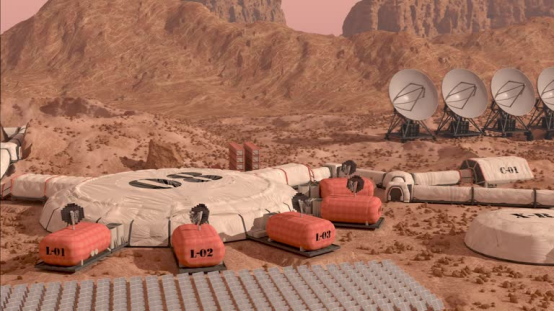
To mitigate the existential risks posed by our own technological adolescence and the random violence of the cosmos, transitioning to a multi-planetary civilization is the only viable long-term strategy. This transition requires a profound shift in global resource allocation, transitioning from terrestrial infighting over diminishing resources to a unified outward expansion into the solar system. Mars stands out as the most logical and feasible first step in this monumental endeavor.
Why Mars is the Crucial First Stepping Stone
While the Moon offers a close testing ground for off-world technologies, Mars provides the necessary raw materials to support a truly independent, self-sustaining civilization. Venus is a pressurized inferno, and the moons of Jupiter and Saturn are currently too distant for rapid colonization. Mars strikes the perfect balance of proximity and potential.
- Resource Availability: Mars possesses vast quantities of water ice locked at its poles and beneath the regolith, essential for life support and propellant production.
- Atmospheric Composition: Though thin, the Martian atmosphere is composed of 95% carbon dioxide. Through processes like the Sabatier reaction, this CO2 can be combined with hydrogen from water to create methane (CH4) and oxygen (O2) for rocket fuel.
- Day/Night Cycle: The Martian day (sol) is approximately 24 hours and 39 minutes, closely mirroring Earth’s circadian rhythms, which is vital for human biological and psychological well-being.
Establishing a permanent presence on Mars requires crossing the threshold from an “outpost” to a “colony.” An outpost relies entirely on resupply missions from Earth. If Earth were to suffer a catastrophic event—such as a global nuclear exchange—an outpost would simply starve. A true multi-planetary civilization requires the Martian settlement to achieve complete industrial and biological autarky, capable of surviving and expanding even if Earth goes dark.

Technological Milestones: Rockets, Propulsion, and Interplanetary Travel
The bridge between Earth and a multi-planetary future is built upon revolutionary advancements in aerospace engineering. The traditional paradigm of expendable launch vehicles made space travel prohibitively expensive, effectively bottlenecking our ability to move significant mass into orbit. The paradigm shift toward fully and rapidly reusable rocket architectures is the foundational technology that makes planetary colonization economically viable.
Advanced Propulsion and In-Situ Resource Utilization
Chemical propulsion, specifically methalox (liquid methane and liquid oxygen) engines, represents the current state-of-the-art for interplanetary transit. Methane burns cleanly, preventing soot buildup in reusable engines, and crucially, it can be synthesized on the surface of Mars. However, to truly open the solar system, we must look beyond chemical rockets.
Nuclear Thermal Propulsion (NTP) and Nuclear Electric Propulsion (NEP) represent the next leap in transit technology. By using a nuclear fission reactor to heat a propellant like liquid hydrogen, NTP can achieve specific impulses (a measure of engine efficiency) double that of the best chemical rockets. This drastically reduces transit times to Mars from seven months to potentially three months, significantly minimizing the crew’s exposure to deep-space radiation and microgravity.
Furthermore, In-Situ Resource Utilization (ISRU) is the cornerstone of off-world economics. ISRU involves harvesting local materials—mining regolith for construction via 3D printing, extracting subsurface ice for water, and capturing atmospheric gases. Without ISRU, every kilogram of material needed for survival must be dragged out of Earth’s deep gravity well, a logistical impossibility for building cities on other planets.

Biological and Evolutionary Adaptation for Off-World Survival
While engineers solve the physics of getting to Mars, biologists and medical professionals face the monumental task of keeping humans alive and healthy once they arrive. The human body is a highly specialized biological machine, fine-tuned over millions of years to thrive exclusively under Earth’s 1G gravity, protected by a thick atmosphere and a powerful magnetosphere. Stepping off Earth means stepping into an environment fundamentally hostile to our biology.
Overcoming Radiation, Microgravity, and Psychological Isolation
The two most insidious physical threats to interplanetary settlers are radiation and altered gravity. In deep space, humans are bombarded by Solar Particle Events (SPEs) and Galactic Cosmic Rays (GCRs). GCRs are particularly dangerous; these high-energy particles strip electrons from atoms within the human body, shattering DNA strands and drastically increasing the risk of severe cancers and central nervous system degradation. Shielding requires meters of water or regolith, meaning early Martian habitats will likely be subterranean.
Microgravity during transit, and the partial gravity of Mars (38% of Earth’s), induce rapid physiological degradation. The human body is brutally efficient; without the constant resistance of 1G, it immediately begins to shed muscle mass and bone density. Astronauts experience spaceflight osteopenia, losing up to 1-2% of their bone mass per month. Countermeasures currently involve rigorous, hours-long daily exercise regimes, but long-term multi-generational survival may require artificial gravity centrifuges or advanced pharmacological interventions.
- Fluid Shifts: In microgravity, bodily fluids shift upward, causing facial puffiness, increased intracranial pressure, and Spaceflight-Associated Neuro-ocular Syndrome (SANS), which degrades vision.
- Microbiome Alterations: The human gut microbiome, crucial for immunity and digestion, shifts unpredictably in sterile, closed-loop space environments, requiring carefully managed probiotic diets.
- Directed Evolution: Over centuries, a multi-planetary species will inevitably speciate. Martian colonists, subjected to different gravitational and radiation pressures, may genetically diverge from Earth-bound humans, representing the next grand chapter in human evolution.
Frequently Asked Questions (FAQ)
- Q1: What exactly is a cobalt bomb and has one ever been detonated?
- A cobalt bomb is a theoretical type of “salted” nuclear weapon. It involves wrapping a thermonuclear device in a shell of Cobalt-59. Upon detonation, the fusion neutrons transmute the shell into highly radioactive Cobalt-60, which has a half-life of 5.27 years, designed to create long-lasting, lethal global fallout. Fortunately, a cobalt bomb has never been built or detonated, as it offers no tactical military advantage and guarantees the destruction of the aggressor alongside the target.
- Q2: Why is becoming a multi-planetary civilization considered the only way to ensure human survival?
- Earth is vulnerable to both natural extinction events (like asteroid impacts and supervolcanoes) and anthropogenic threats (such as nuclear war, engineered pandemics, and runaway AI). By confining our entire species to a single biosphere, any planetary-scale catastrophe results in total extinction. Expanding to multiple planets provides biological and technological redundancy, ensuring that the human species can survive even if Earth is compromised.
- Q3: Can current nuclear weapons actually destroy the planet Earth?
- No. While the global nuclear arsenal is more than capable of destroying human civilization, collapsing the biosphere, and causing a nuclear winter, it cannot physically shatter the planet. The energy required to overcome Earth’s gravitational binding energy is vastly greater than the combined yield of all nuclear weapons ever created.
- Q4: How will humans survive the high radiation levels on Mars?
- Mars lacks a global magnetic field and has a very thin atmosphere, leaving the surface exposed to harsh solar and cosmic radiation. To survive, early colonists will likely live in subterranean habitats, utilizing the Martian regolith (soil) as natural shielding. Additionally, water—which is abundant in the form of ice on Mars—is an excellent radiation shield and can be built into the walls of surface structures.
- Q5: What is In-Situ Resource Utilization (ISRU) and why is it vital for Mars colonization?
- ISRU refers to the practice of harvesting and utilizing local resources on a foreign celestial body, rather than bringing everything from Earth. For Mars, this means extracting subsurface ice for drinking water, and utilizing the carbon dioxide atmosphere to synthesize methane and oxygen for rocket propellant (via the Sabatier reaction). ISRU is absolutely vital because the cost and logistics of launching all necessary survival materials from Earth’s deep gravity well are insurmountable.