The Silence of the Grasslands is a Lie: A Profound Dialogue on Roots, Wildfires, and Human Nostalgia
Educational notice: This site provides independent educational information only. Content about disasters, safety, health, survival, weapons, ecology, or environmental risk is not professional, medical, legal, engineering, emergency-response, or safety advice. Consult qualified professionals and official local authorities before making decisions.
Places that appear empty are often the noisiest.
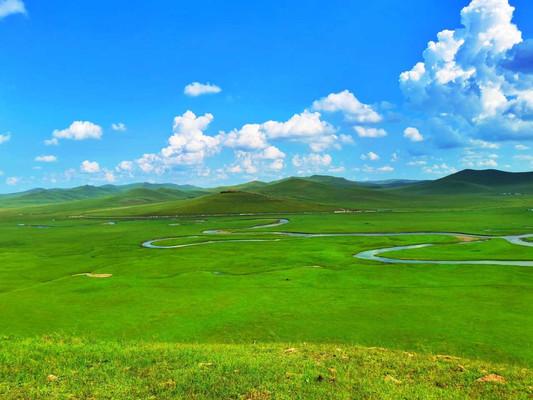
Imagine you’re standing in the middle of Hulunbuir or the Kansas prairie.
Looking out, the horizon seems so low it’s almost within reach. Close your eyes, and you can hear almost nothing except the wind whistling past your ears.
This extreme “quiet” can easily create the illusion that
the place is simple, fragile, and even a bit boring.
But the truth is quite the opposite.
If you lie down and put your face close to the soil, you will find yourself in a never-ending battlefield—countless roots are competing for water and nutrients, microorganisms are decomposing organic matter, and insects are flitting among them.
We are often attracted by the towering heights of forests or the depths of the ocean, but we overlook the fact that this seemingly gentle green sea beneath our feet is actually one of the most resilient and complex ecosystems on Earth .
Grasslands, which cover about 40% of the global land area, are still misunderstood by many as “just open spaces covered with grass.”
Underground Forest: The true power of the grassland lies where you cannot see it.
If someone told you
that the blade of grass you see on the grassland is just a “fingernail” of its body, you might think it’s an exaggeration.
But from an ecological perspective, this is almost certainly true.
Unlike forests, which display their branches and canopies in the air, grasslands have chosen a more subtle strategy—
burying most of their life assets underground.
The root systems of many grasses can extend several meters underground, intertwining into a vast network. In ecology, this is known as an extremely high “root-to-shoot ratio”:
seemingly weak above ground, yet incredibly extensive and resilient underground.
Why do this?
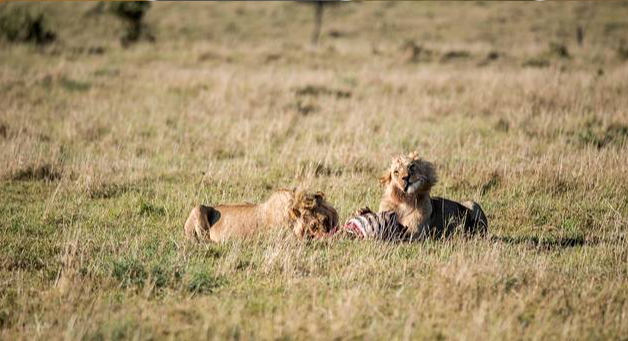
Because the threats faced by grasslands are often devastating: drought, extreme cold, and large herds of grazing animals.
If all the energy is stored on the ground, a single act of grazing could undo all the progress.
Thus, grass stores carbohydrates and nutrients in its roots and stems,
much like a shrewd investor who locks most of his assets in a vault and keeps only a small amount of cash for daily expenses.
An underrated climate hero: grasslands are actually a giant “carbon bank”.
This underground structure also brings an often overlooked byproduct: carbon sequestration capacity .
When discussing climate change, people often think of tropical rainforests first.
However, research has found that the amount of carbon stored in the soil by grasslands around the world is no less significant, and may even be more stable.
The reason is simple:
forest fires quickly release carbon from tree trunks back into the atmosphere;
while most of the carbon in grasslands is buried deep underground, and even if the surface is burned, the root system remains intact.
In a sense, grasslands are like nature’s “decentralized carbon warehouse”
—unassuming yet extremely reliable.
The Aesthetics of Violence: Why Can’t the Grasslands Be Separated from Fire and Gnawing?
In everyday understanding, fire is a disaster.
But in the logic of the grasslands, fire is a necessary mechanism for renewal .
The biggest difference between grass and trees is that
trees grow at high altitudes, where a fire can be fatal;
while grass grows close to the ground or even underground.
Thus, wildfires are more like a “haircut” for grass:
burning away dead leaves, releasing nutrients, and clearing away shrubs and saplings that try to invade—
the grassland’s main competitors.
The result was that
the longer the fire burned, the purer the grassland became.
Being eaten makes them stronger: The strange alliance between grass and animals
Even more counterintuitively, grassland plants actually “welcome” being eaten.
During evolution, many grasses, when eaten, experience a surge in growth hormone secretion, resulting in faster and denser growth.
This is a classic example of co-evolution :
herbivores depend on grass for survival, while grass maintains its youth and dominance by being eaten.
In nature, there are probably few organisms that “request” to be consumed like grass.
If we apply this logic to human society, it’s roughly equivalent to:
your job performance can only be improved by being severely criticized by your boss every day.
It sounds cruel, but it’s precisely the survival philosophy of the grasslands.
Nostalgia Written in Our Genes: Why Do We Feel Peace on the Grasslands?
Leaving aside biological data, let’s return to a more subjective question:
Why do so many people feel a sense of security and release when they stand on the grassland?
Evolutionary psychology has offered an explanation:
the “Savanna Hypothesis” .
This theory posits that human ancestors evolved over millions of years in the East African savanna environment.
Our visual system and brain structure were designed for this environment.
A wide field of vision makes it easier to detect threats early;
Scattered trees provide shelter and resources;
Visible water sources mean a guarantee of survival.
When you step into the boundless grassland, that ancient part deep within your brain seems to whisper:
“It’s safe here.”
In contrast, dense jungles often induce instinctive tension because obstructed vision implies the unknown.
Perhaps this is why, when city life becomes suffocating,
many people unconsciously yearn for the grasslands—
not as an escape from reality, but as a deep-seated urge to return home .
Before the romance: The grasslands are also a harsh wilderness.
Of course, poetry cannot replace reality.
The real grassland is not a backyard where you can wander around at will.
The weather here changes rapidly, with huge temperature differences between day and night, and supply points are scarce;
seemingly flat terrain may hide swamps;
a gentle breeze may turn into a killer of hypothermia within hours.
I’ve seen many travelers get into trouble because they underestimated their surroundings.
The emptiness of the grasslands doesn’t mean safety.
If you truly intend to delve into this green ocean,
you need to treat the grasslands with the same
reverence and preparedness you would a mountain or desert.
From warmth and wind protection to drinking water, navigation, and emergency systems,
a comprehensive (outdoor adventure gear guide) is not a shopping list, but rather a guide to building a
mobile life support system in the wilderness .
Only when your body is safe enough can your mind have the space to experience the vastness of the world.
Conclusion | In the vast silence, learn to take root
What the grasslands truly teach us may not be “freedom,”
but rather a deeper kind of wisdom:
Seemingly fragile life can become incredibly resilient through
taking root ; seemingly destructive forces can bring about renewal; and
beneath seemingly empty silence, there is always an unceasing surge of vitality.
The silence of the grasslands has always been a lie.
What teems with life there is the underground root system, the rebirth after the fire, and the undying homesickness in human genes.
If one day you stand in the middle of that green sea,
you might understand:
in the face of vast silence, life can still bloom so passionately—
as long as you know how to take root and how to go with the flow.If you want to learn more about survival wisdom in extreme environments, or appreciate the unique ecological landscapes of arid regions, you can refer to the rich content provided by the Desert Blog .
The “Underground Treasury” of the Grasslands: Why are the richest pastures on Earth often covered by dead volcanic ash?
Educational notice: This site provides independent educational information only. Content about disasters, safety, health, survival, weapons, ecology, or environmental risk is not professional, medical, legal, engineering, emergency-response, or safety advice. Consult qualified professionals and official local authorities before making decisions.
Imagine you’re standing on the Mongolian Plateau or the vast plains of North America. The wind howls unhindered from the horizon, and the silence is almost unsettling. Many people’s first thought upon seeing such a landscape is, “There seems to be nothing here.”
Subconsciously, we always feel that grasslands are nature’s “half-finished products.” With more rain and more time, they should eventually become lush forests, right?
I have to tell you—this is a huge ecological misunderstanding.
The grassland is not a “failed forest”; it is a highly complex ecosystem full of violent aesthetics—you could say it is the special forces of plants . In order to defend their territory, these plants have evolved two ultimate weapons: one is a physiological mechanism that makes them “unkillable,” and the other is their hot-tempered “geological godfather.”
Weapon One: The Cheating “Immortality”
Why does your backyard lawn keep growing even after being mowed countless times?
If you did the same to a sapling—cut off the top—it would basically die.
The underlying logic is quite hardcore: most trees place their growth point (the most active branching area at the top) on their heads to compete for sunlight, and once that point is eaten, the game is over.
Herbaceous plants—especially grasses—have evolved a basal growth mechanism , hiding their growth points near the ground surface or even burying them underground.
This is a profound philosophical wisdom about survival: sometimes bowing your head isn’t admitting defeat, but rather a means to survive.
Bison bow their heads to graze, wildfires rage, taking only the old leaves. The true “brains” and “factories” remain safely underground. Once the crisis is over, they immediately regenerate from their stored energy reserves.
Weapon Two: The Arsonist’s Self-Cultivation
If “resistance to chew” is a passive defense, then “setting fire” is the grassland’s active attack.
Indeed, grasslands are one of nature’s greatest arsonists . Dry grass is the perfect ignition source. Wildfires ignited by lightning can instantly reduce saplings attempting to invade to ashes—because their buds are exposed to the flames.
And the grass? Its growing point lies hidden in the cool soil below, unharmed. After the fire, the competitors are cleared away, and the dead branches and leaves on the surface turn into ash fertilizer, and the grassland rejoices.
The Hidden Sponsors: Who’s Paying for This War?
Grassland plants grow rapidly with extensive root systems (their underground biomass is often 5–10 times that of the above-ground biomass), and they undergo a cycle of birth and death every year. Such a high-intensity metabolism requires a continuous supply of minerals: phosphorus, potassium, calcium, magnesium…
The cycle of dead grass leaves alone is simply not enough.
So, where do these “golden bars of nutrition” come from?
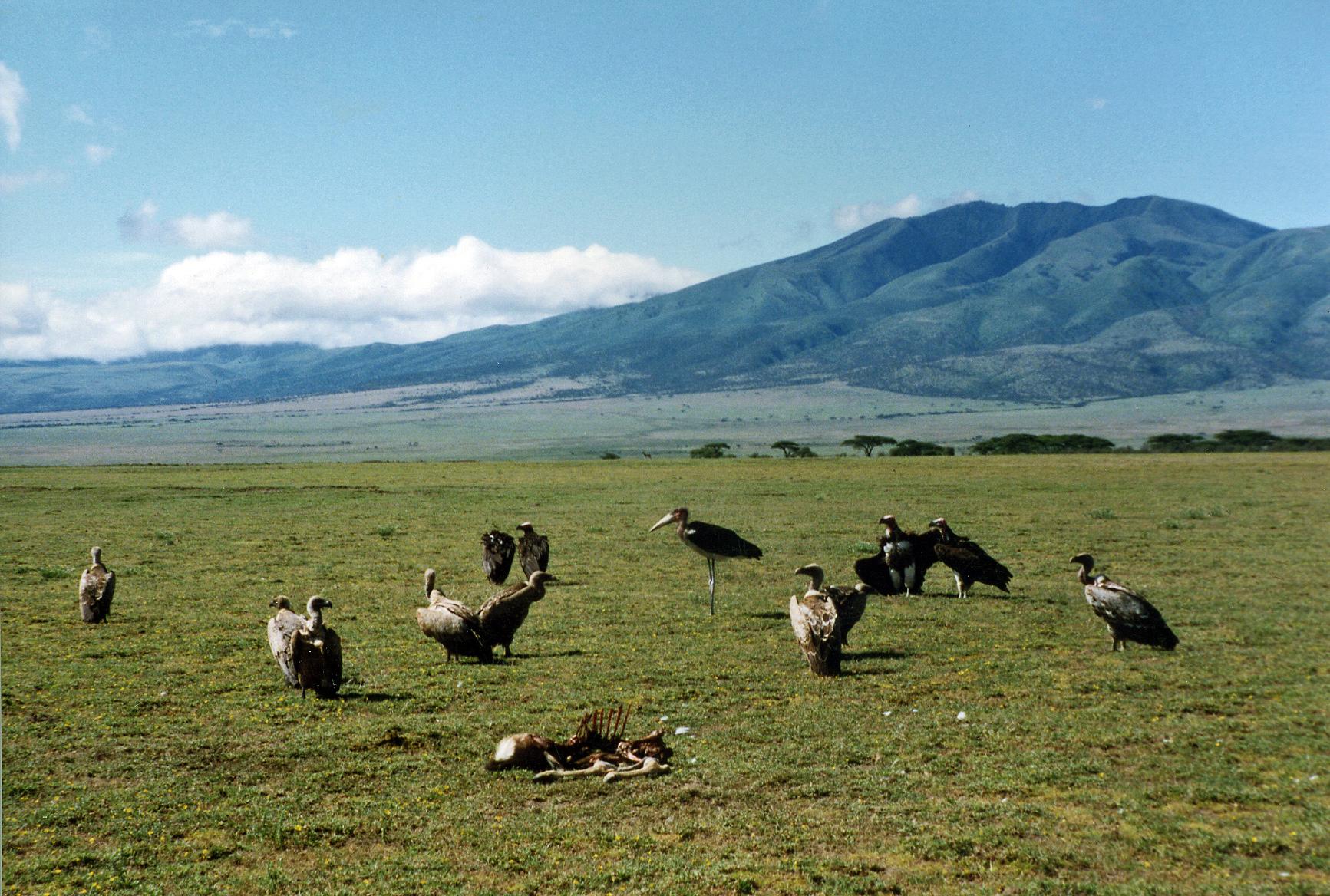
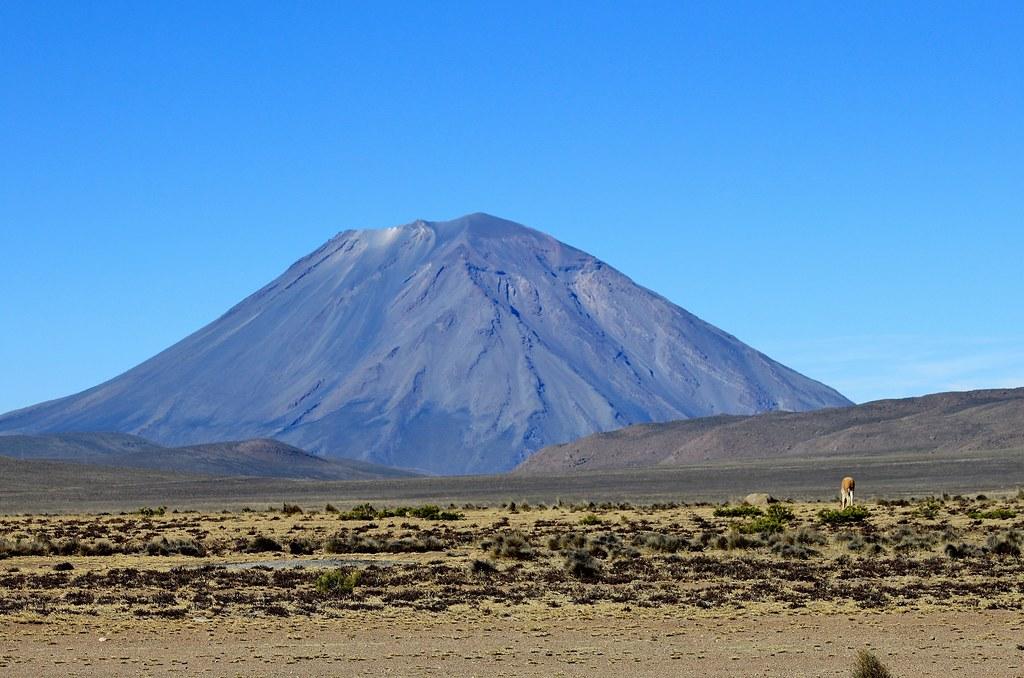
If you were to peel back the surface of the Earth and look at the world’s most fertile grasslands—such as the Serengeti in East Africa or the Pampas in South America —you would find an astonishing coincidence: upstream of them, there is always a volatile neighbor—a volcano .
Maps of the Grasslands 8: Uruguayan Grasslands — Whispers on the Horizon and Memories on Horseback
Educational notice: This site provides independent educational information only. Content about disasters, safety, health, survival, weapons, ecology, or environmental risk is not professional, medical, legal, engineering, emergency-response, or safety advice. Consult qualified professionals and official local authorities before making decisions.
In the southeastern corner of South America, the grasslands of Uruguay aren’t known for their vastness,
but their skies are vast and their winds are long.
Every whiff of wind brushing past your ears is like an echoing whisper:
a message for the rider, a memory for the horse’s hooves, and a
voice for the quietly living beings on the land.
The Uruguayan grasslands are not shocking, but slow
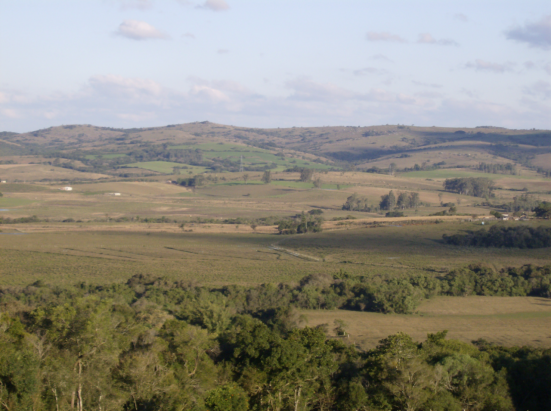
The Uruguayan grasslands, part of the geographical area known as the “Pampas”, are warm and soft.
Unlike the ruggedness of Mongolia or the intensity of Africa, it lacks drama. The terrain here undulates like waves, neither steep nor flat, like a blanket spread across the earth’s surface. The grass is low and varied, and when the wind blows from the east, the entire horizon undulates like the surface of water.
There is no sense of loneliness that is “so vast that it makes people afraid” here, but there is a tolerance that is “so long that it makes people calm”.
The knight culture on the grassland is silent and profound
The Gauchos of Uruguay are horsemen of the South American pampas. They aren’t as obsessed with image as American cowboys, nor are they as nomadic as Mongolian herders. They are quiet, skilled, and live in harmony with their horses.
In the morning mist, you will see a gaucho rider wearing wide trousers and a low-brimmed hat slowly emerging from the horizon. The cattle behind him, the dogs in front of him, and the dust under his horse all work in perfect harmony.
They are shadows on the grassland, riding on horseback, as if in slow motion lasting for centuries.
They don’t need to be recorded—they are the memory itself.
The soundscape on the grassland is a love letter between the wind and the grass
If you close your eyes, the sounds of the Uruguayan pampas are incredibly subtle:
The wind blows from the distant Brazilian plateau, passing over the grass, brushing the horse’s mane, and finally hitting your ears; the grass is whispering, sometimes like waves, sometimes like breathing; the sound of birds comes from afar, neither more nor less, like a sigh at the end of a sentence.
You hear no noise, and rarely, complete silence.
The sounds of the Uruguayan grasslands are the “blank spaces in life,”
the sounds we tend to ignore, yet truly sink into.
There is no industrial atmosphere between cattle and humans, only a sense of daily life.
Uruguay’s grassland cattle industry is well-developed yet unassuming. The cattle don’t run in dense masses, but rather are loosely distributed among the low-lying grasses. Their relationship with the grass is not one of exploitation, but of circulation.
Many farmers graze their cattle themselves, and the cows are not afraid of people, as they are so familiar with each other that they feel like neighbors. “Animal husbandry” here is a slow, understanding journey, not industrialized control.
Cows graze, herders whistle, dogs trot briskly, and horses stroll gently.
A day on the grassland has no clear beginning or end, only a natural continuation.
The philosophy of this grassland is “don’t rush”
Uruguayans have a philosophy of life called “tranquilo” (meaning: relax and quiet).
It’s more than just a word; it’s a national ethos.
This temperament is also reflected on the grasslands.
The grass doesn’t fight, the wind isn’t strong, the cattle aren’t panicking, and the people aren’t anxious. All living things live in a rhythm of “non-competition.”
The grassland seems to be telling humans:
Sometimes, the most profound power does not come from speed, but from patience.
The end of the horizon is the story brought by horse hooves
On the Uruguayan grasslands, nothing is more symbolic than the sound of distant horse hooves.
It is the echo of another era,
the language left behind by Spanish colonization, the roots of gaucho culture, the land’s repeated sowing of memory.
The horse is not a means of transportation, but the language of the grassland. It connects people with the wind and sews together the grass and time.
The man on horseback knows how to narrate life without speaking.