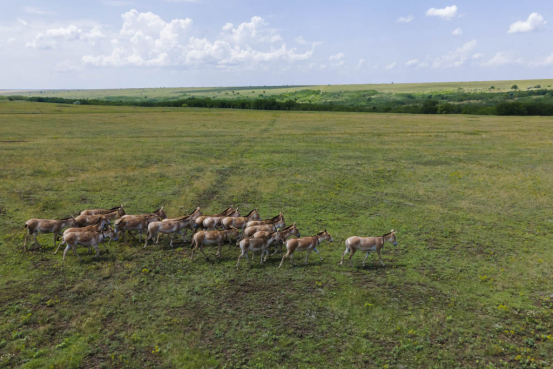
Map of the Steppes III: Ukrainian Steppes – Ode to Black Soil and Rupture
The Ukrainian steppe is not mysterious. It spreads everything out in the light.
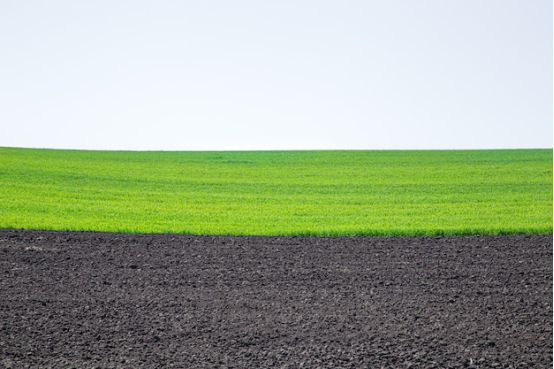
The sky is a straightforward blue, and the ground is a naked black. There are no dense forests or snow-capped mountains, only the endless flatness, as if the whole earth is holding its breath, waiting for sowing, harvesting, or a sudden war.
But this is the fate of the Ukrainian steppe. Fertility and tearing have always been its dual language.
Black soil: so fertile that it’s shocking
The Ukrainian steppes, known as the “Chernozem,” are extremely fertile soils. After the rain, they are shiny black, as if they were not soil, but ancient ink that had been dug up from the ground, capable of turning any seed into a crop and elevating an insignificant plant into the hope of an entire nation.
However, the more abundant something is, the harder it is to place it. Black soil is like a halo bestowed by fate, but also an uninvited game of scramble. It is not dormant, but restless. Too many footsteps have trampled on this grassland in history: Scythians, Tatar cavalry, Cossack warriors, Tsarist Russian cavalry, German tanks, Soviet trucks…
Every generation thinks they will become the masters of this land, but eventually they are swallowed up by the soil and become another layer of mud section.
The wind on the grassland was once an order
There was an ancient sense of order on the Ukrainian steppes, not from laws or military orders, but from the direction of the wind.
The wind brought the smell of horse hooves, fire, and grain, as well as news of escape. The Cossacks rode on horses, with thick beards and wide trousers rustling in the wind. They were unwilling to farm, but they could not leave the land. They were neither farmers nor nomads, but like weeds that suddenly grew on the land, free, stubborn, and even dangerous.
Today, there are more telephone poles and fewer knights on the grassland. But the wind is still there, regardless of national boundaries or regimes, it just blows through the sunflower fields, skims over the rape flowers, and blows down the shabby border station signs.
A Broken Ode
The Ukrainian steppe should be a complete pastoral ode, but it is often interrupted by history, cut off by war, torn by borders, and rewritten by colonization.
So it becomes a fragmented poem – sometimes a folk song of harvesters, sometimes an exile’s chant, and sometimes even silence.
In some mornings, you will see the mist slowly rising over the grassland, like a piece of music that is about to be played, but is suddenly paused at the climax.
Those who live on the grassland have long learned to live in a low voice. Speaking loudly is too frivolous, and fate will hear it; only by praying quietly at night will the black soil continue to protect your wheat seedlings.
The grassland never collapsed, we just used to look in the wrong direction
People always say that Ukraine is a broken place.
But the steppe has never collapsed. It is just too flat, as flat as a boundless piece of paper that needs to be written, colored, and fought over. Humans have never lived on this land, but have rolled, run, shouted, and remained silent on her chest.
It doesn’t hate people, nor does it love people. It just waits for the wind to blow –
Bringing prayers during spring ploughing, or hesitation before war.
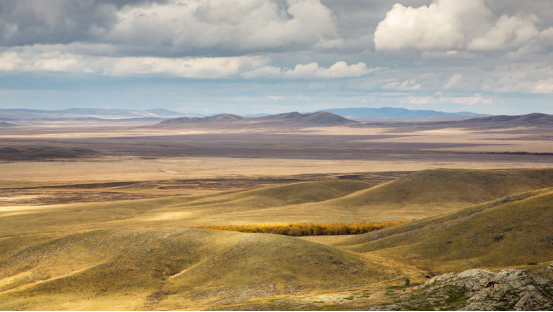
Map of the grassland 2: Kazakh grassland – between long tunes and silence
Educational notice: This site provides independent educational information only. Content about disasters, safety, health, survival, weapons, ecology, or environmental risk is not professional, medical, legal, engineering, emergency-response, or safety advice. Consult qualified professionals and official local authorities before making decisions.
There is a kind of silence, not emptiness, but waiting.
The Kazakh steppe has been waiting like this for thousands of years.
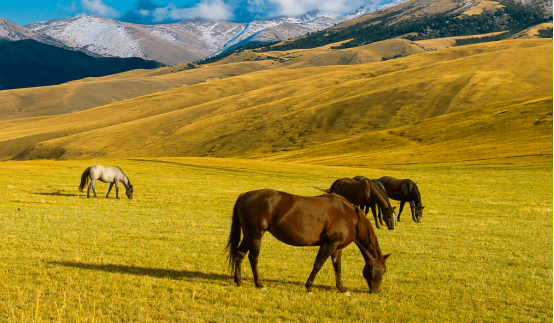
It is not in a hurry to be understood. Its grass is not as tough as Mongolia’s, nor as lush as Ukraine’s. It is thinner and softer, more like a strand of hair that a mother accidentally dropped, lying across the backbone of this Eurasian continent, growing quietly and slowly.
There is no forest to protect the place, only low hills and gentle slopes between the distant sky, just like an unfinished long tune, which stops halfway through with sobs. The singer no longer sings loudly, but continues the unfinished sentence deep in his heart.
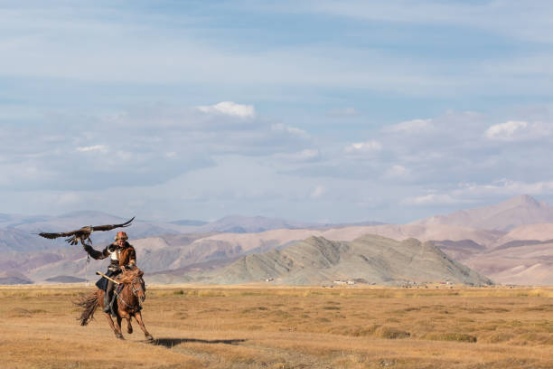
The rider on horseback doesn’t speak.
Kazakh herdsmen don’t often laugh. They speak in low voices and always look into the distance, not because there is anything there, but because that’s where the wind comes from.
The wind is also part of the rhythm. It will whisper in your horse’s ear, sometimes it is a sign of a rainstorm, sometimes it is the shadow of a wolf pack in the distance. The wind is not scary, what really makes people awe is the grassland’s tolerance of time. The path that was arranged thousands of years ago is still the same today; the grandfather’s hand already knows the answer to which valley to pitch the tent.
If you ask the Kazakh steppe about its shape, it may answer you: like a long tune, dragging on for a very long time, not high, not hurried, just singing on and on. Singing to the sky, singing to the earth, and also singing to the children who are gradually being sucked away by the city.
The camel bells haven’t sounded yet, but the singing has arrived
On this grassland, caravans once passed by like shooting stars. Silk, glass, horse gear, spices, bumped along the way from east to west. Camel bells were the beat, and songs were the heartbeat.
Now the road has long been blurred, the camel bells have also fallen silent, and only a few old people are still searching for the footprints of their ancestors in the songs.
“Küy” – a traditional Kazakh instrumental music – is like a sigh played on the grassland, not born for dancing, not played for excitement. It is like the earth’s own language, which cannot be heard, but its texture can be felt every time the wind blows.
The grassland knows your unspoken thoughts
When a person walks into this land, it is hard not to become quiet. It is not that the sound from the outside world becomes smaller, but that the echo in the heart begins to grow louder.
You sit on the grass slope at dusk, watching the sun fall from the low sky, as if the whole sky is falling to the ground. At that moment, you will not think of WeChat, nor will you open the news. You just want to listen to how the wind blows through the grass tips and gently brushes your sleeves.
The grassland does not ask you to sing, nor does it care where you come from. It is just there, quietly absorbing your fatigue and hesitation in every moment when you are silent.
Some grasslands don’t say love, only leave the aftertaste
The Kazakh steppe will not try to keep you like a lover, it is more like a friend who understands your silence.
When you leave, it won’t be disturbed – the grass will continue to grow, the eagle will still fly. But when you hear a piece of song without words somewhere else one day, it may be its reply to you, a letter without a postmark, sent from the depths of silence.
Map of the grassland 1: Mongolian Plateau – the back of the wind and the people of the blue sky
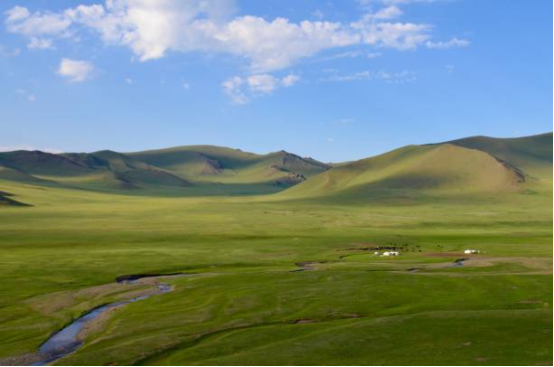
The wind is the oldest resident of this grassland.
It does not live in any yurt, nor does it accept any tribute. Where does it come from? Perhaps it comes from a lost vowel, starting from the valley in southern Siberia, gently brushing the back of the reindeer’s ears, and then entering this vast Mongolian Plateau with great fanfare.
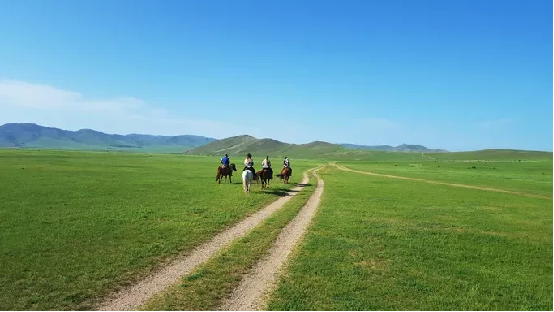
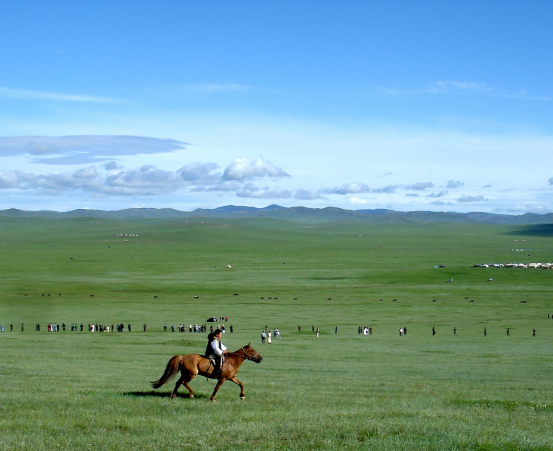
This is one of the highest temperate grasslands on Earth. It belongs not to the trees, nor to the river, but to the wind and the riders. The silhouettes of those riders on saddles always have an almost ancient simplicity, as if time has turned a corner at their shoulder blades and returned to the thirteenth century.
They did not sign a contract with the grassland, but relied on each other tacitly
The grass on the Mongolian Plateau is not gentle. It is short and thick, like a soldier accustomed to the discipline of wind and sand; and its roots are hidden deep, deeper than you can imagine, just like the most silent nomadic old man on the grassland. He doesn’t speak, but his horse’s hooves know the direction, and his eagle knows when to fold his wings.
If you pass by this area at dusk, you will see a few flocks of sheep moving slowly, their silhouettes stretched out, all the way to the low hills in the distance. There are no pastoral songs, no lights of cars guiding the way, only something that cannot be described as loneliness or faith – hanging in the air, like the tail of the wind.
Yurt: A universe moving with the wind
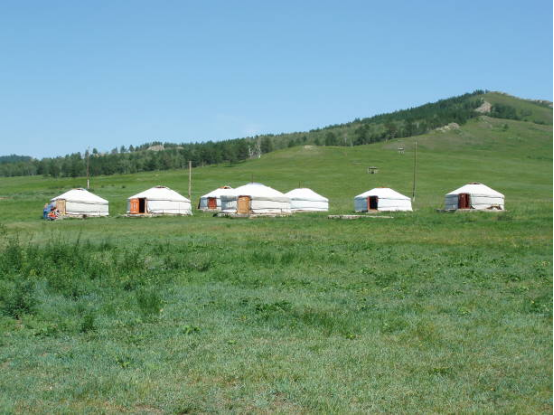
They never build their houses completely. Their roofs are round because the wind has no boundaries. The yurt is like a miniature version of the grassland universe, with wooden beams converging towards the center, just like all the dreams on the grassland, which will eventually return to the order of the round sky and square earth.
The brazier burned in the center of the yurt, and goat milk tea was constantly refilled. There was no loud talk of politics, no overly described idealism, only the sound of boiling water on the edge of the pot and the nasal voice of the children. The real vastness is never the area, but the fact that life can unfold slowly and unhurriedly.
A civilization named after the wind
If you want to understand the Mongolian Plateau, you must first learn to listen to the wind. It is not a background sound, but the main narrator. The sound of horse hooves is just a period, the real subject, the kind of existence that you have to squint your eyes to see clearly.
The annual Nadam Festival is the most solemn response of this grassland to time. Wrestling, archery, horse racing – not competition, but more like a silent dialogue with ancestors. They say with their bodies: We are still here. The wind understands and will turn back to blow gently across your forehead. At that moment, you know that the grassland has forgiven you.
The distance between you and the grassland is only a dream of riding a horse
The Mongolian Plateau is not a geographical type, it is more like an attitude. It allows you to come with questions, but also allows you to say nothing, just ride a horse and disappear in the wind.
The grassland does not force you to understand it, but only hopes that you can feel it quietly. Even if it is only once, it is enough.
Map of grasslands: Visit the world’s ten legendary grasslands
Educational notice: This site provides independent educational information only. Content about disasters, safety, health, survival, weapons, ecology, or environmental risk is not professional, medical, legal, engineering, emergency-response, or safety advice. Consult qualified professionals and official local authorities before making decisions.
We are used to imagining maps as a combination of roads and borders, marking the world into divided territories. However, it is often not cities but grasslands that truly continue the rhythm of life, carry nomadic memories, and reflect the changes of human beings.
The grasslands are not as roaring as storms, nor as hard as rocks. They maintain the hope and anxiety on the horizon in a slowly rippling way. They are not as tall as mountains, nor as deep as forests, but they lead human time and culture with a light, open, and almost silent breathing.
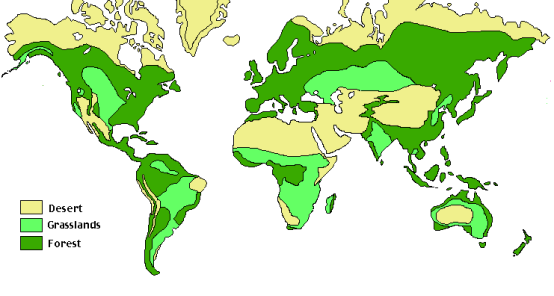
This series will take you to ten legendary grasslands, which are scattered across the Eurasian continent, Africa, the heartland of the Americas and isolated islands of Oceania, but they have one thing in common: they are not just “natural” places, but also the antechamber of civilization, the cradle of nomadism, migration, animal husbandry and poetry.
The grassland is not a landscape, but a boundary of consciousness
. When you really step onto the grassland, it will not take your breath away like a canyon, nor will it comfort you immediately like a lake. The grassland is a flowing, open, and difficult to present in its entirety. You cannot see its end, nor can you sense its beginning.
You must slow down, and slow down again, until your breathing is synchronized with the frequency of the wind, until you can hear the echo of the earth at the moment when the horse’s hooves hit the ground; until you discover that you are no longer consuming the scenery, but being digested and rewritten by the scenery.
Each grassland has a character.
Grasslands are not simply piles of grass. Each grassland has its own unique grammar and temperament. The Mongolian Plateau: the back of the wind, where day and night are equally vast; the East African savannah: the theater of life, where cheetahs and wildebeests dance together; the Pampas: soft yellow-green, where cattle, horses and gauchos coexist; the Queensland grassland: the silent dialogue between dry fires and kangaroos; the Ukrainian black soil belt: the dual contours of fertility and war… They are open, dry, moist or low-lying, but they all tell humans their attitudes towards space, flow and symbiosis.
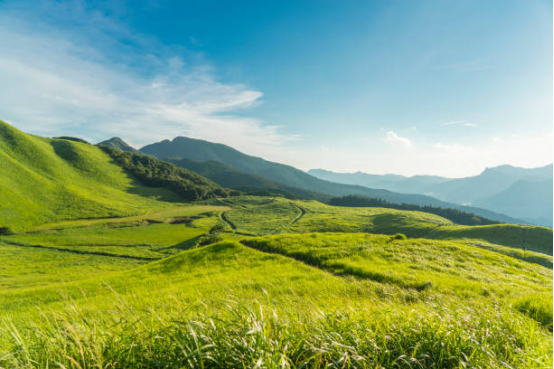
The grassland is the reflection of human beings.
After we built cities, demarcated territories, and erected fences, the grassland became the last refuge of mobility and freedom. We graze on the grassland and sing on it; we seek survival here and learn exile here. The grassland is both the mobile house of herders and the starting point for the galloping of war horses; it has witnessed the rise and fall of empires and preserved oral epics and pastoral songs.
When civilization can no longer expand outward, it will always look back to the grassland. It is not for romance, but to find a simple rhythm – the rhythm that continues in the wind but never bows to any border.
The grassland map
is not listed in order of national boundaries or geography, but by “character”:
Nomadic grasslands : such as the Mongolian Plateau and the Kazakh steppes—an epic poem written by wind and horses;
Fertile steppes : such as the Ukrainian Black Soil Belt and the Argentine Pampas—a land of both fertility and contradiction;
Theater of Life and Death : Such as the East African Savannah – testing life in running and migration;
Extreme environments : such as grasslands in Queensland, Australia, and the Chubut grasslands in Argentina – the philosophy of drought tolerance and restoration;
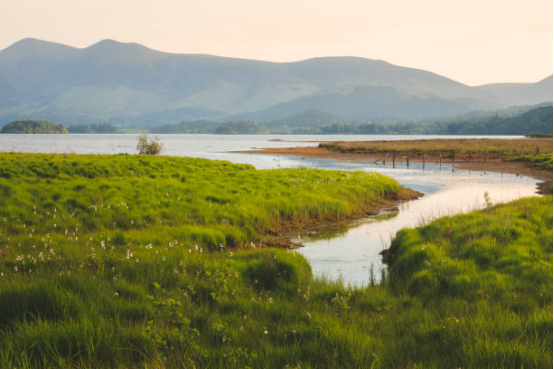
Wetland grasslands : such as the German marsh meadows and the British Lake District – the whispers of microscopic life in the water mist.
For each piece, we will start from the “geographical temperament”, go through humanity and history, and then return to how the grassland shapes human consciousness and life.
It is not for traveling, but for understanding that
you do not have to ride a horse or be there in person to feel its breath. The existence of the grassland will change the way you look at freedom and flow the moment you understand its character. Just as the horizon can be felt without measurement, the grassland can convey its meaning without footsteps – it is an uncircumscribed boundary, a voice that never stops in the human heart.