Educational notice: This site provides independent educational information only. Content about disasters, safety, health, survival, weapons, ecology, or environmental risk is not professional, medical, legal, engineering, emergency-response, or safety advice. Consult qualified professionals and official local authorities before making decisions.
The Biological Blueprint of the Human-Pet Bond
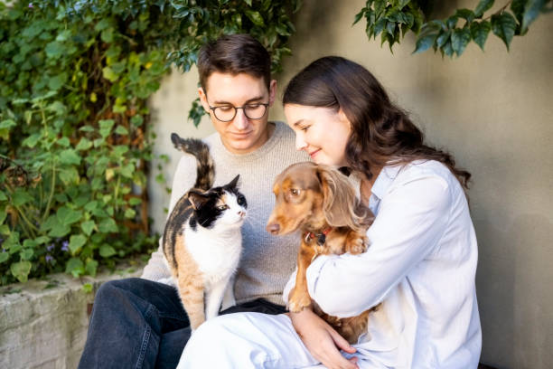
The intense affection humans feel for cats and dogs is not merely a cultural phenomenon; it is a complex biological interaction rooted in millions of years of evolution. At the heart of this connection is the “Oxytocin Loop.” When humans look into the eyes of their pets, both the human and the animal experience an increase in oxytocin, often referred to as the “love hormone.” This is the same chemical mechanism that facilitates bonding between a mother and her infant.
Beyond chemistry, the physical appearance of pets plays a significant role. Evolutionary biologists point to “neoteny,” the retention of juvenile features into adulthood. Large eyes, rounded faces, and floppy ears trigger an innate human “baby schema” response, making us feel a biological urge to protect and care for these creatures.
The Role of Neoteny in Pet Selection
Neoteny is a powerful evolutionary tool. By maintaining features that resemble human infants, dogs and cats have essentially hacked the human caregiving system. This survival strategy ensures they receive food, shelter, and protection, while humans receive emotional fulfillment and companionship.

Decoding the Self-Domestication Hypothesis
The “Self-Domestication Hypothesis” suggests that animals like dogs and cats were not initially captured and tamed by force. Instead, they “chose” to live near human settlements to access food scraps. Individuals with lower stress responses and reduced aggression had a survival advantage in these environments. Over generations, these “tamer” individuals bred together, leading to significant genetic and physical changes.
This process is linked to the “Neural Crest Theory.” Scientists believe that selecting for tameness affects the neural crest cells during embryonic development. These cells are responsible for both the adrenal system (fight or flight) and physical traits like pigmentation and cartilage. This explains why domesticated animals often have white patches of fur, curly tails, and floppy ears—traits rarely seen in their wild ancestors.
Comparative Analysis: Wild vs. Domesticated Traits
| Feature | Wild Ancestor (Wolf/Wildcat) | Domesticated Pet (Dog/Cat) |
|---|---|---|
| Aggression Levels | High (Survival-based) | Low (Socially-integrated) |
| Physical Markers | Uniform coloring, upright ears | Spotted coats, floppy ears (Neoteny) |
| Brain Size | Larger (Focus on hunting/survival) | Slightly smaller (Focus on social cues) |
| Social Interaction | Pack/Solitary hierarchy | Inter-species communication skills |

The Psychological and Physiological Impact on Humans
The benefits of the human-pet bond are measurable and profound. Studies have shown that interacting with a pet can lower cortisol levels (the primary stress hormone) and decrease blood pressure. For many, pets provide a sense of purpose and a non-judgmental source of social support, which is critical for mental health.
Furthermore, the presence of a pet can stimulate social interaction between humans. Dog owners, for example, are more likely to engage in conversations with neighbors, fostering a sense of community. This “social lubricant” effect is a byproduct of our shared evolutionary history with these animals.
Expert Advice: Maximizing the Bond
-
Engage in Eye Contact:
Spending a few minutes of quiet time looking at your pet can stimulate oxytocin production for both of you. -
Interactive Play:
Physical activity mimics the “cooperative hunting” instincts of dogs, strengthening the pack bond. -
Consistent Routine:
Domestication thrives on predictability; a stable routine reduces animal anxiety and strengthens trust.
Frequently Asked Questions (FAQ)
-
Did humans domesticate themselves as well?
- Yes, many scientists believe humans underwent a similar process of self-domestication. By selecting for more cooperative and less aggressive social partners, early humans developed flatter faces and smaller brows, similar to the changes seen in domesticated animals.
-
Why do cats purr when they are with humans?
- Purring is a multi-functional tool. While it often signifies contentment, the frequency of a cat’s purr (between 25 and 150 Hertz) has been shown to improve bone density and promote healing, suggesting a symbiotic health benefit for both cat and owner.
-
Is the bond with a dog different from the bond with a cat?
- While dogs are “cooperative” domesticates (working alongside humans), cats are often seen as “commensal” domesticates (living near humans for mutual benefit). However, both species utilize the same oxytocin-driven pathways to form deep emotional attachments.
-
What is the “Neural Crest” and why does it matter?
- The neural crest is a group of stem cells in embryos. Because these cells contribute to both the adrenal glands and physical features like ear cartilage, reducing fear (adrenal response) naturally leads to physical changes like floppy ears, a hallmark of domestication.
-
Can any animal be domesticated through this process?
- Not necessarily. Domestication requires specific traits, such as a flexible diet, a fast growth rate, and a social hierarchy that humans can integrate into. This is why we have domesticated dogs but not zebras or bears.