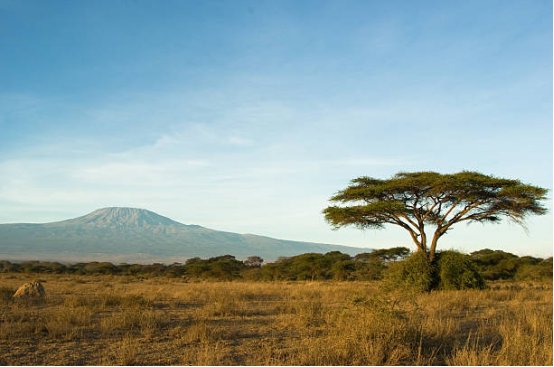
Map of the grassland 4: East African savannah – running is faith
Educational notice: This site provides independent educational information only. Content about disasters, safety, health, survival, weapons, ecology, or environmental risk is not professional, medical, legal, engineering, emergency-response, or safety advice. Consult qualified professionals and official local authorities before making decisions.
The sky here is bigger than time;
the land here is older than mythology.
The East African savannah is the real theater of the earth. It is not a metaphor or an exaggeration, but a real tragedy and comedy of life that is played out every day: pursuit and escape, death and rebirth, dryness and rejuvenation.
It’s not a meadow, it’s a running continent.
The grassland is not the background, it is the protagonist
In movies, grasslands are often used as backgrounds: the wind blows the yellow grass, lions gaze into the distance, and zebras run in groups.
But in East Africa, it is not a background, it is the protagonist itself. The grass is not quiet, but alive: every tuft of grass hides the footsteps of prey, and every blade of grass records the collision of eyes – the kind of gaze that decides life and death in a few seconds.
Wildebeest migration is not a landscape, but the breathing rhythm of the grassland. They are like a black wave, rushing from Tanzania to Kenya and then back, as if writing a map without words on the grassland.
There is no human center in this map. Lions, hyenas, antelopes, buffaloes, vultures, cheetahs, none of them is the sole master, and none of them has a narration to explain their behavior.
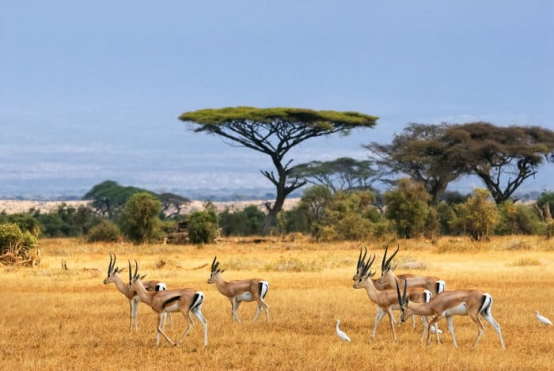
The grassland allows only one form of interpretation: the body.
Running is the only language
In East Africa, animals that can’t run don’t think for long. They don’t have time to grieve.
You either catch up or you are caught up.
From the gazelle’s eyes, you can see the world’s earliest fear sample; and under the cheetah’s feet, is the most precise decision-making result of evolution. We are not talking about fairness here, but efficiency.
Running is a prayer, a communication, a farewell ceremony between mother and child, and the first gaze between lovers.
Those running bodies are like part of the earth’s rotation. If you stand still, you are already behind.
Humans were born on this grassland. Our earliest ancestors learned to stand upright, walk, cooperate, escape, and plan in this grassland. We came from running, and we were also shaped by running.
Death is just part of the season
On this grassland, death is not an exception, it is the norm.
The water source dried up, and the carcasses of wildebeests lay like fossils on the riverbed; the grass burned, and the skeletons of zebras became the ladders of new life. Even the strongest lion group would not have enough food in a drought year, and their eyes would be dim.
But death here is not tragic. It is just part of the season, like the wind changing direction, or a thunderstorm falling suddenly.
Vultures circling high in the sky are not a bad omen, but a kind of grassland watch.
The longer you stay in this land, the more you sense a sense of order that transcends human emotion—a way the world works without ethics or appeal to meaning.
There is no “should or should not”, only “is it possible”.
Faith is not in the temple, but in every departure
The Maasai say that the earth is their ancestor. They do not build walls or enclosures, and their cattle flow between heaven and earth, like the embodiment of time. Their spears, shawls, and earrings all carry the color of the grassland. Even the moment a child learns to walk, he must run.
They do not believe in fixed gods, but in wind, fire, water, migration and footprints.
The East African grasslands teach mankind that faith is not about looking up at the sky, but about running with your head down. Every step carries weight, and every leap may become the last leap.
The grassland never explains who you are, it only asks whether you dare to keep going.