Explore Queensland’s secrets: a natural pilgrimage across grasslands and mangroves
Educational notice: This site provides independent educational information only. Content about disasters, safety, health, survival, weapons, ecology, or environmental risk is not professional, medical, legal, engineering, emergency-response, or safety advice. Consult qualified professionals and official local authorities before making decisions.
When talking about Australia’s natural wonders, the first thing that comes to many people’s minds is probably the colorful Great Barrier Reef, the kangaroos flashing through the grass, or the endless red desert. But in the northwest corner of Queensland, there is a peculiar place that is not noisy or ostentatious, as if it is quietly curled up on the edge of the map, like a corner forgotten by time – that is the Great Water Bay grassland and mangrove wetland.
It is like a mystery, guarding itself silently.
An almost imperceptible slope supports countless lives
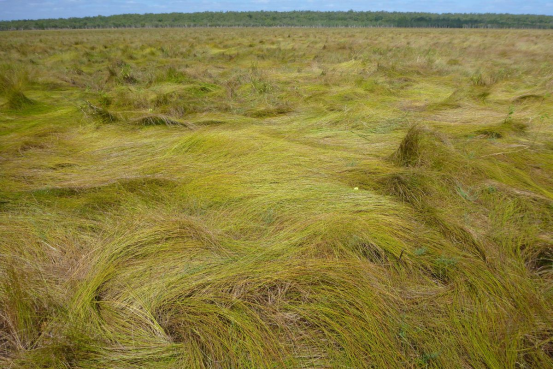
Walking inland from Musgrave Harbour, an indescribable sense of openness suddenly hits you, as if the horizon is stretched. You are not quite sure when you enter the grassland, because there is no dramatic terrain ups and downs here. There is only a gentle inclination, a drop of one meter per kilometer, like the earth sighing softly.
This landform, called the “ocean plain,” is a bit like minimalist art—surprisingly flat, but with an astonishing amount of detail. In the rainy season, it turns into a sparkling green wetland; in the dry season, it transforms into a cracked salt-alkali wasteland. The ground is a kind of grumpy black clay—it expands when it comes into contact with water, shrinks and cracks when it dries, as if sending a warning to plants that “I’ll bite you if you dare to grow.” Trees basically go on strike here, but sedges are enjoying it.
There is a strange softness in the wildness
You might think that the ecology under this kind of landform is barren, even boring. But in fact, the Dashuiwan grassland is like a green diary secretly opened during the rainy season. The water does not pour from any stream, but like a silent traveler, it quietly seeps out from the ground and travels among the rotten leaves and mud. Sedges, aquatic plants, and wild vegetables that quietly take root by the water – they grow on this silent water source.
One of the plants is water chestnut, which is sweet, crisp and fragrant, and is the favorite “snack” of wild boars. The indigenous people also dig it up as a staple food. This land may seem unattended, but in fact no one has forgotten it.
But then again, the gifts here are often two-sided. As soon as the rainy season is over, the fires come almost as expected. The fire does not come out of nowhere, but the whole land suddenly catches fire. In August and September, often before you can recover from the dullness of the afternoon, the whole grassland has become a charred phantom. There are not many wild animals, but there are many wild boars. Dingos also like to patrol here, and one or two snakes appear from time to time.
This is not a resort, but a limit test given by nature.
Many people come to Australia to take photos at the beach and hang out in cafes, but if you choose to come here, you have to be prepared for a psychological gap. In the rainy season, it is as humid as living in a pot of hot soup, and the mud is deep and slippery. In the dry season, there are ashes all over the sky, fire lines are pressing, and the sky is chaotic.
Don’t expect this to be an easy ecological experience. Wild boars may suddenly jump out of the sedge, and the wild buffaloes that once “lived in the wild” here may have left some offspring. Crocodiles lurk in the swamps, and you have to beware of hookworms and poisonous snakes from time to time. To survive here, you don’t rely on maps, but on luck and a kind of awe of nature.
The borders of the wetlands hide fragments of civilization
In the Unigan Nature Reserve near Weipa, there is a special landscape – not a mountain, not a river, but a series of small islands made of shells. You stand on these shell islands, under your feet are hundreds of years of accumulated cockle shells, and in your ears is the sound of the wind blowing through the mangroves. The indigenous people once settled here, fished, lived, died, planted fruit trees, avoided floods, and built fires. How they got along with crocodiles, we don’t know; but the “marks” they left behind are more real than any diagram in the textbook.
The grassland is not a landscape, but the heartbeat of the land.
If you just want to take a few photos and quickly check in, then this grassland is not for you. It is not dazzlingly beautiful, nor is it passionate. It is calm and vast, and occasionally whispers in the wind.
But if you are willing to take a little time to listen to the sound of water seeping into the soil, watch how the fire devours the sedge inch by inch, and touch the traces of time left on the Shell Island – you may feel something: the natural order, it may not care about you, but it is always running.
This grassland wetland in Queensland is nature’s final “exam paper”, testing whether you are willing to let go of your desire to control and learn to listen again. After a walk, the sweat on your body will make you remember what the true “wild beauty” is.
The Great Plains : From Bison Herd to Giant Breadbasket
Educational notice: This site provides independent educational information only. Content about disasters, safety, health, survival, weapons, ecology, or environmental risk is not professional, medical, legal, engineering, emergency-response, or safety advice. Consult qualified professionals and official local authorities before making decisions.
In the heart of the United States and Canada, the endless Great Plains seem to be always overlooked. But this seemingly “empty” land has witnessed the galloping of tens of millions of bison, the rise of agricultural empires, and energy windmills standing in rows on the horizon. It is like a silent epic, slowly but never stopping, telling the entanglement and dance between man and nature.
1. Bison territory
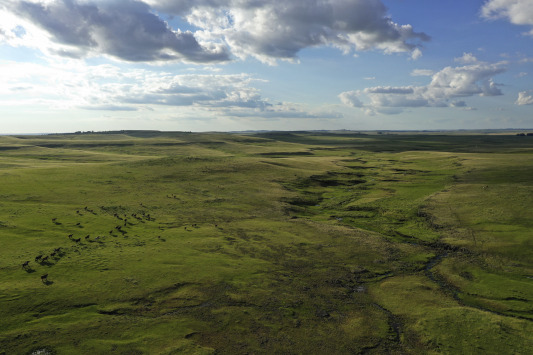
Before the 19th century, the Great Plains of North America was not the “world’s granary”, but the territory of bison. At that time, there were about 30 million bison migrating on this land, and the sound of their hooves shook the earth, as if it was the beating heart of the grassland. Short grass and mixed grasses drifted in the wind, and prairie dogs, black-footed ferrets, wild horses, wolves, and flocks of migratory birds together formed a nearly complete grassland ecological puzzle.
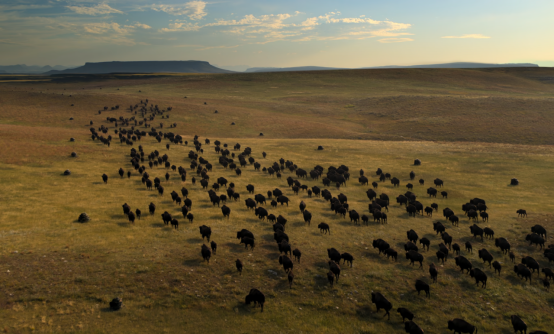
The indigenous tribes, such as the Sioux and Cheyenne, relied on bison for more than just “food”. Bison were their clothing, tools, beliefs, and living totems. In that era, there was no master-servant distinction between man and nature, but rather a symbiotic understanding, a mutual fulfillment that was deeply rooted in their bones and blood.
Until the gunfire of European colonists broke this balance. Large-scale slaughter pushed the bison to the brink of extinction in a few decades – in 1890, there were less than a thousand bison left in North America. This was not only an ecological disaster, but also crushed the foundation of indigenous culture. Without the bison, the soul of the tribe seemed to have lost its home.
2. From wasteland to granary
After the bison left the Great Plains, another group of “conquerors” arrived – farmers, ranchers, pioneers, who brought plows, seeds, railroad tracks and dreams.
(1) The Golden Age of Agriculture and the Dust Bowl
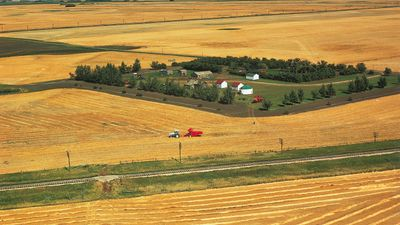
The northern Great Plains have an amazing black soil layer that is so fertile that it seems to be made for farming. Kansas, Nebraska, South Dakota… one state after another gradually turned into a sea of wheat fields, corn fields and soybeans. Mechanized agriculture swept across the grasslands, and it became the “bread basket of the world”.
However, there are hidden dangers behind the gold. In the 1930s, the “black storm” came. Overcultivation caused the soil to lose its structure. When the wind blew, the entire continent seemed to collapse. In those years, people almost forgot what color the sky was. Millions of acres of land became barren, and farmers fled with their families. It was also from then on that the term “soil protection” began to appear frequently in policy reports. People realized that the earth is not a machine with unlimited supply.
(2) Pastures and beef cattle
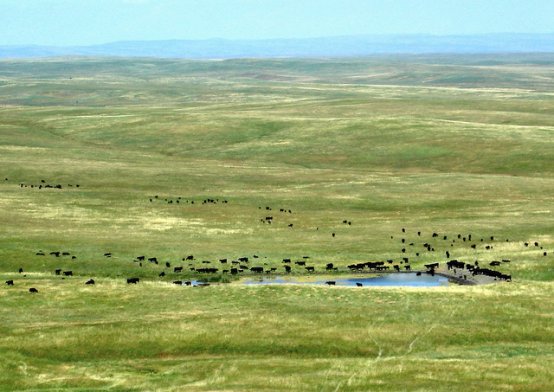
Although bison no longer dominate the grasslands, their shadows still lurk in modern animal husbandry. Texas, Oklahoma and other places are gradually becoming the heartland of beef power. Today’s pasture management is no longer based on grazing by feel, but on algorithms, rotational grazing systems, and native grass restoration to maintain grassland health. In a sense, this is a “scientific succession” to the ecological role of bison.
3. Symbiotic Consciousness
If the Great Plains was an object to be “conquered” in the past, it is now more and more like an old friend in the process of reconciliation – having experienced tearing and destruction, it is slowly recovering the rhythm of life.
(1) Return of the Buffalo
Today, there are about 500,000 bison scattered across reservations and Native lands. The Rose Sioux Reservation in South Dakota is an iconic example of a renaissance that is not only restoring bison populations, but also reconstructing an ecological worldview – bison are guardians of the land and carriers of culture.
(2) Agricultural regeneration
More and more farms are beginning to introduce traditional practices of indigenous peoples, such as periodic burning of grasslands, planting cover crops, and restoring wetlands. These “old methods” have been given a new name: “regenerative agriculture.” In fact, it is not new, but humans are finally willing to let go of their obsession with “control” and relearn how to “coexist.”
Remarkably, Native Americans now manage more than 9 million acres of land, which has become a safe haven for endangered species and bison and is part of a cultural consciousness—a slow-moving experiment in ecological restoration.
(3)Energy: Wind power
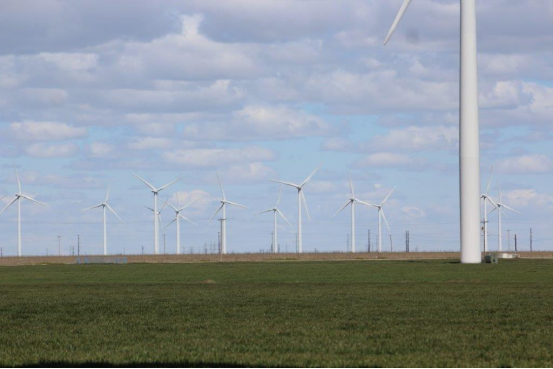
Standing on the Great Plains today, looking across wheat fields, grasslands and pastures, you can often see wind turbines standing in rows. They are no longer just a symbol of industry, but more of a metaphor for hope. In the wave of energy transformation, the Great Plains has become a major center for wind power generation and has found a new path to coexist harmoniously with nature.
4. A place where many parties meet
Today’s grassland is not just a grassland for one person, it is the intersection of interests of multiple parties – herders, governments, scientists, indigenous peoples, environmental protection organizations… all have left their marks on this land.
The World Wildlife Fund launched the Sustainable Pasture Initiative in 2011, trying to make ecological protection and economic interests no longer conflicting. The Central Grasslands Roadmap is an ecological blueprint spanning the United States, Canada, and Mexico, with the goal of weaving a complete grassland protection network across national borders.
Thanks to these efforts, the more than 23 million acres of public grasslands that have not been destroyed have also preserved the habitats of typical species such as sage grouse and Smith’s pipit, while continuing to provide grazing resources for ranches. This coexistence of public and private, modern and traditional, economic and ecological has become possible here.
Epilogue: How should we talk to the grassland?
The story of the Great Plains is not just about bison or agriculture. It raises a big question: How do we get along with nature? Do we become exhausted through taking, or do we find renewal through cooperation?
Protecting the grassland does not mean returning to a “perfect past”, but leaving room for choice for the future. Where the wind blows and the grass is low, the tacit understanding between man and nature is quietly being rebuilt. Perhaps this is the most moving chapter.
Argentina’s Pampas : Things You Might Not Know
Argentina is a vast South American land, with a dazzling array of landforms, from the towering Andes Mountains to the boundless Atlantic coast in the east. Among them, the Pampas is mentioned repeatedly, poeticized, and even written into songs. It is no exaggeration to say that this place is the heart of Argentina. The legend of cowboys, the legend of beef, and the sense of freedom in the slightest disturbance all converge here.
What is the Pampas? It’s more than just “grassland”
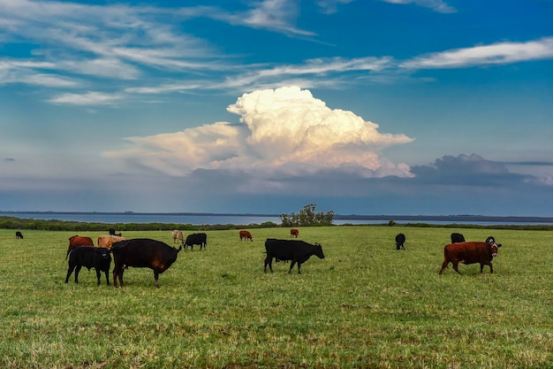
The word “Pampa” sounds peaceful. It comes from the Quechua language and means “flat space”. Yes, it is indeed flat and vast enough to make people doubt life – more than 750,000 square kilometers of land, stretching from Buenos Aires to the foot of the Andes Mountains. This geographical monster consists of the arid west and the humid east. Although the landform is monotonous, it is actually one of the most fertile and agriculturally suitable grasslands in the world.
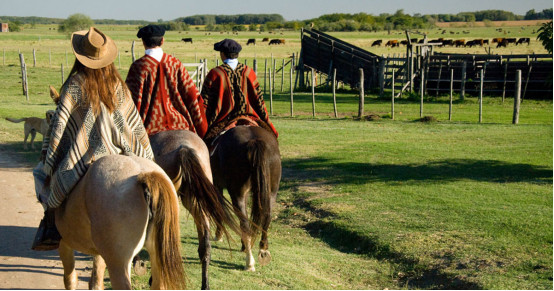
But the Pampas is more than just fertile soil, it also has a soul. It gave birth to the gauchos, the Argentine “cowboys” who are free and proud. Their spirit, clothing, and lifestyle are still sung in the ranches. Many Argentines would say: gauchos are not only history, but also a temperament.
Want to go to the Pampas? You should also pay attention to the “ritual sense” when choosing the time
Although the Pampas is suitable for visiting all year round, the most “attractive” season is still spring (September to November). At that time, the sun is not too strong, the grass grows wildly, and there is a sweet smell in the air, and there is also the fragrance of flowers – real fragrance, not a metaphor. Summer (December to February) is slightly hot, and winter (June to August) is cool, but not cold. Basically, all four seasons have their own advantages. It’s just that spring is a little special.
Six must-see experiences in the Pampas (not just cow patting)
1. San Antonio de Areco: Home of the Gaucho Spirit
This place is not far from Buenos Aires, more than 70 miles away. It is a quiet and rich town. It hides the Gaucho Museum, the old ranch, and a bridge built in 1857. Walking on the bridge, you feel like you are traveling through time. The town also holds a Gaucho Festival every year, with knives, horses, belts, and wine.
2. Asado Grill: Makes you forget you’re vegetarian
Asado is not a simple barbecue, it is more like a slow-paced meat-eating ritual. The residents of Tandil will start preparing it at 9:30 in the morning, simmering it over a high fire, mixing the aroma of wood and meat, and the meal will start around 12:30. Paired with a glass of local red wine, you will feel: Hey, this cow really lived a good life.
3. Riding with the Gauchos: A Step into Cowboy Movies
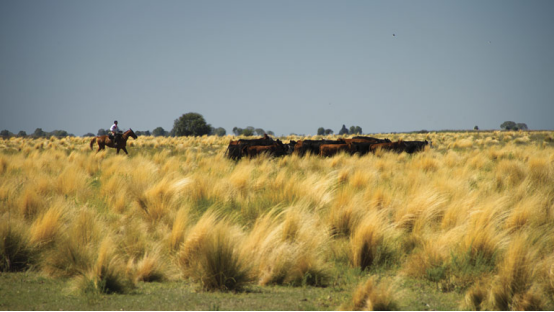
There is nothing special about riding a horse, but if you walk through the dusty grassland with real gauchos, it is not just riding a horse, but experiencing a kind of life. They will teach you how to herd cattle and how to play polo. Yes, polo! Many of the world’s top polo players come from this land.
4. Watch wildlife: Stop focusing on cows and sheep
Have you heard of the Pampas cat? It looks like a domestic cat, but it is wild. There are also foxes, guanacos, chinchillas, various eagles and water birds. This place is actually quite “wild”. You have to squat down and look slowly. Sometimes when you look up, you will see a group of birds flying in a strange formation in the sky.
5. National Park also: Campos del Tuyu
It is not big, only 3,040 hectares, hidden near the eastern coastline, with woodlands and salt marshes mixed together. It is home to the endangered Pampas deer and more than 100 bird species. If you like taking photos or doing eco-tourism, this place will keep you busy all day and you won’t want to go back to the city.
6. Drinking? Of course! “Ocean wine” is waiting for you to try
Don’t just know Mendoza. La Pampa is also a rising star in the wine industry. It can make Malbec and Chardonnay. And the wines made in the coastal areas, such as Tandil and Medanos, have a “sea breeze taste” – a little salty, but special. That taste is very Pampas.
Final words: Romance is in the grassland, not in the movie
Close your eyes and imagine this – you are riding a horse, the wind is blowing so hard that you can’t open your eyes, and the grass waves in the distance are undulating like the sea. Then, it gets dark, and you and your friends are sitting by the campfire, with a piece of Asado just out of the oven, and the gravy is still sizzling. Someone says with a smile: “Tonight we drink La Pampa wine.”
The Pampas is not just a landscape, but also a kind of “life texture”. If you are curious about Argentina, cowboy culture, wild ecology, or just want to escape the hustle and bustle of the city, then come here. This grassland will not let you go back empty-hearted.
the Kenyan Earth: How do wild animals, Maasai tribes and nomads coexist?
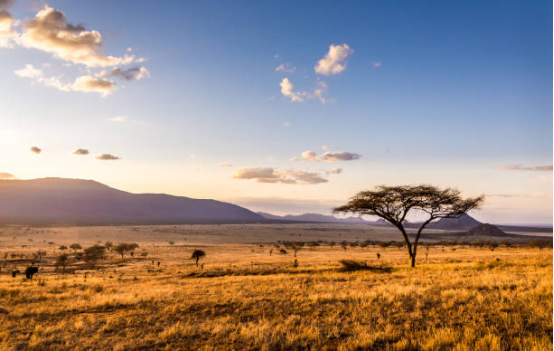
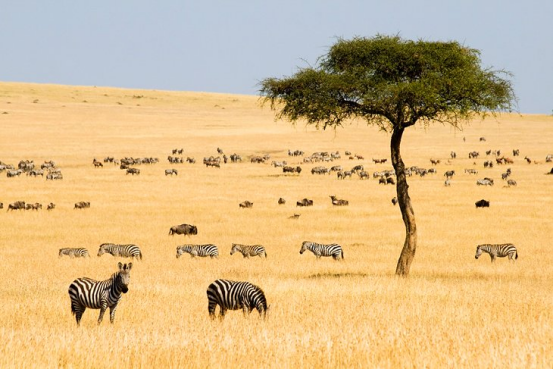
When talking about Africa, many people’s first reaction is animals. Yes, elephants, zebras, herds of antelopes, and the endless golden grasslands. In Kenya, this scene is not just a beautiful fantasy on a postcard, but a real daily occurrence.
The days of wild animals are also mixed with the breath of humans
Here, animals and people are not clearly separated. Giraffes will slowly cross the dusty path in front of you, chewing on acacia trees, as if they don’t take you seriously at all. Not only national parks, but many protected areas are also unfenced, and this kind of “coexistence” seems both casual and real. In “Risaf” – a place that means both “protected area” and “countryside”, the lives of people and animals have been intertwined for hundreds or even thousands of years, and no one finds it strange.
In Ngong, a suburb of Nairobi, you can sometimes see giraffes strolling the streets at dusk, as if they were gods who had strayed into the city. On the highway to the west, baboons roam in groups, sometimes making faces at you. Warthogs, antelopes and even zebras – they never give in to the city, they just exist naturally.
The offensive and defensive tug-of-war between villagers and monkeys
Of course, not all relationships between humans and animals are so harmonious. Monkeys, for example, are not very popular. In places like Kapuso, Kesup, and Nandi, monkeys specifically target corn. They eat it before it is ripe, and they like the milky white, half-ripe corn. They eat it so fast and so fiercely that they can destroy an entire field in three to five days.
Therefore, at 5 a.m., the villagers have already started “standing guard” – carrying sticks, knocking buckets, and loading slingshots, just like a traditional “monkey-driving ceremony”. These monkeys are not stupid, especially the colobus monkeys and green long-tailed monkeys, which are as agile as if they have practiced light kung fu. The young people in Kelio Valley have become accustomed to this “mission” and regard it as a kind of intergenerational inheritance.
What’s even more outrageous is that during the dry season, monkeys would sneak into the school dormitories to look for food. If you forgot to close the window, when you returned, you might see books and half-eaten bread crumbs all over the floor. These “raids” forced the children to predict the monkeys’ movements more accurately than the weather forecast.
The story of the bird, the dignity of the chicken
If monkeys bring chaos, then birds are synonymous with elegance and color. Every year, migratory birds fly to Kenya to spend the winter, with colorful wings and strange calls, some of which even sound like they are beating a rhythm. The purple-breasted scorpionfish, with its electric blue feathers, has become the dream bird of many photographers.
The national bird in the hearts of the locals? Not the eagle, not the stork, but the chicken. Especially the Lucia people, they are very fond of the free-range Chiegi chickens. These chickens are indispensable in celebrations, and sometimes a chicken can even represent the face of a family. Raising chickens is no longer a joke, but an industry. Many families rely on them to make a living and raise children.
From “Seagrass Land” to “Bald Land”: Nature in Place Names
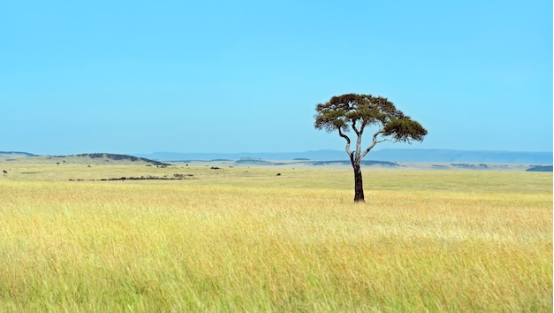
When you walk in the Kenyan countryside, almost every place name you hear is related to nature. “Emsea” means the land of seaweed; “Kipchebos” means that the sun is scorching and there is no grass. People use these words to name the land, which is a memory and a condensation of life experience.
The Emotional Legend of Cow and Man
In northern Kenya, there is a herder tribe called the Turkana. They raise cattle, but cattle are not just cattle, they are members of the family, wealth, and spiritual sustenance.
Social anthropologist Vigdis Broch-Du once recorded such a story: Her friend Eamon owned a special bull named Lokri Mayen. It had brown and white fur, and its horns looked like swirling clouds. In the year of drought, Lokri Mayen was almost unable to survive, so Eamon spent almost all her money to bring it to the highlands, fed it grass by hand, supplemented it with vitamins, and even sang to it every day.
You may find it hard to understand, but he really treated the cow as a family member. He even let the cow sleep in the house while he sent the child to his grandmother’s house to avoid the cold. The cow survived and regained its aphrodisiac instinct. Eamon was so proud that he said his name would be passed down along with the cow’s.
But the story always has a twist. A year later, another drought hit. This time, his wife was no longer silent. The children needed food, and the well was running dry. In the end, Emon sold Lokorimyan. That day, he didn’t talk to anyone, his eyes were empty, as if he had lost his soul.
This story of a man and a cow is not just about personal emotions, it is a microcosm of a philosophy of life. In this scorching land, man is not the master of nature, but the people of nature – living together with the wind, grass, monkeys and cows, sharing the joys and sorrows.
Cultural and Natural Wonders of Inner Mongolia and the Mongolian Grasslands
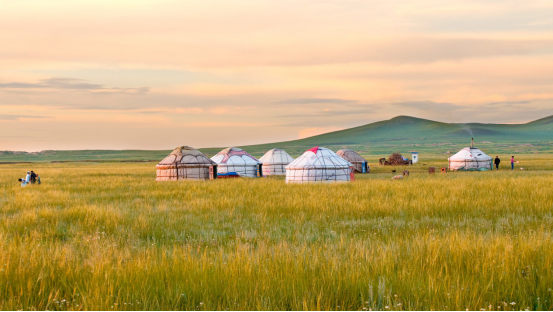
Have you ever stood deep in the grassland, with the sound of the wind in your ears and endless green in front of you? In northern China, there is a border area that always makes people feel a sense of emptiness and solidity like the wilderness. Inner Mongolia, the name itself is a bit legendary. Going further north, there is the independent Mongolia, a country where the nomadic atmosphere has not yet been completely dried up. The two places, like brothers and mirror images, one on the left and one on the right, fully display the soul of the entire Mongolian Plateau.
Take a deep breath on the grassland and get lost in the desert
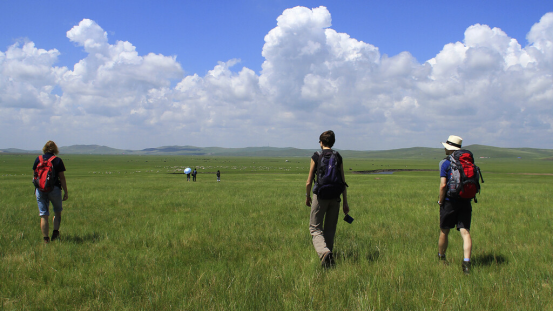
When talking about Inner Mongolia, the first thing that comes to mind for many people is the grassland. Yes, it is incredibly vast. Gegentala, Huitengxile, Jinlianchuan… These names are like poems, and also like ancient passwords. Once they are read out, it seems as if the sound of the wind will automatically blow from all directions.
In July and August, people and horses are relaxed. Riding horses on the grassland is a “must”, but don’t rush the trip – the real fun is actually hidden in the details of making milk tea with herdsmen and listening to the throat singing around the campfire. If you are lucky, you can also see a meteor dragging its tail across your head.
As for the desert, it is a completely different scene. Badain Jaran in western Inner Mongolia is not only a sand dune, but also a sand that can “sing”, which is called “resonant sand gorge”. This place is very strange. When the wind blows, the sand is like someone whispering in your ear. There are several lakes hidden between the sand dunes. The blue is like the color cards in fairy tales scattered on the ground. There are also people driving motorboats, sandboarding, and riding hot air balloons. It is as noisy as an amusement park, but as long as you look back, it is a silent world again.
Hidden threads of history beyond Genghis Khan
Genghis Khan. You have certainly heard of him, a world-class name. But if you think that this is the entire history of the Mongolian Plateau, you are too simplistic.
The Genghis Khan Mausoleum in Inner Mongolia is not just a tourist attraction, it is more like a spiritual anchor for the nation. Many Mongolians still hold him in an almost religious respect. In addition to the mausoleum, you can also find more delicate historical textures in some small-scale museums, libraries, and even temples in the area.
In Mongolia, there is a place called “Flame Cliff”, which is not a setting in a novel, but a real place. The Gobi soil there is particularly red, and it looks like a whole piece of burning rock from a distance. And this is the paradise of dinosaur fossils. Archaeologists are still digging in the soil to find new species. I heard that a dinosaur that “may swim” was discovered in 2022. The history hidden in the grassland is far more than the legend of the emperor.
Life on the grassland is not as primitive as you think
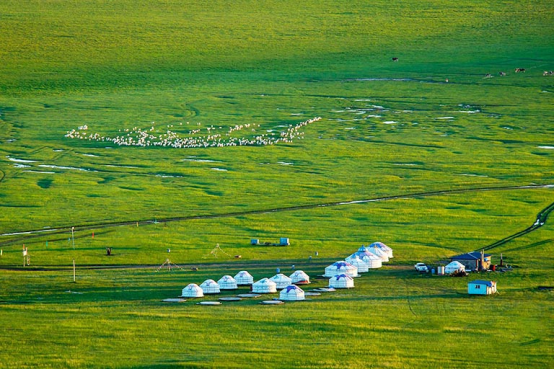
You may think that nomadic life is ancient and backward, but it is not. Many herders on the Mongolian Plateau live quite modern lives. Although they still live in yurts, you will know when you go in: there are solar panels, LED lights, and some people watch short videos on smartphones. Herding during the day and chatting on the phone at night is a bit out of place, but it is also quite real.
Tradition and modernity go hand in hand here. They eat mutton, drink mare’s milk, chat about the weather, sing songs, and even use power panels to charge their phones. Their philosophy of life is “enough is good enough”, which sounds simple, but if you really want to do it, you have to learn to “let go” first.
Summer is a carnival of grassland festivals
If you plan to visit the Mongolian steppes, I strongly recommend going in summer. Really, don’t hesitate. Because that is the season with the most festivals and the most lively atmosphere.
The “Nadam Festival” held in July every year is simply a national version of the “Olympic Games”. Wrestling, horse racing, and archery are not only competitive, but also a display of tradition. The competition site is crowded with people. You may not understand the rules, but you can feel the atmosphere, a kind of power rooted in the land and bursting out of the body.
Interestingly, young people in Mongolia are now starting to have new ways of playing. They hold the “Gobi Soul” music festival, set up a stage in the desert, sing electronic music and play rock music. I heard that the sand reflects light at night, and the music and the starry sky are just right. This wonderful fusion makes people wonder: Is tradition really only a thing of the past?
In conclusion:
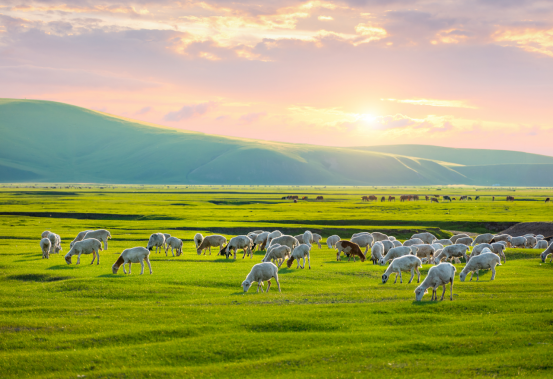
If you are tired of routine travel and want to find a place where you can “take a breath” and “have some fun”, you might as well turn your attention to this plateau. Grasslands, deserts, dinosaur fossils, Genghis Khan, enthusiastic herdsmen and a sudden sense of modernity, everything is defenseless.
In this vast world, you may also find a new scale: life can be less complicated, and the road under your feet can be less straight. The wind blowing the grass low may hide the answer, or it may just be a gust of wind.