Educational notice: This site provides independent educational information only. Content about disasters, safety, health, survival, weapons, ecology, or environmental risk is not professional, medical, legal, engineering, emergency-response, or safety advice. Consult qualified professionals and official local authorities before making decisions.
When talking about Australia’s natural wonders, the first thing that comes to many people’s minds is probably the colorful Great Barrier Reef, the kangaroos flashing through the grass, or the endless red desert. But in the northwest corner of Queensland, there is a peculiar place that is not noisy or ostentatious, as if it is quietly curled up on the edge of the map, like a corner forgotten by time – that is the Great Water Bay grassland and mangrove wetland.
It is like a mystery, guarding itself silently.
An almost imperceptible slope supports countless lives
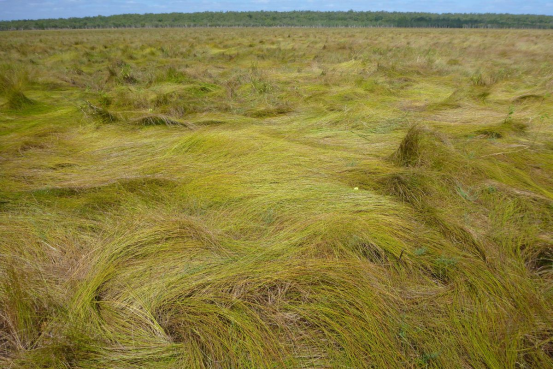
Walking inland from Musgrave Harbour, an indescribable sense of openness suddenly hits you, as if the horizon is stretched. You are not quite sure when you enter the grassland, because there is no dramatic terrain ups and downs here. There is only a gentle inclination, a drop of one meter per kilometer, like the earth sighing softly.
This landform, called the “ocean plain,” is a bit like minimalist art—surprisingly flat, but with an astonishing amount of detail. In the rainy season, it turns into a sparkling green wetland; in the dry season, it transforms into a cracked salt-alkali wasteland. The ground is a kind of grumpy black clay—it expands when it comes into contact with water, shrinks and cracks when it dries, as if sending a warning to plants that “I’ll bite you if you dare to grow.” Trees basically go on strike here, but sedges are enjoying it.
There is a strange softness in the wildness
You might think that the ecology under this kind of landform is barren, even boring. But in fact, the Dashuiwan grassland is like a green diary secretly opened during the rainy season. The water does not pour from any stream, but like a silent traveler, it quietly seeps out from the ground and travels among the rotten leaves and mud. Sedges, aquatic plants, and wild vegetables that quietly take root by the water – they grow on this silent water source.
One of the plants is water chestnut, which is sweet, crisp and fragrant, and is the favorite “snack” of wild boars. The indigenous people also dig it up as a staple food. This land may seem unattended, but in fact no one has forgotten it.
But then again, the gifts here are often two-sided. As soon as the rainy season is over, the fires come almost as expected. The fire does not come out of nowhere, but the whole land suddenly catches fire. In August and September, often before you can recover from the dullness of the afternoon, the whole grassland has become a charred phantom. There are not many wild animals, but there are many wild boars. Dingos also like to patrol here, and one or two snakes appear from time to time.
This is not a resort, but a limit test given by nature.
Many people come to Australia to take photos at the beach and hang out in cafes, but if you choose to come here, you have to be prepared for a psychological gap. In the rainy season, it is as humid as living in a pot of hot soup, and the mud is deep and slippery. In the dry season, there are ashes all over the sky, fire lines are pressing, and the sky is chaotic.
Don’t expect this to be an easy ecological experience. Wild boars may suddenly jump out of the sedge, and the wild buffaloes that once “lived in the wild” here may have left some offspring. Crocodiles lurk in the swamps, and you have to beware of hookworms and poisonous snakes from time to time. To survive here, you don’t rely on maps, but on luck and a kind of awe of nature.
The borders of the wetlands hide fragments of civilization
In the Unigan Nature Reserve near Weipa, there is a special landscape – not a mountain, not a river, but a series of small islands made of shells. You stand on these shell islands, under your feet are hundreds of years of accumulated cockle shells, and in your ears is the sound of the wind blowing through the mangroves. The indigenous people once settled here, fished, lived, died, planted fruit trees, avoided floods, and built fires. How they got along with crocodiles, we don’t know; but the “marks” they left behind are more real than any diagram in the textbook.
The grassland is not a landscape, but the heartbeat of the land.
If you just want to take a few photos and quickly check in, then this grassland is not for you. It is not dazzlingly beautiful, nor is it passionate. It is calm and vast, and occasionally whispers in the wind.
But if you are willing to take a little time to listen to the sound of water seeping into the soil, watch how the fire devours the sedge inch by inch, and touch the traces of time left on the Shell Island – you may feel something: the natural order, it may not care about you, but it is always running.
This grassland wetland in Queensland is nature’s final “exam paper”, testing whether you are willing to let go of your desire to control and learn to listen again. After a walk, the sweat on your body will make you remember what the true “wild beauty” is.