Educational notice: This site provides independent educational information only. Content about disasters, safety, health, survival, weapons, ecology, or environmental risk is not professional, medical, legal, engineering, emergency-response, or safety advice. Consult qualified professionals and official local authorities before making decisions.
We are used to imagining maps as a combination of roads and borders, marking the world into divided territories. However, it is often not cities but grasslands that truly continue the rhythm of life, carry nomadic memories, and reflect the changes of human beings.
The grasslands are not as roaring as storms, nor as hard as rocks. They maintain the hope and anxiety on the horizon in a slowly rippling way. They are not as tall as mountains, nor as deep as forests, but they lead human time and culture with a light, open, and almost silent breathing.
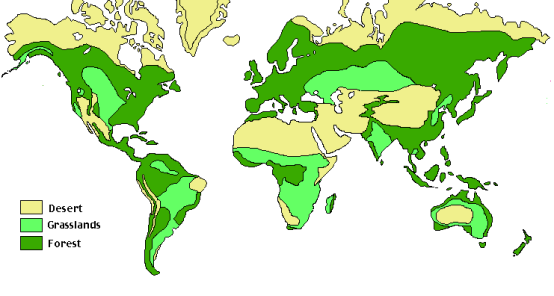
This series will take you to ten legendary grasslands, which are scattered across the Eurasian continent, Africa, the heartland of the Americas and isolated islands of Oceania, but they have one thing in common: they are not just “natural” places, but also the antechamber of civilization, the cradle of nomadism, migration, animal husbandry and poetry.
The grassland is not a landscape, but a boundary of consciousness
. When you really step onto the grassland, it will not take your breath away like a canyon, nor will it comfort you immediately like a lake. The grassland is a flowing, open, and difficult to present in its entirety. You cannot see its end, nor can you sense its beginning.
You must slow down, and slow down again, until your breathing is synchronized with the frequency of the wind, until you can hear the echo of the earth at the moment when the horse’s hooves hit the ground; until you discover that you are no longer consuming the scenery, but being digested and rewritten by the scenery.
Each grassland has a character.
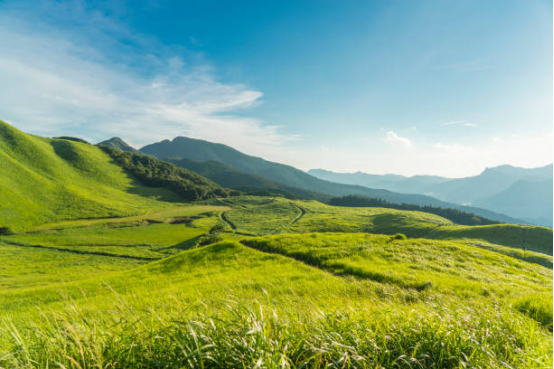
Grasslands are not simply piles of grass. Each grassland has its own unique grammar and temperament. The Mongolian Plateau: the back of the wind, where day and night are equally vast; the East African savannah: the theater of life, where cheetahs and wildebeests dance together; the Pampas: soft yellow-green, where cattle, horses and gauchos coexist; the Queensland grassland: the silent dialogue between dry fires and kangaroos; the Ukrainian black soil belt: the dual contours of fertility and war… They are open, dry, moist or low-lying, but they all tell humans their attitudes towards space, flow and symbiosis.
The grassland is the reflection of human beings.
After we built cities, demarcated territories, and erected fences, the grassland became the last refuge of mobility and freedom. We graze on the grassland and sing on it; we seek survival here and learn exile here. The grassland is both the mobile house of herders and the starting point for the galloping of war horses; it has witnessed the rise and fall of empires and preserved oral epics and pastoral songs.
When civilization can no longer expand outward, it will always look back to the grassland. It is not for romance, but to find a simple rhythm – the rhythm that continues in the wind but never bows to any border.
The grassland map
is not listed in order of national boundaries or geography, but by “character”:
Nomadic grasslands : such as the Mongolian Plateau and the Kazakh steppes—an epic poem written by wind and horses;
Fertile steppes : such as the Ukrainian Black Soil Belt and the Argentine Pampas—a land of both fertility and contradiction;
Theater of Life and Death : Such as the East African Savannah – testing life in running and migration;
Extreme environments : such as grasslands in Queensland, Australia, and the Chubut grasslands in Argentina – the philosophy of drought tolerance and restoration;
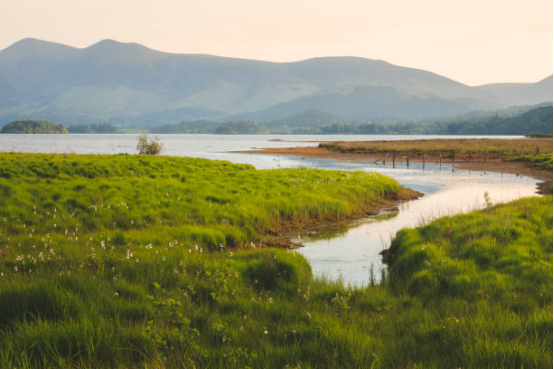
Wetland grasslands : such as the German marsh meadows and the British Lake District – the whispers of microscopic life in the water mist.
For each piece, we will start from the “geographical temperament”, go through humanity and history, and then return to how the grassland shapes human consciousness and life.
It is not for traveling, but for understanding that
you do not have to ride a horse or be there in person to feel its breath. The existence of the grassland will change the way you look at freedom and flow the moment you understand its character. Just as the horizon can be felt without measurement, the grassland can convey its meaning without footsteps – it is an uncircumscribed boundary, a voice that never stops in the human heart.