Educational notice: This site provides independent educational information only. Content about disasters, safety, health, survival, weapons, ecology, or environmental risk is not professional, medical, legal, engineering, emergency-response, or safety advice. Consult qualified professionals and official local authorities before making decisions.
In the southeastern corner of South America, the grasslands of Uruguay aren’t known for their vastness,
but their skies are vast and their winds are long.
Every whiff of wind brushing past your ears is like an echoing whisper:
a message for the rider, a memory for the horse’s hooves, and a
voice for the quietly living beings on the land.
The Uruguayan grasslands are not shocking, but slow
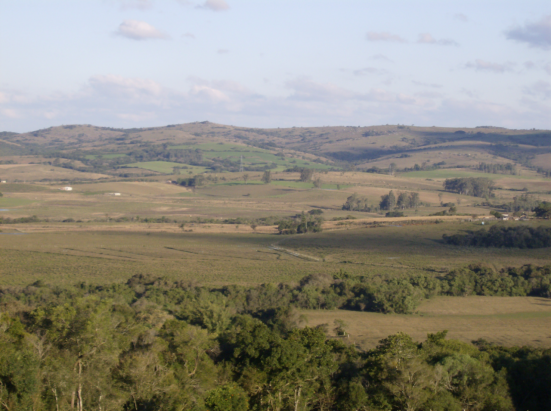
The Uruguayan grasslands, part of the geographical area known as the “Pampas”, are warm and soft.
Unlike the ruggedness of Mongolia or the intensity of Africa, it lacks drama. The terrain here undulates like waves, neither steep nor flat, like a blanket spread across the earth’s surface. The grass is low and varied, and when the wind blows from the east, the entire horizon undulates like the surface of water.
There is no sense of loneliness that is “so vast that it makes people afraid” here, but there is a tolerance that is “so long that it makes people calm”.
The knight culture on the grassland is silent and profound
The Gauchos of Uruguay are horsemen of the South American pampas. They aren’t as obsessed with image as American cowboys, nor are they as nomadic as Mongolian herders. They are quiet, skilled, and live in harmony with their horses.
In the morning mist, you will see a gaucho rider wearing wide trousers and a low-brimmed hat slowly emerging from the horizon. The cattle behind him, the dogs in front of him, and the dust under his horse all work in perfect harmony.
They are shadows on the grassland, riding on horseback, as if in slow motion lasting for centuries.
They don’t need to be recorded—they are the memory itself.
The soundscape on the grassland is a love letter between the wind and the grass
If you close your eyes, the sounds of the Uruguayan pampas are incredibly subtle:
The wind blows from the distant Brazilian plateau, passing over the grass, brushing the horse’s mane, and finally hitting your ears; the grass is whispering, sometimes like waves, sometimes like breathing; the sound of birds comes from afar, neither more nor less, like a sigh at the end of a sentence.
You hear no noise, and rarely, complete silence.
The sounds of the Uruguayan grasslands are the “blank spaces in life,”
the sounds we tend to ignore, yet truly sink into.
There is no industrial atmosphere between cattle and humans, only a sense of daily life.
Uruguay’s grassland cattle industry is well-developed yet unassuming. The cattle don’t run in dense masses, but rather are loosely distributed among the low-lying grasses. Their relationship with the grass is not one of exploitation, but of circulation.
Many farmers graze their cattle themselves, and the cows are not afraid of people, as they are so familiar with each other that they feel like neighbors. “Animal husbandry” here is a slow, understanding journey, not industrialized control.
Cows graze, herders whistle, dogs trot briskly, and horses stroll gently.
A day on the grassland has no clear beginning or end, only a natural continuation.
The philosophy of this grassland is “don’t rush”
Uruguayans have a philosophy of life called “tranquilo” (meaning: relax and quiet).
It’s more than just a word; it’s a national ethos.
This temperament is also reflected on the grasslands.
The grass doesn’t fight, the wind isn’t strong, the cattle aren’t panicking, and the people aren’t anxious. All living things live in a rhythm of “non-competition.”
The grassland seems to be telling humans:
Sometimes, the most profound power does not come from speed, but from patience.
The end of the horizon is the story brought by horse hooves
On the Uruguayan grasslands, nothing is more symbolic than the sound of distant horse hooves.
It is the echo of another era,
the language left behind by Spanish colonization, the roots of gaucho culture, the land’s repeated sowing of memory.
The horse is not a means of transportation, but the language of the grassland. It connects people with the wind and sews together the grass and time.
The man on horseback knows how to narrate life without speaking.