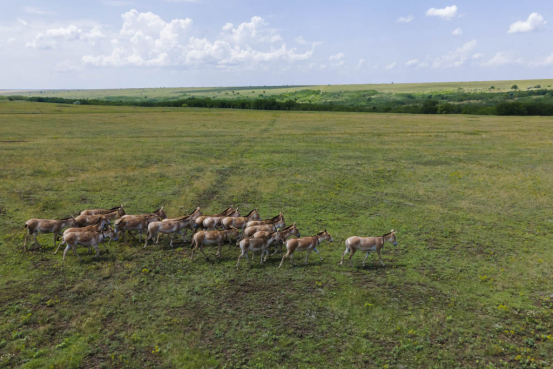
The Ukrainian steppe is not mysterious. It spreads everything out in the light.
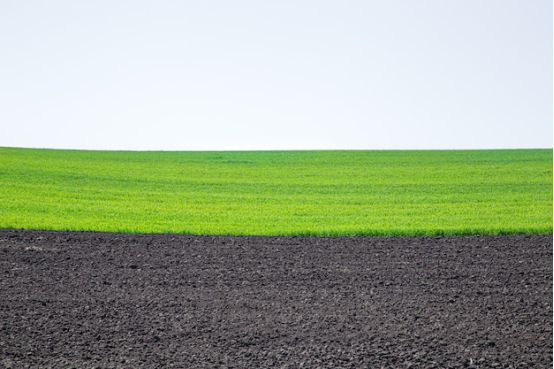
The sky is a straightforward blue, and the ground is a naked black. There are no dense forests or snow-capped mountains, only the endless flatness, as if the whole earth is holding its breath, waiting for sowing, harvesting, or a sudden war.
But this is the fate of the Ukrainian steppe. Fertility and tearing have always been its dual language.
Black soil: so fertile that it’s shocking
The Ukrainian steppes, known as the “Chernozem,” are extremely fertile soils. After the rain, they are shiny black, as if they were not soil, but ancient ink that had been dug up from the ground, capable of turning any seed into a crop and elevating an insignificant plant into the hope of an entire nation.
However, the more abundant something is, the harder it is to place it. Black soil is like a halo bestowed by fate, but also an uninvited game of scramble. It is not dormant, but restless. Too many footsteps have trampled on this grassland in history: Scythians, Tatar cavalry, Cossack warriors, Tsarist Russian cavalry, German tanks, Soviet trucks…
Every generation thinks they will become the masters of this land, but eventually they are swallowed up by the soil and become another layer of mud section.
The wind on the grassland was once an order
There was an ancient sense of order on the Ukrainian steppes, not from laws or military orders, but from the direction of the wind.
The wind brought the smell of horse hooves, fire, and grain, as well as news of escape. The Cossacks rode on horses, with thick beards and wide trousers rustling in the wind. They were unwilling to farm, but they could not leave the land. They were neither farmers nor nomads, but like weeds that suddenly grew on the land, free, stubborn, and even dangerous.
Today, there are more telephone poles and fewer knights on the grassland. But the wind is still there, regardless of national boundaries or regimes, it just blows through the sunflower fields, skims over the rape flowers, and blows down the shabby border station signs.
A Broken Ode
The Ukrainian steppe should be a complete pastoral ode, but it is often interrupted by history, cut off by war, torn by borders, and rewritten by colonization.
So it becomes a fragmented poem – sometimes a folk song of harvesters, sometimes an exile’s chant, and sometimes even silence.
In some mornings, you will see the mist slowly rising over the grassland, like a piece of music that is about to be played, but is suddenly paused at the climax.
Those who live on the grassland have long learned to live in a low voice. Speaking loudly is too frivolous, and fate will hear it; only by praying quietly at night will the black soil continue to protect your wheat seedlings.
The grassland never collapsed, we just used to look in the wrong direction
People always say that Ukraine is a broken place.
But the steppe has never collapsed. It is just too flat, as flat as a boundless piece of paper that needs to be written, colored, and fought over. Humans have never lived on this land, but have rolled, run, shouted, and remained silent on her chest.
It doesn’t hate people, nor does it love people. It just waits for the wind to blow –
Bringing prayers during spring ploughing, or hesitation before war.