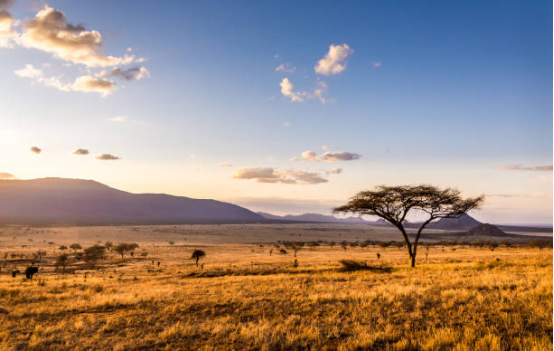
When talking about Africa, many people’s first reaction is animals. Yes, elephants, zebras, herds of antelopes, and the endless golden grasslands. In Kenya, this scene is not just a beautiful fantasy on a postcard, but a real daily occurrence.
The days of wild animals are also mixed with the breath of humans
Here, animals and people are not clearly separated. Giraffes will slowly cross the dusty path in front of you, chewing on acacia trees, as if they don’t take you seriously at all. Not only national parks, but many protected areas are also unfenced, and this kind of “coexistence” seems both casual and real. In “Risaf” – a place that means both “protected area” and “countryside”, the lives of people and animals have been intertwined for hundreds or even thousands of years, and no one finds it strange.
In Ngong, a suburb of Nairobi, you can sometimes see giraffes strolling the streets at dusk, as if they were gods who had strayed into the city. On the highway to the west, baboons roam in groups, sometimes making faces at you. Warthogs, antelopes and even zebras – they never give in to the city, they just exist naturally.
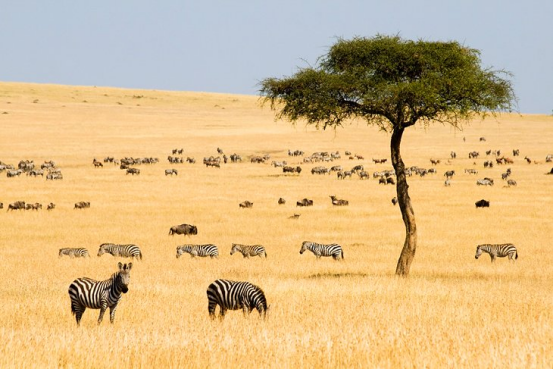
The offensive and defensive tug-of-war between villagers and monkeys
Of course, not all relationships between humans and animals are so harmonious. Monkeys, for example, are not very popular. In places like Kapuso, Kesup, and Nandi, monkeys specifically target corn. They eat it before it is ripe, and they like the milky white, half-ripe corn. They eat it so fast and so fiercely that they can destroy an entire field in three to five days.
Therefore, at 5 a.m., the villagers have already started “standing guard” – carrying sticks, knocking buckets, and loading slingshots, just like a traditional “monkey-driving ceremony”. These monkeys are not stupid, especially the colobus monkeys and green long-tailed monkeys, which are as agile as if they have practiced light kung fu. The young people in Kelio Valley have become accustomed to this “mission” and regard it as a kind of intergenerational inheritance.
What’s even more outrageous is that during the dry season, monkeys would sneak into the school dormitories to look for food. If you forgot to close the window, when you returned, you might see books and half-eaten bread crumbs all over the floor. These “raids” forced the children to predict the monkeys’ movements more accurately than the weather forecast.
The story of the bird, the dignity of the chicken
If monkeys bring chaos, then birds are synonymous with elegance and color. Every year, migratory birds fly to Kenya to spend the winter, with colorful wings and strange calls, some of which even sound like they are beating a rhythm. The purple-breasted scorpionfish, with its electric blue feathers, has become the dream bird of many photographers.
The national bird in the hearts of the locals? Not the eagle, not the stork, but the chicken. Especially the Lucia people, they are very fond of the free-range Chiegi chickens. These chickens are indispensable in celebrations, and sometimes a chicken can even represent the face of a family. Raising chickens is no longer a joke, but an industry. Many families rely on them to make a living and raise children.
From “Seagrass Land” to “Bald Land”: Nature in Place Names
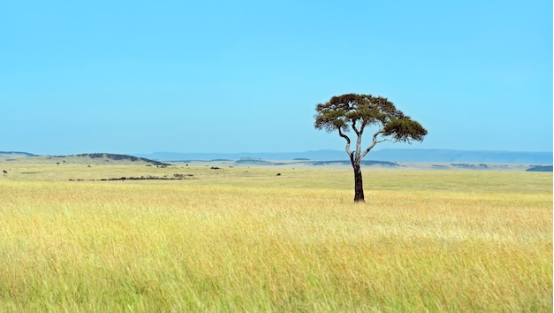
When you walk in the Kenyan countryside, almost every place name you hear is related to nature. “Emsea” means the land of seaweed; “Kipchebos” means that the sun is scorching and there is no grass. People use these words to name the land, which is a memory and a condensation of life experience.
The Emotional Legend of Cow and Man
In northern Kenya, there is a herder tribe called the Turkana. They raise cattle, but cattle are not just cattle, they are members of the family, wealth, and spiritual sustenance.
Social anthropologist Vigdis Broch-Du once recorded such a story: Her friend Eamon owned a special bull named Lokri Mayen. It had brown and white fur, and its horns looked like swirling clouds. In the year of drought, Lokri Mayen was almost unable to survive, so Eamon spent almost all her money to bring it to the highlands, fed it grass by hand, supplemented it with vitamins, and even sang to it every day.
You may find it hard to understand, but he really treated the cow as a family member. He even let the cow sleep in the house while he sent the child to his grandmother’s house to avoid the cold. The cow survived and regained its aphrodisiac instinct. Eamon was so proud that he said his name would be passed down along with the cow’s.
But the story always has a twist. A year later, another drought hit. This time, his wife was no longer silent. The children needed food, and the well was running dry. In the end, Emon sold Lokorimyan. That day, he didn’t talk to anyone, his eyes were empty, as if he had lost his soul.
This story of a man and a cow is not just about personal emotions, it is a microcosm of a philosophy of life. In this scorching land, man is not the master of nature, but the people of nature – living together with the wind, grass, monkeys and cows, sharing the joys and sorrows.