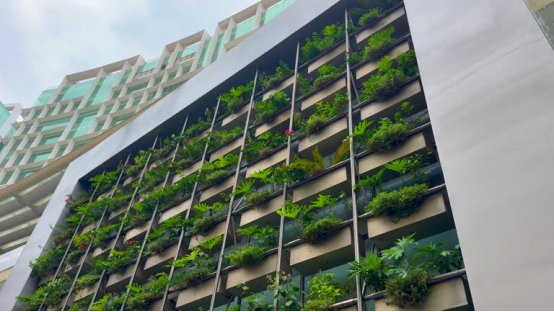
Educational notice: This site provides independent educational information only. Content about disasters, safety, health, survival, weapons, ecology, or environmental risk is not professional, medical, legal, engineering, emergency-response, or safety advice. Consult qualified professionals and official local authorities before making decisions.
Understanding the Architecture of Vertical Greening Systems
Vertical greening systems, commonly referred to as living walls or green facades, represent a sophisticated intersection of structural engineering, botany, and fluid dynamics. These systems are not merely aesthetic enhancements; they are highly functional architectural elements designed to mitigate the urban heat island effect, improve local air quality, and provide substantial acoustic and thermal insulation. To successfully implement a vertical greening system, one must first understand the fundamental structural requirements and the ecological microclimates they create against building envelopes.
The foundation of any successful living wall lies in its structural integrity. Unlike traditional horizontal landscaping, vertical systems must combat gravity, wind shear, and the fluctuating weight of water saturation. Engineers must calculate both the dead load (the weight of the hardware, growing medium, and the plants themselves) and the live load (the additional weight of water during peak irrigation and potential dynamic wind loads). A failure to accurately assess these metrics can lead to catastrophic structural failures, compromising both the building facade and public safety.
Types of Vertical Greening Frameworks
There are generally two primary categories of vertical greening systems: green facades and living walls. Green facades typically involve climbing plants rooted in the ground or large planter boxes, utilizing a trellis or cable system to ascend the wall. Living walls, however, are far more complex. They involve modular panels, geotextile felts, or specialized structural containers affixed directly to the wall, supporting a diverse array of flora across the entire vertical plane. Each system demands a unique approach to waterproofing, root management, and nutrient delivery.
- Modular Panel Systems: These consist of pre-grown panels containing a specialized lightweight substrate. They offer instant aesthetic impact and are highly customizable, but require robust structural backing and precise irrigation calibration.
- Geotextile Felt Systems: Pioneered by Patrick Blanc, these systems utilize layers of synthetic felt with pockets for plants. They are incredibly lightweight and allow for organic, flowing designs, but demand continuous hydroponic fertigation as they lack traditional soil buffers.
- Trellis and Cable Networks: Ideal for aggressive climbers like Ivy or Wisteria. While less mechanically complex, they require careful long-term pruning to prevent structural damage to the primary building facade.

Core Design Principles and Plant Selection Matrix
Designing a sustainable vertical greening system requires an exhaustive analysis of the site’s environmental variables. The microclimate of a vertical surface can vary drastically from the ground level. Factors such as solar radiation, wind velocity, ambient temperature fluctuations, and shading from adjacent structures must be mapped meticulously. This environmental mapping dictates the zoning of the living wall, ensuring that specific plant species are placed in locations where their biological needs align with the localized microclimate.
Plant selection is arguably the most critical variable in the longevity of a living wall. A common critical error in vertical garden design is selecting flora based solely on aesthetic appeal rather than environmental suitability. The upper sections of an exterior living wall are typically subjected to intense solar radiation and high wind speeds, leading to rapid desiccation. Conversely, the lower sections often experience deep shade and higher moisture retention. Therefore, a successful design employs a gradient planting strategy.
Strategic Zoning and Botanical Selection
To ensure uniform growth and minimize plant mortality, designers must categorize the wall into distinct ecological zones. High-altitude, sun-drenched zones require drought-tolerant, wind-resistant species such as sedums, grasses, and specific perennials. Mid-zones can support a wider variety of broadleaf evergreens and flowering plants. The base of the wall, often shadowed and damp, is ideal for ferns, hostas, and shade-loving ground covers.
| Vertical Zone | Environmental Conditions | Recommended Plant Typologies | Key Survival Traits |
|---|---|---|---|
| Upper Canopy (Top 20%) | High UV, High Wind, Rapid Drying | Sedums, Festuca, Phlox subulata | Drought tolerance, deep root anchoring, low transpiration rates |
| Mid-Section (Middle 60%) | Moderate Light, Variable Wind | Heuchera, Carex, Liriope, Campanula | Adaptability, moderate moisture retention, robust foliage |
| Lower Base (Bottom 20%) | Low Light, High Moisture, Cool | Polystichum, Asplenium, Hedera helix | Shade tolerance, susceptibility to root rot prevention, high humidity preference |

Advanced Irrigation and Moisture Management
Water management is the lifeblood of any vertical greening system. Because vertical gardens possess a significantly reduced substrate volume compared to traditional gardens, their capacity to retain moisture is inherently limited. Consequently, automated, precision irrigation systems are non-negotiable. These systems must deliver the exact volume of water and nutrients required by the plants without oversaturating the substrate, which could lead to root asphyxiation, fungal pathogens, and excessive weight loading on the structural framework.
Modern vertical greening systems rely on pressure-compensating drip irrigation lines woven horizontally throughout the supporting structure. These lines ensure that the water pressure remains consistent from the top of the wall to the bottom, preventing the lower plants from drowning while the upper plants dehydrate. Furthermore, these systems are frequently integrated with fertigation units—injectors that automatically mix liquid fertilizers into the water supply at precise parts-per-million (PPM) ratios, ensuring optimal nutrient delivery in hydroponic or semi-hydroponic setups.
Waterproofing and Drainage Architecture
Protecting the host building from moisture damage is a paramount engineering concern. Before any greening infrastructure is installed, a robust, multi-layered waterproofing membrane must be applied to the structural wall. This is typically followed by an air gap—a ventilated space that prevents condensation build-up and allows the building envelope to breathe. At the base of the system, a meticulously designed drainage gutter captures excess runoff. This runoff can either be directed to the municipal storm drain or, in more sustainable designs, filtered, sterilized via UV light, and recirculated back into the irrigation reservoir.
- Pressure-Compensating Emitters: Essential for vertical gradients, ensuring uniform water distribution regardless of elevation or gravitational pull.
- Moisture Sensors: Integrated smart sensors embedded in the substrate that communicate with the irrigation controller, triggering watering cycles only when volumetric water content drops below a specific threshold.
- Redundant Drainage Pathways: Designing fail-safes to prevent overflow during extreme weather events or system blockages, protecting the building facade from water ingress.

Comprehensive Maintenance and Troubleshooting Protocols
The assumption that vertical greening systems are “set it and forget it” installations is a dangerous misconception. Long-term viability requires a rigorous, proactive maintenance schedule executed by trained professionals. Vertical gardens are highly dynamic, living ecosystems that evolve rapidly. Without regular intervention, aggressive plant species can choke out delicate ones, irrigation emitters can calcify and clog, and pest infestations can spread with devastating speed across the contiguous foliage.
Routine maintenance encompasses several critical tasks. Pruning is essential not only for aesthetic shaping but for maintaining the structural integrity of the wall; overgrown plants catch more wind and add unnecessary weight. Additionally, deadheading spent flowers and removing necrotic tissue prevents the proliferation of botrytis and other fungal diseases. Technicians must also perform regular visual inspections of the hardware, checking for corrosion on brackets, tension loss in cables, and degradation of the substrate or felt pockets.
Nutrient Flushing and Pest Management
Over time, salts from fertilizers and municipal water supplies can accumulate within the vertical substrate, leading to nutrient lockout and root burn. To counteract this, a systematic flushing protocol must be implemented quarterly, utilizing pure water to leach accumulated salts from the system. Concurrently, Integrated Pest Management (IPM) strategies must be deployed. Because living walls are often located in high-traffic urban areas or indoor environments, the use of harsh chemical pesticides is generally prohibited. Instead, maintenance teams rely on biological controls, such as introducing predatory insects (e.g., ladybugs, predatory mites) and applying organic horticultural oils to manage aphid, mealybug, and spider mite populations.
- Quarterly Irrigation Audits: Physically inspecting and cleaning every drip emitter, flushing the mainlines, and recalibrating the fertigation injector to match seasonal growth rates.
- Targeted Biomass Reduction: Selectively pruning aggressive species to maintain the original design intent and ensure adequate light penetration to lower-canopy plants.
- Winterization Procedures: In cold climates, draining external irrigation lines to prevent freeze-thaw pipe bursts, and applying anti-desiccant sprays to evergreen foliage to protect against harsh winter winds.
Frequently Asked Questions (FAQ)
- How often does a vertical greening system need to be watered?
- Watering frequency is highly dependent on the system type, climate, and season. Substrate-based modular systems may require watering once a day or every other day, while hydroponic felt systems often require multiple short watering cycles daily (e.g., 3-5 minutes every few hours) to maintain constant moisture without oversaturation.
- Can vertical greening systems be installed indoors?
- Absolutely. Indoor living walls are highly popular for improving indoor air quality and biophilic design. However, they almost always require supplemental artificial lighting (specifically full-spectrum LED grow lights) to ensure plants receive adequate Photosynthetically Active Radiation (PAR) for survival, as natural indoor light is rarely sufficient.
- What is the typical lifespan of a living wall?
- With proper structural engineering and diligent, professional maintenance, the hardware and framework of a vertical greening system can last 15 to 25 years. The plants themselves are dynamic; while many perennials will thrive for years, it is normal to expect a 5% to 10% plant replacement rate annually to keep the wall looking lush and full.
- How do you handle freezing temperatures with exterior living walls?
- In freezing climates, plant selection is limited to highly hardy, native evergreens and dormant perennials. The irrigation system must be completely blown out and winterized before the first hard freeze to prevent pipe rupture. The plants rely on natural precipitation and the moisture retained in the substrate throughout the winter months.