Educational notice: This site provides independent educational information only. Content about disasters, safety, health, survival, weapons, ecology, or environmental risk is not professional, medical, legal, engineering, emergency-response, or safety advice. Consult qualified professionals and official local authorities before making decisions.
The Phenomenon of Oceanic Bird Migration
The vast expanse of the world’s oceans presents one of the most challenging environments for life, yet countless bird species undertake incredible journeys across these watery frontiers. Oceanic bird migration is not merely a seasonal movement; it is a testament to extraordinary evolution, resilience, and navigational prowess. These birds spend the majority of their lives at sea, returning to land primarily for breeding. Their migratory paths often span thousands of kilometers, crossing hemispheres and enduring extreme weather conditions. Understanding these epic journeys offers profound insights into avian biology, ecological interconnectedness, and the delicate balance of marine ecosystems.
Defining Oceanic Migrators and Their Habitats
Oceanic migrators are a specialized group of birds, distinct from coastal or terrestrial species, that are supremely adapted to life on the open ocean. Their habitats range from polar seas to tropical waters, often following food sources or returning to specific breeding islands. These birds exhibit unique physiological and behavioral adaptations that allow them to thrive in an environment where fresh water is scarce, food is widely dispersed, and land is a distant memory for extended periods. Their reliance on marine resources makes them crucial indicators of ocean health.
- Pelagic Lifestyle: Birds like albatrosses, petrels, and shearwaters spend years without touching land, resting on the water’s surface or soaring tirelessly.
- Global Distribution: Migratory routes often connect distant continents, linking breeding grounds in one hemisphere with feeding grounds in another.
- Ecological Role: They play a vital role in marine food webs, consuming fish and invertebrates while also distributing nutrients across vast areas.

Frigatebirds: Masters of Aerial Endurance and Non-Stop Flight
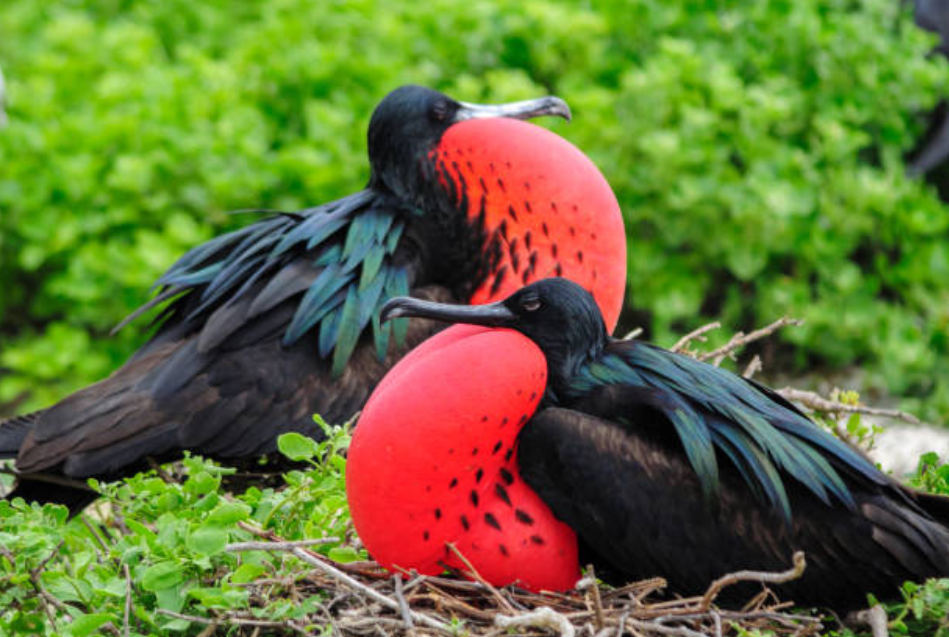
Among the most astonishing feats of avian endurance is the frigatebird’s ability to remain aloft for weeks, even months, without landing. These magnificent birds, often dubbed “pirates of the sky” due to their kleptoparasitic feeding habits, possess an unparalleled mastery of aerial dynamics. Their unique physiology and flight strategies allow them to exploit atmospheric conditions to their advantage, minimizing energy expenditure and maximizing time spent foraging over the open ocean. A scientific study published in Science revealed that frigatebirds can fly continuously for over a month, covering thousands of kilometers without a single stop.
The Anatomy of Endless Flight: Adaptations for Soaring
Frigatebirds (family Fregatidae) are characterized by their enormous wingspan relative to their body weight, deeply forked tails, and long, hooked beaks. Their bones are exceptionally light, making up only about 5% of their total body mass, which is less than any other bird. Unlike many other seabirds, their feathers are not waterproof, meaning they cannot land on the water for extended periods without risking hypothermia. This structural limitation necessitates their continuous aerial existence over the ocean.
- Wingspan and Aspect Ratio: Their wings are long and narrow, providing an optimal aspect ratio for efficient soaring and gliding. This design allows them to generate significant lift with minimal drag.
- Dynamic Soaring: Frigatebirds masterfully employ dynamic soaring, a technique also used by albatrosses, where they gain energy by repeatedly crossing the boundary between air masses of different velocities (wind shear) just above the ocean surface.
- Thermal Exploitation: They are adept at riding thermals – columns of rising warm air – which lift them to high altitudes (up to 4,000 meters). From these heights, they can glide for vast distances, slowly descending before catching another thermal.
Sleep and Energy Conservation Strategies During Flight
The question of how frigatebirds manage sleep during their month-long flights has long puzzled scientists. Research indicates that they engage in a form of “unihemispheric slow-wave sleep” (USWS), where one half of the brain sleeps while the other remains alert. This allows them to maintain flight control and situational awareness while partially resting. Furthermore, their energy conservation extends beyond sleep, incorporating highly efficient flight mechanics.
- Micro-Sleeps: Studies have shown frigatebirds taking brief “micro-naps” lasting only seconds, often while soaring high above the ocean, utilizing the stability of high-altitude flight to maximize rest periods.
- Minimizing Flapping: They flap their wings very infrequently, relying almost entirely on passive soaring. Flapping flight is energetically costly, so minimizing it is crucial for long-duration journeys.
- Optimal Flight Paths: By tracking weather patterns and atmospheric conditions, frigatebirds can choose flight paths that provide the most favorable winds and thermals, significantly reducing the energy required to cover long distances.

Shearwaters: Navigating the Global Ocean with Epic Migrations
Shearwaters, belonging to the family Procellariidae, are renowned for their incredible trans-equatorial migrations, covering immense distances between their breeding and non-breeding grounds. Species like the Sooty Shearwater undertake one of the longest animal migrations known, a figure-eight journey that can span over 64,000 kilometers annually. These birds exemplify oceanic navigation and endurance, spending most of their lives traversing the high seas, only returning to land to breed in dense colonies.
The Sooty Shearwater’s Record-Breaking Journey
The Sooty Shearwater (Ardenna grisea) is perhaps the most famous example of a long-distance oceanic migrator. Breeding in the Southern Hemisphere (e.g., New Zealand, Chile, Falkland Islands) during the austral summer, they then embark on a colossal migration to the North Pacific and North Atlantic oceans to feed during the boreal summer. This journey allows them to exploit rich food sources in both hemispheres, effectively experiencing two summers a year.
- Figure-Eight Route: Their migration path is a complex figure-eight loop, allowing them to utilize prevailing winds and ocean currents efficiently. They travel up the Pacific and Atlantic coasts of the Americas and then return across the central oceans.
- Foraging Strategies: Sooty Shearwaters are pursuit divers, plunging into the water to catch small fish, squid, and krill. Their ability to locate widely dispersed prey across vast ocean expanses is critical to their survival.
- Population Decline: Despite their incredible endurance, Sooty Shearwater populations have faced significant declines, primarily due to bycatch in fisheries, plastic pollution, and climate change affecting food availability.
Navigational Prowess and Challenges of Oceanic Life
Shearwaters possess remarkable navigational abilities, guiding them across thousands of miles of seemingly featureless ocean. While the exact mechanisms are still being researched, it is believed they use a combination of cues, including the Earth’s magnetic field, celestial bodies (sun and stars), and olfactory cues (smell) to find their way. However, their oceanic life comes with numerous challenges.
- Magnetic Sense: Like many migratory birds, shearwaters are thought to possess a magnetoreception sense, allowing them to perceive the Earth’s magnetic field as a compass.
- Olfactory Navigation: They can detect specific scents emitted by plankton blooms or landmasses, which can guide them towards rich feeding grounds or their breeding colonies.
- Storm Endurance: Shearwaters are built to withstand severe oceanic storms, riding gale-force winds and enduring turbulent seas, though extreme weather events can still take a heavy toll.
- Predation and Competition: While at sea, they face predation from large fish and marine mammals, and competition for food resources.

Shared Adaptations for Sustained Oceanic Flight
While frigatebirds and shearwaters employ different flight strategies and occupy slightly different niches, they share a suite of remarkable adaptations that enable their sustained oceanic journeys. These adaptations highlight convergent evolution, where similar environmental pressures lead to similar solutions in unrelated species. From specialized diets to efficient water management, these birds are paragons of biological engineering tailored for an extreme marine existence.
Physiological and Morphological Features for Endurance
Both groups of birds exhibit physical traits optimized for long-distance flight and survival in a saline environment. Their bodies are streamlined, their feathering is dense (though not always waterproof for frigatebirds), and their metabolic rates are finely tuned for energy efficiency.
- Efficient Metabolism: Oceanic birds often have a highly efficient metabolism that allows them to extract maximum energy from their diet and store fat reserves for long flights.
- Salt Glands: To cope with drinking seawater or consuming salty prey, both frigatebirds and shearwaters possess specialized salt glands located above their eyes. These glands excrete excess salt through a concentrated saline solution, maintaining their internal osmotic balance.
- Aerodynamic Design: Their wing shapes, whether for dynamic soaring (albatrosses, shearwaters) or thermal soaring (frigatebirds), are perfectly adapted for minimizing drag and maximizing lift in oceanic winds.
Behavioral Strategies for Energy Conservation
Beyond physical adaptations, these birds employ sophisticated behavioral strategies to conserve energy, navigate vast distances, and find sustenance in a challenging environment. These behaviors are often learned and refined over their long lifespans.
- Wind Exploitation: Both groups are masters of using wind patterns – be it dynamic soaring in shearwaters or thermal riding in frigatebirds – to reduce the need for energetically expensive flapping flight.
- Social Foraging: While often solitary during migration, some species may gather in large flocks at rich feeding grounds, indicating collective foraging strategies that can enhance food discovery.
- Breeding Site Fidelity: Returning to the same breeding sites year after year, often remote islands, demonstrates an incredible spatial memory and navigational precision, minimizing energy spent searching for suitable nesting locations.

The Science of Tracking and Understanding Migratory Feats
Modern technology has revolutionized our understanding of oceanic bird migration. Satellite tags, geolocators, and GPS devices now allow scientists to track individual birds with unprecedented detail, revealing the intricate routes, speeds, and behavioral patterns of these elusive travelers. These technological advancements provide crucial data for conservation efforts and shed light on previously unknown aspects of avian biology.
Technological Innovations in Avian Tracking
Early methods of bird tracking relied on banding and re-capture, providing limited data points. Today, miniaturized electronic devices offer continuous, real-time, or archival data, transforming our ability to study birds in their natural, often remote, habitats.
- Satellite Telemetry: Small transmitters attached to birds send signals to satellites, providing precise location data. This technology is particularly useful for large birds and offers real-time tracking capabilities, as seen in studies of frigatebirds.
- Geolocators: These tiny devices record ambient light levels, which can then be used to estimate latitude and longitude. They are retrieved when the bird returns to its breeding site, providing detailed migration maps, commonly used for shearwaters due to their smaller size.
- GPS Loggers: Offering even higher precision than satellite tags, GPS loggers record exact coordinates at set intervals. Data is typically retrieved upon the bird’s return, providing fine-scale movements and foraging patterns.
- Accelerometer Tags: These tags measure movement and activity levels, giving insights into flight effort, foraging dives, and even sleep patterns during migration.
Insights Gained from Tracking Data
The wealth of data collected from tracking studies has unveiled astonishing details about oceanic bird migration, challenging previous assumptions and opening new avenues for research. These insights are vital for understanding the ecological roles of these birds and the threats they face.
- Unprecedented Flight Durations: Tracking confirmed the month-long flights of frigatebirds and the multi-hemispheric journeys of shearwaters, pushing the boundaries of known avian endurance.
- Optimal Migration Corridors: Data reveals that birds often follow specific, highly efficient corridors, exploiting prevailing winds and oceanographic features to minimize energy expenditure.
- Foraging Hotspots: Tracking helps identify critical marine areas where birds aggregate to feed, highlighting important biodiversity hotspots that require protection.
- Response to Environmental Change: By monitoring changes in migratory routes or timings, scientists can assess the impact of climate change, ocean warming, and shifts in food availability on bird populations.

Conservation Challenges and Future Outlook for Oceanic Birds
Despite their incredible adaptations and endurance, oceanic birds like frigatebirds and shearwaters face numerous and growing threats in the modern world. Human activities, ranging from industrial fishing to climate change, are exerting immense pressure on their populations and habitats. Understanding these challenges is the first step towards developing effective conservation strategies to ensure the survival of these magnificent long-distance flyers.
Major Threats to Oceanic Bird Populations
The threats to oceanic birds are complex and often interconnected, impacting them at various stages of their life cycle, from breeding colonies to vast migratory routes. Addressing these issues requires a multi-faceted approach involving international cooperation.
- Bycatch in Fisheries: One of the most significant threats is accidental capture in fishing gear, particularly longlines and trawl nets. Birds pursuing bait or discarded fish often get hooked or entangled, leading to drowning.
- Plastic Pollution: Ingesting plastic debris, mistaking it for food, is a widespread problem. Plastic fills their stomachs, leading to starvation, and can also cause internal injuries or blockages.
- Climate Change: Rising sea temperatures, ocean acidification, and altered current patterns impact the distribution and abundance of their prey species, leading to food shortages. Increased frequency and intensity of storms also pose a direct threat.
- Habitat Degradation: On breeding islands, introduced predators (rats, cats) decimate eggs and chicks, while human development and disturbance reduce available nesting sites.
- Oil Spills: Large-scale oil spills can be catastrophic, coating feathers, impairing flight and insulation, and leading to poisoning through ingestion during preening.
Strategies for Protecting Our Oceanic Aviators
Effective conservation requires a combination of policy changes, technological solutions, habitat protection, and public awareness. International agreements and local community involvement are both crucial for success.
- Fisheries Management: Implementing bird-friendly fishing practices, such as weighted lines, streamer lines to deter birds, and night setting, can significantly reduce bycatch. Regulations on fishing quotas and areas are also vital.
- Marine Protected Areas (MPAs): Establishing and enforcing MPAs in critical foraging grounds and migratory corridors can provide safe havens for birds and their prey.
- Plastic Reduction Initiatives: Global efforts to reduce plastic production, improve waste management, and promote recycling are essential to curb ocean plastic pollution.
- Climate Change Mitigation: Addressing the root causes of climate change through reduced greenhouse gas emissions is fundamental to protecting all marine life, including oceanic birds.
- Island Restoration: Eradicating invasive species from breeding islands and restoring native vegetation can help secure crucial nesting habitats.
- Public Awareness and Citizen Science: Educating the public about the importance of oceanic birds and involving citizens in monitoring and reporting can foster a sense of stewardship.
Frequently Asked Questions (FAQ)
- Q1: How do frigatebirds manage to stay in the air for so long without landing?
- Frigatebirds are masters of energy-efficient flight. They possess extremely light bones and long, narrow wings that allow them to exploit thermals (columns of rising warm air) and dynamic soaring (gaining energy from wind shear) over the ocean. They minimize flapping, which is energetically costly, and can even engage in brief “micro-naps” during high-altitude glides, allowing them to rest one half of their brain while remaining airborne.
- Q2: What is the longest migration undertaken by a shearwater?
- The Sooty Shearwater (Ardenna grisea) is famous for one of the longest animal migrations, undertaking a figure-eight journey that can cover over 64,000 kilometers (nearly 40,000 miles) annually. They breed in the Southern Hemisphere and migrate to the North Pacific and North Atlantic to feed, effectively experiencing two summers each year.
- Q3: How do oceanic birds navigate across vast, featureless oceans?
- Oceanic birds utilize a sophisticated combination of navigational cues. These include the Earth’s magnetic field (magnetoreception), celestial bodies such as the sun and stars, and olfactory cues (smell) to detect specific scents from plankton blooms or distant landmasses. Their remarkable spatial memory also helps them return to the same breeding sites year after year.
- Q4: What are the main threats to the survival of frigatebirds and shearwaters?
- Both frigatebirds and shearwaters face significant threats, primarily from human activities. These include bycatch in commercial fisheries, plastic pollution (ingestion and entanglement), habitat degradation at breeding sites (due to invasive species or human development), and the impacts of climate change, such as altered prey distribution and increased storm intensity.
- Q5: What is the role of salt glands in oceanic birds?
- Salt glands are specialized organs located above the eyes of oceanic birds. They are crucial for osmoregulation, allowing these birds to excrete excess salt from their bodies. This enables them to drink seawater or consume salty prey without becoming dehydrated, maintaining their internal fluid balance in a marine environment.