Educational notice: This site provides independent educational information only. Content about disasters, safety, health, survival, weapons, ecology, or environmental risk is not professional, medical, legal, engineering, emergency-response, or safety advice. Consult qualified professionals and official local authorities before making decisions.
There is a kind of silence, not emptiness, but waiting.
The Kazakh steppe has been waiting like this for thousands of years.
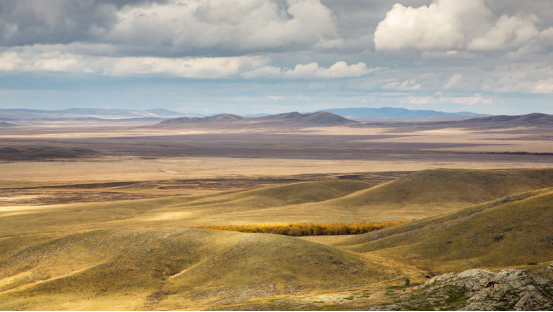
It is not in a hurry to be understood. Its grass is not as tough as Mongolia’s, nor as lush as Ukraine’s. It is thinner and softer, more like a strand of hair that a mother accidentally dropped, lying across the backbone of this Eurasian continent, growing quietly and slowly.
There is no forest to protect the place, only low hills and gentle slopes between the distant sky, just like an unfinished long tune, which stops halfway through with sobs. The singer no longer sings loudly, but continues the unfinished sentence deep in his heart.
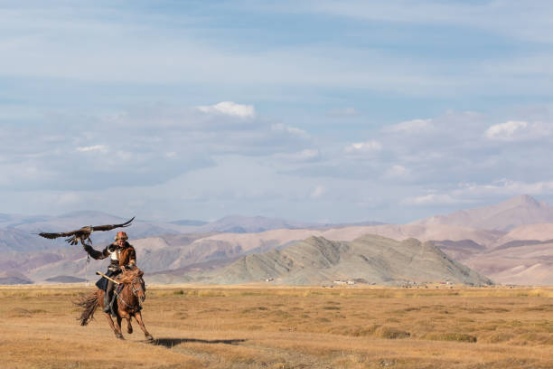
The rider on horseback doesn’t speak.
Kazakh herdsmen don’t often laugh. They speak in low voices and always look into the distance, not because there is anything there, but because that’s where the wind comes from.
The wind is also part of the rhythm. It will whisper in your horse’s ear, sometimes it is a sign of a rainstorm, sometimes it is the shadow of a wolf pack in the distance. The wind is not scary, what really makes people awe is the grassland’s tolerance of time. The path that was arranged thousands of years ago is still the same today; the grandfather’s hand already knows the answer to which valley to pitch the tent.
If you ask the Kazakh steppe about its shape, it may answer you: like a long tune, dragging on for a very long time, not high, not hurried, just singing on and on. Singing to the sky, singing to the earth, and also singing to the children who are gradually being sucked away by the city.
The camel bells haven’t sounded yet, but the singing has arrived
On this grassland, caravans once passed by like shooting stars. Silk, glass, horse gear, spices, bumped along the way from east to west. Camel bells were the beat, and songs were the heartbeat.
Now the road has long been blurred, the camel bells have also fallen silent, and only a few old people are still searching for the footprints of their ancestors in the songs.
“Küy” – a traditional Kazakh instrumental music – is like a sigh played on the grassland, not born for dancing, not played for excitement. It is like the earth’s own language, which cannot be heard, but its texture can be felt every time the wind blows.
The grassland knows your unspoken thoughts
When a person walks into this land, it is hard not to become quiet. It is not that the sound from the outside world becomes smaller, but that the echo in the heart begins to grow louder.
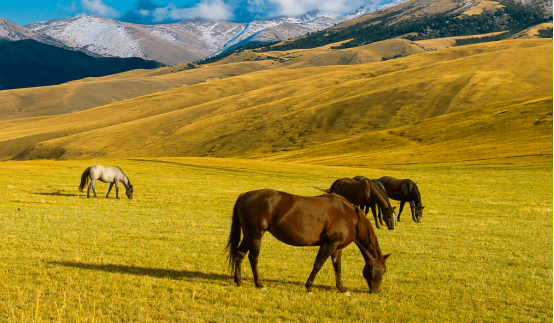
You sit on the grass slope at dusk, watching the sun fall from the low sky, as if the whole sky is falling to the ground. At that moment, you will not think of WeChat, nor will you open the news. You just want to listen to how the wind blows through the grass tips and gently brushes your sleeves.
The grassland does not ask you to sing, nor does it care where you come from. It is just there, quietly absorbing your fatigue and hesitation in every moment when you are silent.
Some grasslands don’t say love, only leave the aftertaste
The Kazakh steppe will not try to keep you like a lover, it is more like a friend who understands your silence.
When you leave, it won’t be disturbed – the grass will continue to grow, the eagle will still fly. But when you hear a piece of song without words somewhere else one day, it may be its reply to you, a letter without a postmark, sent from the depths of silence.