Educational notice: This site provides independent educational information only. Content about disasters, safety, health, survival, weapons, ecology, or environmental risk is not professional, medical, legal, engineering, emergency-response, or safety advice. Consult qualified professionals and official local authorities before making decisions.
The Evolutionary Arms Race: Why Prey Doesn’t Always Become Unpalatable
One of the most persistent questions in evolutionary biology is why all prey species—both flora and fauna—have not simply evolved to be highly toxic or utterly unpalatable. On the surface, developing a foul taste or lethal toxicity seems like the ultimate defense mechanism against predation. However, evolution is not a straightforward trajectory toward invulnerability; it is a complex economy of energy allocation, ecological trade-offs, and relentless co-evolutionary arms races.
The High Energy Cost of Chemical Defenses
Producing toxins, alkaloids, or specialized unpalatable compounds requires a massive metabolic investment. Organisms have a finite pool of energy derived from their environment, which must be partitioned among growth, reproduction, and defense. If a plant or animal diverts too much energy into synthesizing complex chemical deterrents, it invariably compromises its reproductive output or physical growth rate.
- Metabolic Trade-offs: Species that invest heavily in toxicity often grow much slower than their non-toxic counterparts, making them vulnerable to environmental changes or out-competition for resources.
- Resource Allocation: Synthesizing defensive chemicals requires specific nutrients, such as nitrogen, which are often scarce in natural environments.
- Autotoxicity Risks: Organisms must also evolve internal mechanisms to prevent their own toxins from poisoning their cellular structures, adding another layer of biological expense.
Because of these immense costs, many species rely on alternative, less metabolically draining survival strategies, such as rapid reproduction rates, camouflage, or physical speed. In many ecosystems, simply out-breeding the rate of predation is a far more efficient evolutionary strategy than becoming universally unpalatable.
The Red Queen Hypothesis and Co-Evolution
Even when a species does manage to evolve a potent chemical defense, the evolutionary narrative does not end there. The “Red Queen Hypothesis” dictates that species must constantly adapt and evolve not just for reproductive advantage, but simply to survive against ever-evolving opposing organisms. When a prey species becomes toxic, predator species face intense selective pressure to develop biological resistances or specialized digestive enzymes to neutralize those specific toxins.
This creates a perpetual biological arms race. For instance, the monarch butterfly evolved to sequester toxic cardenolides from milkweed plants, making it unpalatable to most birds. However, certain predators, like the black-headed grosbeak, have evolved specific genetic mutations that render them immune to these toxins, allowing them to feast on the monarchs regardless. Thus, total unpalatability is an evolutionary illusion; nature always finds a biological workaround.
Mutualism and the Strategy of Being Consumed
In the botanical world, being eaten is not always a negative outcome; in fact, it is often a highly sophisticated reproductive strategy. Many plants have evolved to be explicitly palatable—producing sweet, nutrient-dense fruits—to entice animals into consuming them. This mutualistic relationship ensures seed dispersal across vast geographic areas.
If these plants evolved to be entirely unpalatable, their seeds would simply drop at the base of the parent plant, leading to intense resource competition and localized population collapse. Therefore, palatability is a vital evolutionary tool for genetic proliferation, proving that avoiding consumption is not always the ultimate biological goal.

Mammalian Constraints in the Deep: The Case of Whales and Gills
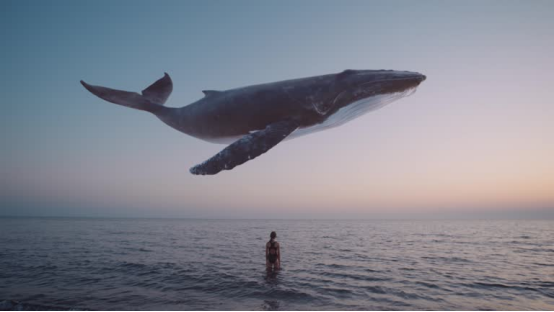
Whales have spent approximately 50 million years adapting to a fully aquatic lifestyle, evolving streamlined bodies, blubber for insulation, and flippers for navigation. Yet, despite their complete reliance on the ocean, they have never evolved gills. This apparent inefficiency—forcing massive marine creatures to continuously surface for air—is a textbook example of evolutionary path dependency and the extraordinary efficiency of the mammalian lung.
Dollo’s Law of Irreversibility
The primary reason whales do not have gills is rooted in Dollo’s Law of Irreversibility, a principle suggesting that an organism cannot return to a previous evolutionary state once it has undergone significant complex transformations. Whales descended from terrestrial, four-legged mammals (like the Pakicetus) that had already fully developed lungs and lost the genetic blueprints for gills hundreds of millions of years prior, when their tetrapod ancestors first left the oceans.
Evolution lacks foresight. It cannot spontaneously generate entirely new, highly complex respiratory organs from scratch. Instead, it modifies existing structures. For whales, evolution heavily modified their nasal passages (migrating them to the top of the head to form blowholes) and vastly increased their lung capacity and oxygen-storing myoglobin in their muscles, rather than attempting the impossible task of re-evolving gills.
The Metabolic Superiority of Mammalian Lungs
Beyond genetic constraints, there is a profound physiological reason why lungs are vastly superior to gills for marine mammals. Whales are endothermic (warm-blooded) creatures with massive brains and highly active lifestyles. Maintaining this internal body temperature in the cold, heat-sapping environment of the ocean requires an astronomical metabolic rate, which in turn demands a massive and rapid supply of oxygen.
- Oxygen Concentration Differences: Air contains roughly 21% oxygen by volume, whereas even the most highly oxygenated seawater contains less than 1% dissolved oxygen.
- Extraction Efficiency: Lungs allow whales to extract large volumes of oxygen rapidly from the atmosphere. If a whale had to rely on gills, it would have to process biologically impossible volumes of water every second just to sustain its baseline metabolic rate.
- Heat Retention: Pumping cold ocean water continuously across highly vascularized gills would result in catastrophic heat loss. Lungs allow whales to keep their respiratory surfaces internalized, preserving vital body heat.
Therefore, surfacing to breathe is not an evolutionary failure; it is the exact mechanism that permits whales to grow to colossal sizes, maintain high intelligence, and dominate the marine food web.

The Vulnerability of Rest: Why Humans Sleep Lying Down
While many ungulates (like horses and cows) sleep standing up, and many predators sleep in semi-alert crouched positions, human beings require a completely prone or supine, deeply vulnerable posture to achieve restful sleep. This biological quirk is deeply intertwined with our evolutionary history, our neurological requirements for REM sleep, and the unique environmental niches our ancestors carved out.
REM Sleep Atonia and Muscle Paralysis
The most critical biological factor dictating the human sleeping posture is our profound need for Rapid Eye Movement (REM) sleep. Humans spend a significantly higher percentage of their sleep cycle in REM compared to most other mammals. REM sleep is crucial for cognitive maintenance, memory consolidation, and emotional regulation—all vital functions for a highly intelligent, social species.
During REM sleep, the human brain induces a state known as REM atonia, a temporary but near-total paralysis of the voluntary skeletal muscles. This mechanism prevents us from physically acting out our vivid dreams, which could lead to severe injury. Because of this complete loss of muscle tone, it is biomechanically impossible for a human to remain standing or perched in a tree while achieving deep REM sleep. A lying down posture provides the necessary passive support for a paralyzed musculoskeletal system.
The Transition from Arboreal to Terrestrial Sleep
The evolutionary shift from sleeping in trees to sleeping on the ground was a monumental turning point for early hominins. Arboreal primates, like chimpanzees, build nests in trees to avoid ground-dwelling predators, but their sleep is often fragmented and lighter due to the constant risk of falling. When early humans transitioned to terrestrial life, they required a new strategy to safely achieve the deep, restorative sleep necessary to fuel their rapidly expanding brains.
- The Mastery of Fire: The domestication of fire was the primary catalyst. Fire provided warmth, light, and a powerful deterrent against nocturnal predators, creating a localized safe zone.
- Social Sentinel Systems: Early humans developed complex social structures where individuals would sleep in shifts. With designated lookouts standing guard, the rest of the tribe could afford the luxury of lying down in deep, vulnerable sleep.
- Shelter Construction: The eventual development of physical shelters further insulated humans from environmental threats, solidifying the prone sleeping posture as the standard human resting state.
Ultimately, lying down to sleep is an evolutionary luxury. It is a posture earned through the mastery of the environment, allowing human neurology to prioritize deep cognitive maintenance over constant physical vigilance.

Culinary Evolution: Crustaceans vs. Arachnids on the Dinner Plate
Crabs and spiders share a striking morphological resemblance. Both are arthropods with jointed legs, exoskeletons, and complex, segmented bodies. Yet, crabs are globally celebrated as a high-end culinary delicacy, while spiders evoke deep-seated disgust and are rarely consumed outside of highly specific regional traditions. This divergence in human perception is driven by a combination of anatomical realities, evolutionary psychology, and historical dietary patterns.
Anatomical Differences and Meat Yield
The most pragmatic reason for this culinary divide lies in the anatomical composition of the creatures themselves. Despite their outward similarities, the internal structures of crustaceans and arachnids are vastly different in ways that directly impact their viability as a food source.
| Biological Trait | Crustaceans (e.g., Crabs, Lobsters) | Arachnids (e.g., Spiders, Scorpions) |
|---|---|---|
| Internal Composition | Dense, fibrous muscle tissue highly concentrated in the claws, legs, and thorax. | Primarily filled with hemolymph (arthropod blood) and digestive organs. |
| Meat Yield | High. A single crab can provide substantial caloric intake. | Extremely low. Negligible muscle mass makes them inefficient for foraging. |
| Dietary Profile | Scavengers and omnivores; meat is rich in sweet amino acids (glycine, arginine). | Obligate carnivores; utilize extra-oral digestion which liquefies internal tissues. |
When a crab is boiled, its dense muscle proteins denature and firm up, creating the sweet, flaky meat humans crave. Conversely, if a spider is cooked, its lack of substantial muscle mass and high fluid content result in a hollow, unappetizing husk. From a purely caloric and foraging efficiency standpoint, early humans had no incentive to hunt spiders when crustaceans offered a vastly superior return on energy investment.
Evolutionary Psychology and Arachnophobia
Beyond the lack of meat, human aversion to eating spiders is deeply hardwired into our evolutionary psychology. Unlike crabs, which are generally confined to aquatic or coastal environments and pose little passive threat to humans, spiders are ubiquitous terrestrial predators. More importantly, many spider species possess potent venoms that were highly dangerous to early hominins.
Evolutionary psychologists propose that arachnophobia is not merely a cultural construct, but an inherited survival trait. Early humans who exhibited an innate disgust and fear of spiders were less likely to be bitten by venomous species, thus surviving to pass on their genes. This biological aversion extends to our palate; our brains instinctively categorize venomous, terrestrial crawlers as a pathogenic or toxic threat, fundamentally suppressing any appetite for them.

Anthropomorphism in Morphology: The “Polite” Posture of Shrimp
When observing a shrimp, humans often project a sense of “politeness” onto the creature, noting its deeply bowed, curved posture and its front appendages tucked neatly beneath its body. This perception is a classic example of anthropomorphism—attributing human characteristics to non-human entities. However, the biological reality of the shrimp’s posture has nothing to do with etiquette; it is a highly specialized morphological adaptation engineered for explosive aquatic survival.
The Caridoid Escape Reaction
The defining “bowed” shape of a shrimp is driven by its primary defense mechanism, scientifically known as the caridoid escape reaction (commonly referred to as “lobstering” or “tail-flipping”). Shrimp live in environments teeming with fast-moving predators, and their survival depends on their ability to execute immediate, erratic evasive maneuvers.
To achieve this, a shrimp’s abdomen is packed with incredibly dense, powerful flexor muscles. When threatened, the shrimp violently contracts these abdominal muscles, snapping its tail inward against its body. This rapid flexion propels the shrimp backward through the water at astonishing speeds, confusing predators. The permanent “hunched” posture is simply the natural resting state of these massive flexor muscles, keeping the biological spring constantly coiled and ready to fire at a millisecond’s notice.
Human Pareidolia and Food Perception
Why do humans interpret this biological spring-loading as “polite”? The answer lies in human pareidolia and our social conditioning. Pareidolia is the psychological phenomenon where the human brain imposes meaningful interpretations—often human faces or postures—on ambiguous visual stimuli. In human body language, a bowed head and tucked arms universally signify submission, respect, and non-aggression.
- Visual Projection: When we see the shrimp’s curved rostrum and tucked pleopods (swimming legs), our brains bypass biological logic and map human social cues onto the animal.
- Culinary Framing: This anthropomorphic perception is often subtly reinforced by culinary presentation. In gastronomy, food that appears non-threatening or submissive is often perceived as more appetizing, making the “polite” shrimp an aesthetically pleasing ingredient on the plate.
Ultimately, the shrimp’s posture is a testament to the brutal efficiency of aquatic evolution, disguised by the quirks of human psychology. What we perceive as a polite bow is, in reality, a finely tuned biological trigger designed to evade the jaws of death.
Frequently Asked Questions (FAQ)
- Why didn’t early mammals that returned to the sea re-evolve gills?
- According to Dollo’s Law of Irreversibility, complex evolutionary traits that are lost over millions of years (like gills in terrestrial ancestors) cannot simply be re-evolved. Furthermore, mammalian lungs are far more efficient at extracting the massive amounts of oxygen required to sustain the high metabolic rates of warm-blooded marine mammals.
- Do any animals besides humans experience REM sleep atonia?
- Yes, nearly all mammals and birds experience REM sleep and the accompanying muscle paralysis (atonia). However, because many animals sleep in secure dens or nests, or have different environmental pressures, their resting postures vary. Humans are unique in our complete reliance on a supine/prone posture due to our evolutionary shift away from arboreal living and our large brain’s requirement for extended REM cycles.
- Are there any cultures that regularly eat spiders?
- Yes, while globally rare, certain cultures do consume arachnids. The most famous example is in Skuon, Cambodia, where fried tarantulas are considered a regional delicacy. However, even in these instances, the spiders are heavily processed (fangs removed, deep-fried) to neutralize venom and alter the texture, confirming that they are not a naturally efficient or inherently palatable food source compared to crustaceans.
- If toxicity is so metabolically expensive, why are some frogs so poisonous?
- Poison dart frogs manage the metabolic cost of toxicity by not synthesizing the toxins themselves. Instead, they sequester highly toxic alkaloids from their diet of specialized ants and mites. This evolutionary loophole allows them to be incredibly toxic without bearing the massive internal energy cost of producing the chemicals from scratch.
- Why do shrimp turn pink when they are cooked?
- Shrimp shells contain a carotenoid pigment called astaxanthin, which is naturally bound to a protein called crustacyanin, making the live shrimp appear translucent, grey, or blue. When exposed to heat, the protein chains denature and release the astaxanthin, revealing its natural, vibrant pink/red color. This chemical reaction has no relation to their posture, but heavily influences their culinary appeal.