Educational notice: This site provides independent educational information only. Content about disasters, safety, health, survival, weapons, ecology, or environmental risk is not professional, medical, legal, engineering, emergency-response, or safety advice. Consult qualified professionals and official local authorities before making decisions.
The Ultimate Guide to the World’s Major Wetland Ecosystems
Often referred to as the “lungs of the Earth” or the “planet’s kidneys,” wetlands are among the most productive and biologically diverse ecosystems in the world. These transitional zones, where land and water meet, provide critical services that support life, regulate our climate, and protect our communities. Despite their immense value, wetlands are disappearing at an alarming rate. This comprehensive guide will take you on a deep dive into the world of wetlands, exploring their fundamental characteristics, touring the globe’s most significant examples, and outlining the urgent need for their conservation.
What Defines a Wetland? Understanding the ‘Kidneys of the Earth’
Before exploring specific locations, it’s crucial to understand what makes a wetland a wetland. It’s more than just wet land. These ecosystems are defined by a unique combination of three core characteristics that create a distinct environment capable of supporting a vast array of specialized life.
The Three Pillars of a Wetland Ecosystem
Every wetland, regardless of its size or location, is identified by the presence of water, specific soil conditions, and adapted vegetation.
- Hydrology (Water): The defining feature is the presence of water, either at the surface or within the root zone, for a significant period. This water saturation is the primary driver that influences the soil, plants, and animal life.
- Hydric Soils (Soil): Wetland soils are distinct because they are formed under saturated, anaerobic (low-oxygen) conditions. This lack of oxygen slows down decomposition, leading to a build-up of organic matter, which is why many wetlands are rich carbon sinks.
- Hydrophytes (Vegetation): Wetlands are home to plants that have special adaptations allowing them to thrive in wet, low-oxygen soil. Plants like cattails, water lilies, and cypress trees are all examples of hydrophytes.
A Global Tour of the World’s Most Vital Wetlands
While thousands of wetlands dot the globe, a few stand out for their sheer size, unparalleled biodiversity, and critical role in the global ecosystem. These are not just landmarks; they are essential life-support systems for the planet.
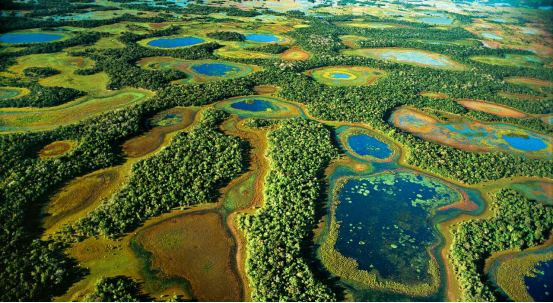
The Pantanal, South America: The Tropical Giant
Covering parts of Brazil, Bolivia, and Paraguay, the Pantanal is the world’s largest tropical wetland. During the wet season, over 80% of this vast alluvial plain is submerged, creating an astonishingly rich habitat. It is a sanctuary for iconic species like the jaguar, capybara, and giant river otter. However, the Pantanal faces growing threats from agricultural expansion, particularly cattle ranching and soy cultivation, which alter its delicate water cycle.
The Congo River Basin, Africa: The Planet’s Second Lung
Second only to the Amazon, the Congo River Basin contains a massive wetland complex, including the recently discovered Cuvette Centrale peatlands. These peatlands alone store an estimated 30 billion metric tons of carbon, equivalent to three years of global fossil fuel emissions. This region is vital for regulating regional climate and is home to forest elephants, gorillas, and bonobos. Deforestation and potential oil exploration pose significant risks to this critical carbon sink.
The Sundarbans, Asia: The Mangrove Fortress
Straddling the border of India and Bangladesh, the Sundarbans is the world’s largest single block of tidal mangrove forest. This UNESCO World Heritage Site is a natural barrier, protecting millions of coastal inhabitants from cyclones and storm surges. It’s also the only mangrove forest inhabited by the Bengal tiger. Sea-level rise, salinity intrusion, and deforestation are existential threats to this unique ecosystem.
The Okavango Delta, Africa: The Desert Oasis
A truly remarkable natural wonder, the Okavango Delta is an inland delta where the Okavango River flows into the Kalahari Desert in Botswana. Instead of reaching the sea, its waters create a labyrinth of channels, lagoons, and islands that support an incredible concentration of wildlife. It’s a critical water source in an arid region and a key destination for wildlife migrations. Water diversion projects upstream and tourism pressure are its primary conservation challenges.
The Critical Importance of Wetland Conservation
The services provided by wetlands are indispensable for both nature and humanity. Protecting them is not just an environmental issue; it is a matter of economic stability, public health, and climate resilience. The degradation of these ecosystems has far-reaching consequences.
Checklist: Key Ecological Services from Wetlands
- Biodiversity Hotspots: Wetlands provide habitat for a disproportionately high number of species compared to their land area.
- Water Purification: They act as natural filters, trapping sediments and removing pollutants, which is why they are called the “Earth’s kidneys.”
- Flood Control: Wetlands function like natural sponges, absorbing and slowly releasing floodwaters, reducing the intensity and damage of floods downstream.
- Carbon Sequestration: Peatlands, a type of wetland, are the most effective carbon sinks on the planet, storing more carbon than all the world’s forests combined.
- Coastal Protection: Mangrove and salt marsh wetlands stabilize shorelines and act as buffers against storm surges and erosion.
- Economic Resources: They provide essential resources for millions of people, including fish, rice, timber, and recreational opportunities.
Comparing Major Wetland Types
The term “wetland” is a broad category. Understanding the different types helps to appreciate their diverse functions and characteristics. Here is a comparison of the four primary types of wetlands.
| Wetland Type | Dominant Vegetation | Water Source | Acidity (pH) |
|---|---|---|---|
| Marsh | Non-woody plants (reeds, cattails, grasses) | Surface water (rivers, lakes) | Neutral to Alkaline |
| Swamp | Woody plants (trees and shrubs) | Surface water, slow-moving streams | Typically Neutral |
| Bog | Spongy sphagnum moss, sedges | Precipitation (rain, snow) | Highly Acidic |
| Fen | Grasses, sedges, reeds | Groundwater | Neutral to Alkaline |
Expert Advice: How You Can Support Wetland Conservation
Protecting these vital ecosystems requires a global effort, but individual actions can make a significant difference. Here are some professional tips for contributing to wetland conservation from wherever you are.
- Educate Yourself and Others: Share knowledge about the importance of wetlands in your community. Understanding their value is the first step toward protection.
- Support Conservation Organizations: Donate to or volunteer with groups like the Ramsar Convention, WWF, or local conservation trusts that work directly on wetland restoration and protection projects.
- Reduce Your Water Footprint: Conserve water at home. Less demand on water sources means more water remains in the ecosystem to sustain wetlands.
- Avoid Harmful Chemicals: Use non-toxic, phosphate-free detergents and cleaners. Runoff from homes and gardens can pollute local waterways and harm wetland habitats.
- Participate in Local Clean-ups: Join or organize efforts to clean up local rivers, streams, and marshes. Removing trash and debris directly improves the health of the ecosystem.
- Advocate for Policy: Encourage local and national governments to enact and enforce strong policies that protect wetlands from development, pollution, and drainage.
Frequently Asked Questions (FAQ)
-
What is the Ramsar Convention?
- The Ramsar Convention on Wetlands is an international treaty for the conservation and sustainable use of wetlands. Signed in Ramsar, Iran, in 1971, it provides a framework for national action and international cooperation. Countries that join the convention designate “Wetlands of International Importance” (Ramsar Sites) and commit to their wise use.
-
Why are wetlands called the “kidneys of the Earth”?
- This nickname comes from their incredible ability to filter and purify water. As water flows through a wetland, the plants and slow-moving water work together to trap sediments, and microorganisms in the soil break down pollutants and absorb excess nutrients. Just as our kidneys filter waste from our blood, wetlands cleanse the water that flows through them.
-
How does climate change affect wetlands?
- Climate change poses a severe threat. Rising sea levels can drown coastal wetlands like salt marshes and mangroves. Changes in precipitation patterns can lead to either the drying out of wetlands or prolonged flooding that alters their character. Additionally, warming temperatures can cause permafrost in northern peatlands to thaw, releasing massive amounts of stored carbon and methane into the atmosphere.
-
Can damaged wetlands be restored?
- Yes, wetland restoration is possible and is a growing field in conservation science. Restoration projects can involve re-establishing natural water flows, removing invasive species, and replanting native vegetation. While restored wetlands can recover many of their original functions over time, it is a complex and often costly process. Protecting existing, healthy wetlands remains the most effective conservation strategy.