Educational notice: This site provides independent educational information only. Content about disasters, safety, health, survival, weapons, ecology, or environmental risk is not professional, medical, legal, engineering, emergency-response, or safety advice. Consult qualified professionals and official local authorities before making decisions.
In the heart of two different continents lie two of our planet’s most breathtaking and vital ecosystems: the Okavango Delta in Africa and the Pantanal in South America. These are not merely swamps or marshes; they are vast, pulsating mega-wetlands, each a theater of life governed by the dramatic ebb and flow of water. The Okavango is a geological anomaly—a river that spills into a desert, creating a lush oasis. The Pantanal is the world’s largest tropical wetland, a sprawling alluvial plain that becomes an immense inland sea. For the wildlife enthusiast and eco-traveler, choosing between them presents a magnificent dilemma. This guide provides an in-depth exploration and comparison of these two natural wonders, dissecting their formation, wildlife, travel experiences, and the conservation battles being fought to protect them.
What Defines a Mega-Wetland? The Ecological Powerhouses of Okavango and Pantanal
Mega-wetlands like the Okavango and Pantanal are defined by their immense scale and their reliance on a seasonal flood pulse. This annual cycle of inundation and recession is the engine that drives their incredible productivity and biodiversity. Unlike static bodies of water, these landscapes are in constant flux, creating a dynamic mosaic of habitats—from deep channels and permanent swamps to seasonal floodplains, grasslands, and forested islands. This environmental dynamism forces wildlife to adapt, leading to spectacular seasonal migrations and concentrations of animals. They are biodiversity hotspots, acting as critical refuges, breeding grounds, and feeding stations for countless species, many of which are rare or endangered. Their global importance cannot be overstated, as they play crucial roles in water purification, flood control, and carbon sequestration.

The Okavango Delta: An Oasis in the Kalahari Desert
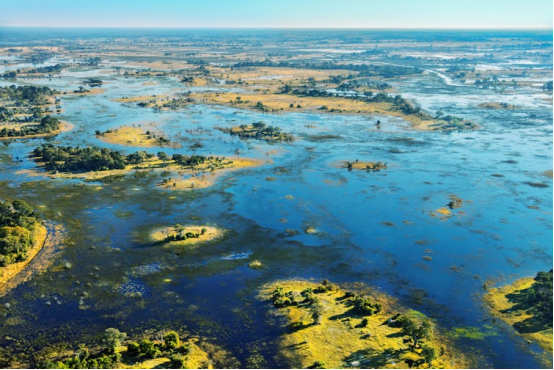
Located in northern Botswana, the Okavango Delta is a UNESCO World Heritage Site renowned for its unique formation. It is an endorheic delta—a river system that terminates inland rather than flowing to the sea. This ecological miracle transforms a vast swath of the arid Kalahari Desert into a vibrant, water-logged paradise.
A River That Never Meets the Sea: The Unique Geology and Hydrology
The Okavango River originates in the Angolan highlands, and its journey ends in a tectonic trough in the Kalahari. As the river enters this flat basin, it slows and spreads out, forming a massive alluvial fan spanning over 15,000 square kilometers. The water percolates through the sand, evaporates, and is transpired by plants, never reaching an ocean. A key feature of its hydrology is the timing: the floodwaters from Angola’s summer rains take months to travel downstream, arriving in the Delta during Botswana’s dry season (roughly June to August). This counter-intuitive timing creates a life-saving abundance of water and fresh vegetation when the surrounding region is at its driest, attracting immense concentrations of wildlife.
The Pulse of Life: Seasonal Flooding and Wildlife Migration
The annual flood is the lifeblood of the Delta. As the water advances, it replenishes the floodplains, creating a network of channels, lagoons, and islands. This pulse dictates the movement of all life. Herbivores like elephants, buffalo, and various antelope species move into the Delta to take advantage of the fresh grazing, followed closely by predators. The landscape is dotted with thousands of islands, many of which began as termite mounds, providing dry ground for trees to grow and animals to take refuge.
Iconic Wildlife of the Delta: From Elephants to Wild Dogs
The Okavango is a stronghold for some of Africa’s most iconic and endangered species. It is particularly famous for its massive elephant population. Other key species include:
- The Big Five: Lion, leopard, African buffalo, and elephant are common, though rhinoceros are rare and heavily protected.
- Endangered Predators: The Delta is one of the best places in the world to see the African wild dog and cheetahs.
- Aquatic Antelope: Species like the red lechwe and sitatunga have adapted specifically to a semi-aquatic life in the wetlands.
- Avian Diversity: With over 400 species of birds, it is a birder’s paradise, home to the Pel’s fishing owl, slaty egret, and wattled crane.
Navigating the Waterways: The Mokoro Experience and Conservation Tourism
The quintessential Okavango experience is a trip in a mokoro, a traditional dugout canoe propelled by a poler standing in the stern. This silent mode of transport allows for intimate, eye-level encounters with wildlife in the shallow channels. Botswana has championed a low-impact, high-cost tourism model, which means fewer visitors, exclusive concessions, and a strong focus on conservation. This ensures the wilderness remains pristine and the experience is intimate and profound.

The Pantanal: South America’s Wildlife Super-Sanctuary
Spanning across Brazil, Bolivia, and Paraguay, the Pantanal is the world’s largest tropical wetland, an immense basin that transforms into a wildlife-rich floodplain each year. It offers a different, but no less spectacular, safari experience, characterized by open landscapes and an incredible density of fauna.
The World’s Largest Tropical Wetland: Scale and Formation
The Pantanal is a vast, gently sloped sedimentary basin. Unlike the Okavango’s focused alluvial fan, the Pantanal is a sprawling plain fed by numerous rivers flowing from the surrounding highlands (Planalto). During the rainy season (October to March), these rivers overflow, inundating up to 80% of the plain and creating a shallow inland sea.
The Rhythms of Rain and River: A Different Flood Cycle
The Pantanal’s flood cycle is directly tied to the local rainy season. The waters rise through the summer and then slowly recede during the dry season (April to September). As the water levels drop, fish become trapped in shrinking pools, creating a massive, easily accessible buffet for wading birds, caimans, and other predators. This concentration of prey is what makes wildlife viewing in the Pantanal’s dry season so extraordinarily reliable and dramatic.
Jaguar Country: Unrivaled Predator Sightings
The Pantanal has earned a global reputation as the best place on Earth to see jaguars in the wild. Along the riverbanks of the Cuiabá River and its tributaries, a population of jaguars has become habituated to the presence of safari boats. During the dry season, they are frequently seen hunting their primary prey, caiman and capybara, in broad daylight, offering unparalleled photographic and viewing opportunities.
A Tapestry of Life: Caimans, Capybaras, and Avian Wonders
Beyond the jaguar, the Pantanal’s wildlife is abundant and highly visible. It boasts the highest density of caimans in the world. Other signature species include:
- Mammals: The capybara (the world’s largest rodent), giant river otter, giant anteater, and tapir are all commonly sighted.
- Reptiles: Yacare caiman are ubiquitous, and the yellow anaconda is also a resident of these wetlands.
- Iconic Birds: The Pantanal is home to the stunning hyacinth macaw (the world’s largest parrot) and the jabiru stork, a symbol of the region.

Okavango vs. Pantanal: A Head-to-Head Comparison
While both are world-class wetlands, they offer distinct experiences. Choosing between them depends on your specific interests, from the type of wildlife you wish to see to the style of safari you prefer. Here we break down the key differences.
Geographic and Hydrological Differences
The core difference lies in their water source and timing. The Okavango’s flood is out of sync with its local seasons, bringing water during the dry winter. The Pantanal’s flood is directly caused by its summer rainy season. The Okavango is an inland delta forming a complex maze of channels and islands within a desert, while the Pantanal is a much larger, more open alluvial plain that experiences a more uniform, sheet-like inundation.
Biodiversity Showdown: Africa’s Giants vs. America’s Predators
This is often the deciding factor for travelers. The Okavango offers the classic African safari experience with a chance to see megafauna like elephants, giraffes, buffalo, and a wide array of antelope. The Pantanal is the undisputed champion for Neotropical wildlife, offering near-guaranteed sightings of jaguars, capybaras, giant otters, and an overwhelming density of caiman and birdlife. If your dream is to see big cats, the Pantanal is the world’s best for jaguars, while the Okavango is superb for lions, leopards, and cheetahs.
The Tourist Experience: Safari Styles and Accessibility
The Okavango experience is often defined by exclusivity, with private concessions and luxurious lodges. Activities are varied, including game drives, walking safaris, and the iconic mokoro trips. The Pantanal experience is often more river-focused, with boat-based safaris being the primary method for jaguar tracking. Accommodation can range from rustic lodges (fazendas) to more comfortable safari boats. The famous Transpantaneira Highway also offers excellent opportunities for land-based wildlife viewing.
Conservation Challenges: Contrasting Threats and Strategies
Both ecosystems face significant threats. The Okavango is threatened by potential upstream water abstraction for agriculture in Angola and Namibia, as well as climate change. Its protection is bolstered by Botswana’s strong, government-led, low-volume tourism model. The Pantanal faces threats from agricultural expansion (especially soy and cattle ranching) on its periphery, which leads to deforestation, soil erosion, and pesticide runoff. Conservation is often driven by private landowners and NGOs, creating a patchwork of protected areas alongside working ranches.

Planning Your Wetland Adventure: Which is Right for You?
Your choice between these two giants depends on your priorities. If you dream of classic African landscapes, the grace of a giraffe, the thunder of an elephant herd, and the silent glide of a mokoro, the Okavango Delta is your destination. If your heart is set on the raw power of the jaguar, the spectacle of thousands of caimans, and the vibrant chaos of South American biodiversity, the Pantanal will not disappoint.
Best Time to Visit Each Destination
- Okavango Delta: The peak season is during the dry winter months of June to October. This is when floodwaters are high, skies are clear, and wildlife congregates in massive numbers around the water sources.
- Pantanal: The prime time to visit is also during the dry season, from July to October. Water levels are low, concentrating wildlife along the rivers and making jaguar sightings much more likely.
What to Expect: Accommodation and Activities
In the Okavango, expect high-end, all-inclusive safari lodges with a mix of activities: 4×4 game drives on the islands, mokoro excursions in the channels, and guided bush walks. In the Pantanal, many lodges are converted cattle ranches (fazendas) offering a more rustic charm. The main activities are boat safaris for jaguars and other riverine life, horseback riding, and drives along the Transpantaneira.
Frequently Asked Questions (FAQ)
- Which is better for seeing big cats, the Okavango or the Pantanal?
- It depends on the cat. For the highest probability of seeing jaguars, the Pantanal is unrivaled globally. For a chance to see lions, leopards, and cheetahs, the Okavango Delta is a premier African destination.
- What is the main difference in the flooding patterns of the two wetlands?
- The Okavango’s flood arrives months after the rains in Angola, peaking during Botswana’s dry season. The Pantanal’s flood is a direct result of its own local rainy season, with waters rising in the wet season and receding in the dry season.
- Is it safe to travel to the Okavango Delta and the Pantanal?
- Yes, both are considered very safe tourist destinations when traveling with reputable operators. The primary safety considerations involve respecting wildlife and following the guidance of your professional guides. Standard travel health precautions, such as consulting a doctor about vaccinations and malaria prophylaxis (for the Okavango), are recommended.
- What is a “mokoro” and is it only found in the Okavango?
- A mokoro is a traditional dugout canoe, typically made from a large tree like an ebony or sausage tree (though modern versions are often fiberglass for conservation reasons). It is propelled by a guide who stands and poles it through shallow waters. This tranquil and intimate form of water safari is a signature experience unique to the Okavango Delta.
- How do conservation efforts differ between the Pantanal and the Okavango?
- Conservation in the Okavango is heavily driven by the Botswana government’s high-cost, low-impact tourism policy within a system of national parks and private concessions. In the Pantanal, a large portion of the land is privately owned, so conservation is often a collaboration between private landowners (many of whom are ranchers), NGOs, and government, with ecotourism providing a direct economic incentive to protect wildlife like jaguars.