Educational notice: This site provides independent educational information only. Content about disasters, safety, health, survival, weapons, ecology, or environmental risk is not professional, medical, legal, engineering, emergency-response, or safety advice. Consult qualified professionals and official local authorities before making decisions.
The Intersection of Natural Ecology and Game Design
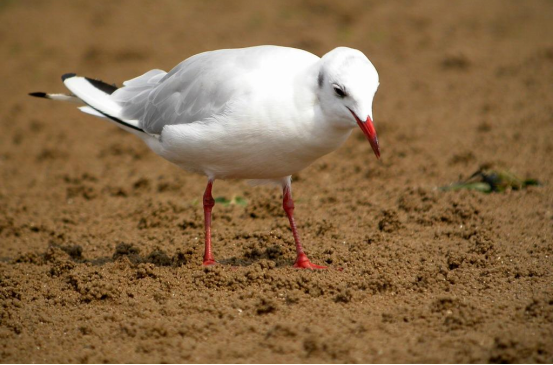
The concept of biomimicry—drawing inspiration from nature to solve complex human challenges—has found a profound application in modern game design. By studying real-world ecosystems, developers can create virtual worlds that feel organically alive rather than artificially constructed. The Red-Billed Gull, a highly adaptable and socially complex coastal bird, serves as a masterclass in behavioral ecology that can be directly translated into digital mechanics.
When players navigate an open-world game, their immersion is heavily dictated by the background activity of the environment. If non-playable characters (NPCs) and wildlife follow rigid, predictable loops, the illusion of a living world shatters. However, by integrating the ecological principles observed in species like the Red-Billed Gull, developers can engineer dynamic, emergent gameplay scenarios where the environment reacts intelligently to player inputs and systemic variables.
Why Biomimicry Matters in Virtual Worlds
Incorporating natural ecology into game design is not just an aesthetic choice; it is a mechanical upgrade. Real-world animals have spent millions of years optimizing their survival strategies, resource management, and communication protocols. By mapping these evolutionary algorithms into game engines, developers can achieve highly efficient crowd simulations, realistic aggro systems, and dynamic audio landscapes that require less manual scripting and offer higher replayability.

Decoding the Red-Billed Gull: Behaviors and Traits
To successfully adapt the Red-Billed Gull into a game design framework, we must first deconstruct its core biological and social behaviors. These coastal scavengers are not solitary wanderers; they operate within highly structured social hierarchies and exhibit complex responses to environmental stimuli.
Flocking Dynamics and Swarm Intelligence
Red-Billed Gulls are famous for their synchronized flocking behaviors. When a food source is identified, or a predator approaches, the flock moves as a unified entity. This is driven by decentralized intelligence—no single bird commands the flock. Instead, each individual reacts to the movements of its immediate neighbors, maintaining optimal distance to avoid collisions while aligning its trajectory with the group.
Opportunistic Foraging and Resource Management
In the wild, these gulls are highly opportunistic feeders. They constantly scan their environment for high-yield, low-effort food sources. If one gull discovers a discarded meal, its specific vocalizations immediately alert the surrounding flock, triggering a rapid convergence on the location. This demonstrates a natural risk-reward calculation and an efficient area-of-effect (AoE) communication system.

Translating Avian Ecology into Gameplay Mechanics
Understanding the biology is only the first step; the true challenge lies in translating these organic behaviors into code. The Red-Billed Gull provides a perfect blueprint for several advanced game systems, particularly in NPC artificial intelligence and environmental storytelling.
NPC AI and Crowd Simulation
The flocking behavior of the gull can be perfectly replicated using the classic Boids algorithm, developed by Craig Reynolds. By assigning three simple rules to digital entities—Separation (avoiding crowding neighbors), Alignment (steering towards the average heading of neighbors), and Cohesion (steering towards the average position of neighbors)—developers can create breathtaking, CPU-efficient flocks of birds or even apply these rules to swarms of enemies in combat scenarios.
Audio Design and Environmental Storytelling
The vocalizations of the Red-Billed Gull can be used to telegraph information to the player. In game design, audio cues are vital. A developer can implement a dynamic soundscape where the intensity and pitch of gull cries change based on the game state. Calm, rhythmic calls can indicate a safe zone or the presence of a fishing resource, while sharp, chaotic shrieks can serve as an early warning system for an approaching storm or a hidden predator.

Comparative Analysis: Traditional vs. Ecological Game Design
To truly appreciate the value of ecology-inspired design, we must compare it against traditional, hard-coded game development methodologies. The table below outlines the structural differences and advantages of using natural systems like the Red-Billed Gull’s behavior as a foundational design pillar.
| Design Aspect | Traditional Game Design | Ecological Game Design (Gull-Inspired) |
|---|---|---|
| Entity Spawning | Static spawn points with fixed timers. | Dynamic spawning based on environmental resources and time of day. |
| Movement Patterns | Pre-defined patrol routes and waypoints. | Emergent pathfinding using flocking algorithms and sensory triggers. |
| Player Interaction | Binary aggro states (Idle or Attacking). | Layered threat assessment (Curiosity, Warning, Fleeing, Swarming). |
| Resource Consumption | Infinite resources or simple despawning. | Ecosystem depletion; entities migrate when local resources are exhausted. |

Expert Advice and Pro Tips for Ecological Integration
Integrating complex ecological systems into a game engine can be computationally expensive and difficult to balance. Drawing from industry best practices, here are essential tips for developers looking to implement Red-Billed Gull-inspired mechanics without compromising game performance.
- Optimize with Level of Detail (LOD): Only run complex behavioral algorithms (like individual foraging calculations) when the player is within a specific proximity. Use simplified flocking math for distant entities.
- Utilize State Machines: Implement Hierarchical Finite State Machines (HFSM) to manage the transition between resting, foraging, and fleeing states smoothly, preventing jittery NPC behavior.
- Layer Spatial Audio: Do not attach a sound emitter to every single bird in a flock. Instead, use a few dynamic audio emitters that move with the center of the flock’s mass to save audio channels while maintaining realism.
- Telegraph Systemic Rules: Ensure players understand the ecosystem. If gulls flocking means a specific fish is nearby, make sure this rule is consistent so players can use it strategically.
Frequently Asked Questions (FAQ)
- How does the Boids algorithm relate to Red-Billed Gull behavior?
- The Boids algorithm simulates the complex, coordinated movement of animal groups like flocks of birds. By mimicking the Red-Billed Gull’s reliance on separation, alignment, and cohesion, developers can create highly realistic, self-organizing digital flocks without manually animating each bird.
- Can ecological design impact game performance?
- Yes, simulating individual AI for hundreds of entities can drain CPU resources. However, by using optimization techniques like object pooling and LOD (Level of Detail) scaling, developers can maintain the illusion of a complex ecosystem with minimal performance overhead.
- How can bird vocalizations improve player experience?
- Sound is a powerful tool for environmental storytelling. Red-Billed Gull cries can act as natural UI elements, guiding players toward hidden resources, warning them of approaching dangers, or simply establishing the atmospheric tone of a coastal biome.
- What is emergent gameplay in the context of virtual ecology?
- Emergent gameplay occurs when complex situations arise from the interaction of relatively simple game mechanics. By programming NPCs with ecological needs (like hunger or fear) rather than scripted events, players can experience unique, unscripted scenarios that make the game world feel truly alive.