Educational notice: This site provides independent educational information only. Content about disasters, safety, health, survival, weapons, ecology, or environmental risk is not professional, medical, legal, engineering, emergency-response, or safety advice. Consult qualified professionals and official local authorities before making decisions.
Places that appear empty are often the noisiest.
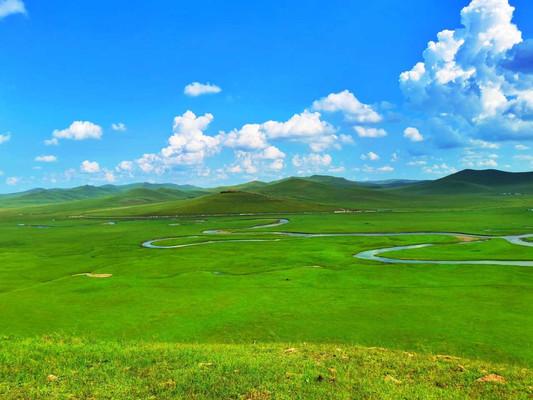
Imagine you’re standing in the middle of Hulunbuir or the Kansas prairie.
Looking out, the horizon seems so low it’s almost within reach. Close your eyes, and you can hear almost nothing except the wind whistling past your ears.
This extreme “quiet” can easily create the illusion that
the place is simple, fragile, and even a bit boring.
But the truth is quite the opposite.
If you lie down and put your face close to the soil, you will find yourself in a never-ending battlefield—countless roots are competing for water and nutrients, microorganisms are decomposing organic matter, and insects are flitting among them.
We are often attracted by the towering heights of forests or the depths of the ocean, but we overlook the fact that this seemingly gentle green sea beneath our feet is actually one of the most resilient and complex ecosystems on Earth .
Grasslands, which cover about 40% of the global land area, are still misunderstood by many as “just open spaces covered with grass.”
Underground Forest: The true power of the grassland lies where you cannot see it.
If someone told you
that the blade of grass you see on the grassland is just a “fingernail” of its body, you might think it’s an exaggeration.
But from an ecological perspective, this is almost certainly true.
Unlike forests, which display their branches and canopies in the air, grasslands have chosen a more subtle strategy—
burying most of their life assets underground.
The root systems of many grasses can extend several meters underground, intertwining into a vast network. In ecology, this is known as an extremely high “root-to-shoot ratio”:
seemingly weak above ground, yet incredibly extensive and resilient underground.
Why do this?
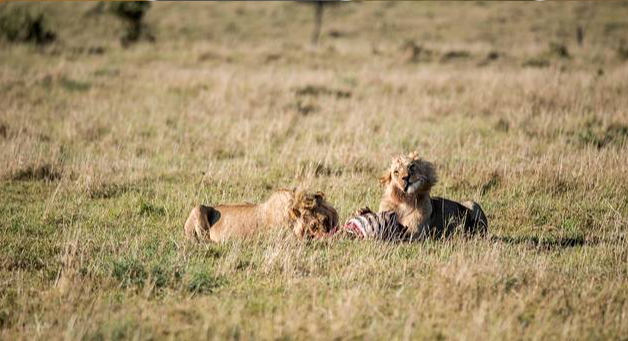
Because the threats faced by grasslands are often devastating: drought, extreme cold, and large herds of grazing animals.
If all the energy is stored on the ground, a single act of grazing could undo all the progress.
Thus, grass stores carbohydrates and nutrients in its roots and stems,
much like a shrewd investor who locks most of his assets in a vault and keeps only a small amount of cash for daily expenses.
An underrated climate hero: grasslands are actually a giant “carbon bank”.
This underground structure also brings an often overlooked byproduct: carbon sequestration capacity .
When discussing climate change, people often think of tropical rainforests first.
However, research has found that the amount of carbon stored in the soil by grasslands around the world is no less significant, and may even be more stable.
The reason is simple:
forest fires quickly release carbon from tree trunks back into the atmosphere;
while most of the carbon in grasslands is buried deep underground, and even if the surface is burned, the root system remains intact.
In a sense, grasslands are like nature’s “decentralized carbon warehouse”
—unassuming yet extremely reliable.
The Aesthetics of Violence: Why Can’t the Grasslands Be Separated from Fire and Gnawing?
In everyday understanding, fire is a disaster.
But in the logic of the grasslands, fire is a necessary mechanism for renewal .
The biggest difference between grass and trees is that
trees grow at high altitudes, where a fire can be fatal;
while grass grows close to the ground or even underground.
Thus, wildfires are more like a “haircut” for grass:
burning away dead leaves, releasing nutrients, and clearing away shrubs and saplings that try to invade—
the grassland’s main competitors.
The result was that
the longer the fire burned, the purer the grassland became.
Being eaten makes them stronger: The strange alliance between grass and animals
Even more counterintuitively, grassland plants actually “welcome” being eaten.
During evolution, many grasses, when eaten, experience a surge in growth hormone secretion, resulting in faster and denser growth.
This is a classic example of co-evolution :
herbivores depend on grass for survival, while grass maintains its youth and dominance by being eaten.
In nature, there are probably few organisms that “request” to be consumed like grass.
If we apply this logic to human society, it’s roughly equivalent to:
your job performance can only be improved by being severely criticized by your boss every day.
It sounds cruel, but it’s precisely the survival philosophy of the grasslands.
Nostalgia Written in Our Genes: Why Do We Feel Peace on the Grasslands?
Leaving aside biological data, let’s return to a more subjective question:
Why do so many people feel a sense of security and release when they stand on the grassland?
Evolutionary psychology has offered an explanation:
the “Savanna Hypothesis” .
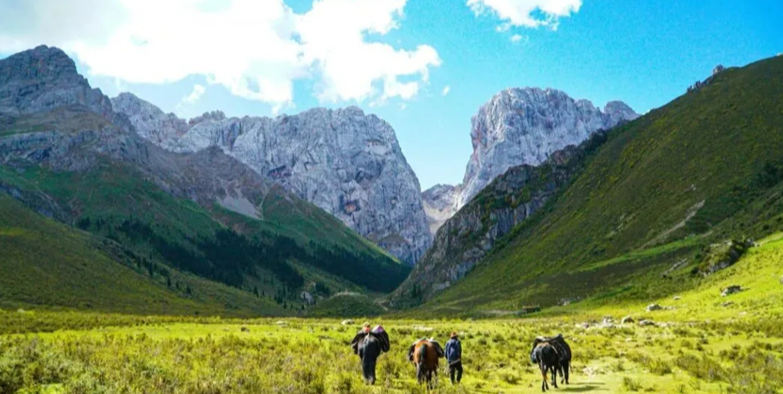
This theory posits that human ancestors evolved over millions of years in the East African savanna environment.
Our visual system and brain structure were designed for this environment.
A wide field of vision makes it easier to detect threats early;
Scattered trees provide shelter and resources;
Visible water sources mean a guarantee of survival.
When you step into the boundless grassland, that ancient part deep within your brain seems to whisper:
“It’s safe here.”
In contrast, dense jungles often induce instinctive tension because obstructed vision implies the unknown.
Perhaps this is why, when city life becomes suffocating,
many people unconsciously yearn for the grasslands—
not as an escape from reality, but as a deep-seated urge to return home .
Before the romance: The grasslands are also a harsh wilderness.
Of course, poetry cannot replace reality.
The real grassland is not a backyard where you can wander around at will.
The weather here changes rapidly, with huge temperature differences between day and night, and supply points are scarce;
seemingly flat terrain may hide swamps;
a gentle breeze may turn into a killer of hypothermia within hours.
I’ve seen many travelers get into trouble because they underestimated their surroundings.
The emptiness of the grasslands doesn’t mean safety.
If you truly intend to delve into this green ocean,
you need to treat the grasslands with the same
reverence and preparedness you would a mountain or desert.
From warmth and wind protection to drinking water, navigation, and emergency systems,
a comprehensive (outdoor adventure gear guide) is not a shopping list, but rather a guide to building a
mobile life support system in the wilderness .
Only when your body is safe enough can your mind have the space to experience the vastness of the world.
Conclusion | In the vast silence, learn to take root
What the grasslands truly teach us may not be “freedom,”
but rather a deeper kind of wisdom:
Seemingly fragile life can become incredibly resilient through
taking root ; seemingly destructive forces can bring about renewal; and
beneath seemingly empty silence, there is always an unceasing surge of vitality.
The silence of the grasslands has always been a lie.
What teems with life there is the underground root system, the rebirth after the fire, and the undying homesickness in human genes.
If one day you stand in the middle of that green sea,
you might understand:
in the face of vast silence, life can still bloom so passionately—
as long as you know how to take root and how to go with the flow.If you want to learn more about survival wisdom in extreme environments, or appreciate the unique ecological landscapes of arid regions, you can refer to the rich content provided by the Desert Blog .