Educational notice: This site provides independent educational information only. Content about disasters, safety, health, survival, weapons, ecology, or environmental risk is not professional, medical, legal, engineering, emergency-response, or safety advice. Consult qualified professionals and official local authorities before making decisions.
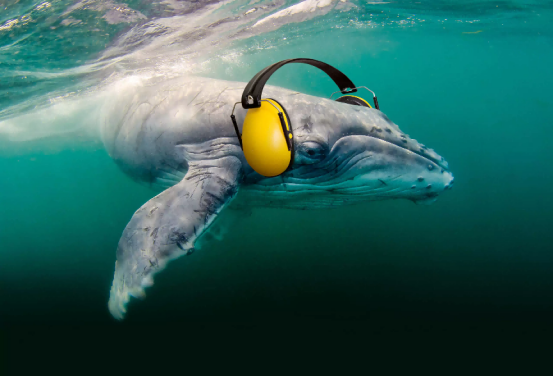
The global ocean, once a sanctuary of biological harmony, is currently facing a dual onslaught of human-induced stressors that are largely invisible to the naked eye. While plastic pollution and overfishing often dominate the headlines, two more insidious threats—marine noise pollution and ocean acidification—are fundamentally restructuring marine ecosystems. These phenomena do not merely exist in isolation; they represent a profound shift in the physical and chemical properties of the hydrosphere. Marine noise pollution, driven by industrialization and global trade, is stripping marine mammals of their primary sense: hearing. Simultaneously, the absorption of atmospheric carbon dioxide is causing ocean acidification, a chemical “corrosion” that prevents life-sustaining calcification in shellfish and coral reefs. Understanding these threats requires a deep dive into the biological, chemical, and acoustic mechanisms that sustain life beneath the waves.
The Acoustic Crisis: Understanding Marine Noise Pollution
Sound travels five times faster in water than in air, making the underwater environment a naturally acoustic world. For millions of years, marine species—particularly cetaceans like whales and dolphins—have evolved to rely on sound for every facet of their survival, including navigation, foraging, and social bonding. However, the industrial revolution has introduced a relentless “smog” of anthropogenic noise that has disrupted this delicate balance. This noise is not merely a nuisance; it is a lethal environmental pollutant that can cause permanent physiological damage and behavioral collapse in sensitive species.
Anthropogenic Sources of Underwater Sound
The modern ocean is louder than at any point in evolutionary history. The primary contributors to this acoustic saturation include commercial shipping, seismic surveys for oil and gas exploration, and military sonar operations. Commercial vessels, particularly large container ships, produce low-frequency noise that can travel across entire ocean basins, effectively raising the background noise floor. Seismic airguns, used to map the seafloor, release high-pressure blasts of air every few seconds for weeks at a time, creating sound levels that can exceed 250 decibels. Military sonar, designed to detect submarines, utilizes intense mid-frequency pulses that have been directly linked to mass stranding events and acute tissue trauma in deep-diving whales.
The Mechanics of Marine Deafness and Physiological Trauma
When marine animals are exposed to high-intensity sounds, the results are often catastrophic. Temporary Threshold Shift (TTS) occurs when an animal’s hearing is temporarily impaired, while Permanent Threshold Shift (PTS) results in irreversible deafness. For a whale, deafness is a death sentence; without the ability to echolocate, they cannot find food or avoid obstacles. Beyond auditory damage, intense sound waves can cause “bubble sickness,” or decompression sickness, in deep-diving species. When startled by sonar, these animals may ascend too rapidly, causing nitrogen bubbles to form in their blood and organs, leading to internal hemorrhaging and death. This physiological stress is often compounded by chronic exposure to lower-level noise, which elevates cortisol levels and weakens immune systems.
Behavioral Disruptions and Communication Masking
Communication masking is perhaps the most widespread impact of marine noise. As background noise levels rise, the “acoustic space” available for animals to communicate shrinks. Whales that once communicated across hundreds of miles are now restricted to much shorter distances, leading to the fragmentation of social groups and reduced mating opportunities. Furthermore, noise pollution disrupts foraging behaviors. Species like the harbor porpoise may stop feeding entirely in the presence of vessel noise, leading to significant energetic deficits. The cumulative effect of these behavioral shifts is a decline in population resilience and a higher vulnerability to other environmental pressures.

The Chemical Shift: The Hidden Crisis of Ocean Acidification
While noise pollution alters the physical environment, ocean acidification is fundamentally changing the ocean’s chemistry. Since the beginning of the industrial era, the ocean has absorbed approximately 30% of the carbon dioxide (CO2) released into the atmosphere. While this has mitigated some effects of global warming, it has come at a staggering cost to marine life. When CO2 dissolves in seawater, it reacts with water to form carbonic acid, which subsequently releases hydrogen ions. This process lowers the pH of the water, making it more acidic and reducing the availability of carbonate ions—the essential building blocks for many marine organisms.
The Chemistry of Carbon Sequestration and pH Decline
The pH scale is logarithmic, meaning that a small numerical change represents a massive shift in chemistry. Since the pre-industrial era, the average surface ocean pH has dropped from 8.2 to 8.1, representing a 30% increase in acidity. This shift is occurring at a rate faster than any known event in the last 66 million years. The primary chemical consequence is the reduction of calcium carbonate saturation states. Organisms such as corals, mollusks, and certain types of plankton rely on calcium carbonate to build their skeletons and shells. As the concentration of carbonate ions decreases, these organisms must expend significantly more energy to calcify, or in extreme cases, their existing structures begin to dissolve.
Impacts on Calcifying Organisms and Coral Reefs
Coral reefs, often called the “rainforests of the sea,” are among the most vulnerable ecosystems to acidification. Corals require a specific chemical environment to build their calcium carbonate structures. As acidity increases, the rate of calcification slows down, making reefs more susceptible to erosion and storm damage. Furthermore, acidification acts as a “stress multiplier” alongside rising sea temperatures, leading to more frequent and severe coral bleaching events. Beyond corals, shellfish such as oysters, mussels, and pteropods (sea butterflies) are facing an existential crisis. Larval shellfish are particularly sensitive; if they cannot form their initial shells within the first few days of life, they perish, leading to the collapse of entire cohorts and threatening the multi-billion dollar aquaculture industry.
Socio-Economic Consequences for Global Fisheries
The impacts of ocean acidification extend far beyond the biological realm, posing a direct threat to global food security. Many of the species most affected by acidification—such as pteropods—serve as the foundation of the marine food web. These tiny snails are a primary food source for salmon, herring, and mackerel. If pteropod populations collapse due to shell dissolution, the commercial fisheries that depend on these stocks will follow. Small island nations and coastal communities that rely on coral reefs for coastal protection and protein are at the highest risk. The economic loss attributed to declining shellfish harvests and the degradation of reef-based tourism is projected to reach hundreds of billions of dollars by the end of the century.

Synergistic Impacts on Marine Biodiversity
The true danger to the marine environment lies in the synergy between noise pollution and acidification. Marine ecosystems do not experience these stressors in isolation; rather, they are subjected to a “cocktail” of environmental pressures that amplify one another. For example, acidification has been shown to change the way sound travels in water. In more acidic water, low-frequency sound is absorbed less effectively, meaning that noise from shipping and industrial activity can travel even further than it does today. This creates a feedback loop where chemical changes exacerbate the acoustic crisis.
Cascading Effects on the Food Web
When foundational species like plankton are weakened by acidification, the entire food web becomes less resilient to the disruptions caused by noise pollution. For instance, if a whale population is already struggling with reduced prey availability due to acidification, the added stress of noise-induced foraging disruption can push the population toward extinction. This cascading effect threatens the stability of the entire oceanic ecosystem. Biodiversity loss in the ocean is not a linear process; it is a complex web of interactions where the failure of one component can lead to a systemic collapse. The loss of apex predators, such as sharks or orcas, can lead to “trophic cascades” that further destabilize the environment.
Loss of Habitat and Keystone Species
The degradation of coral reefs and seagrass beds due to acidification results in the loss of critical nursery habitats for thousands of species. When these habitats disappear, the “acoustic signature” of the reef—which larval fish use to find their way home—is also altered. Research has shown that larval fish are less attracted to the sounds of degraded reefs, further reducing the chances of ecosystem recovery. This interplay between chemical habitat loss and acoustic disorientation demonstrates the profound complexity of the challenges facing marine conservation today. The disappearance of keystone species, which play a disproportionately large role in their environment, can lead to the “empty ocean” syndrome where the physical structure remains but the biological richness is gone.

Strategies for Mitigation and Marine Conservation
Addressing the dual threats of noise and acidification requires a multi-faceted approach involving international policy, technological innovation, and local conservation efforts. While the challenges are immense, there are clear pathways toward a healthier ocean. The primary goal must be the rapid reduction of global CO2 emissions to halt the progress of acidification, but immediate steps can also be taken to quiet the oceans and protect vulnerable habitats.
Technological Innovations in Shipping and Industry
Reducing marine noise is a technologically feasible goal. “Quiet ship” technologies, such as redesigned propellers and improved hull insulation, can significantly reduce the acoustic footprint of commercial vessels. In many cases, simply slowing down—a practice known as “slow steaming”—can reduce noise emissions by up to 50% while also decreasing fuel consumption and carbon emissions. In the energy sector, the use of “bubble curtains” during offshore construction can dampen the sound of pile driving, protecting nearby marine life from acoustic trauma. These solutions demonstrate that economic activity and marine protection are not mutually exclusive.
Global Policy Frameworks and Marine Protected Areas (MPAs)
International cooperation is essential for managing stressors that cross national boundaries. The establishment of large-scale Marine Protected Areas (MPAs) can provide “quiet zones” where industrial activity and noise are strictly regulated, allowing populations to recover. Furthermore, incorporating noise standards into international maritime law, such as through the International Maritime Organization (IMO), is a critical step. Regarding acidification, global adherence to the Paris Agreement is the most vital action. On a local level, restoring “blue carbon” habitats like mangroves and seagrasses can help buffer the effects of acidification by naturally sequestering CO2 and providing refugia for sensitive species.
Frequently Asked Questions (FAQ)
- Q1: Can marine life eventually adapt to ocean acidification?
- While some species show limited capacity for adaptation over many generations, the current rate of acidification is roughly 10 to 100 times faster than any change in the last 50 million years. This speed exceeds the evolutionary capacity of most long-lived species, particularly those that rely on complex calcification processes like corals and large mollusks.
- Q2: How does noise pollution specifically lead to whale strandings?
- High-intensity sounds, such as mid-frequency military sonar, can cause whales to panic and change their diving behavior. This often leads to decompression sickness (the bends) or physical injury to the ears. Disoriented and in pain, the animals may flee toward shallow waters and end up beaching themselves, where they often die from dehydration or organ collapse under their own weight.
- Q3: Is ocean acidification the same as “acid” in the traditional sense?
- Not exactly. The ocean is naturally slightly alkaline (pH above 7). Acidification refers to the pH moving down the scale toward the acidic side. While the ocean is not expected to become “acid” (pH below 7), the shift toward a more neutral pH is enough to disrupt the delicate chemical balance required for shell formation and metabolic function.
- Q4: What is “communication masking” in marine biology?
- Communication masking occurs when anthropogenic noise (like shipping) overlaps with the frequencies used by marine animals for communication. This effectively “drowns out” their signals, much like trying to have a conversation in a loud nightclub. This prevents animals from finding mates, warning others of predators, or maintaining social contact with their calves.
- Q5: What can individuals do to help reduce these marine threats?
- Individuals can contribute by reducing their overall carbon footprint to combat acidification (using less energy, supporting renewables). To address noise pollution, consumers can support companies that prioritize sustainable shipping practices and advocate for stricter maritime regulations and the expansion of Marine Protected Areas.