Educational notice: This site provides independent educational information only. Content about disasters, safety, health, survival, weapons, ecology, or environmental risk is not professional, medical, legal, engineering, emergency-response, or safety advice. Consult qualified professionals and official local authorities before making decisions.
The Science Behind Blackening Leaves
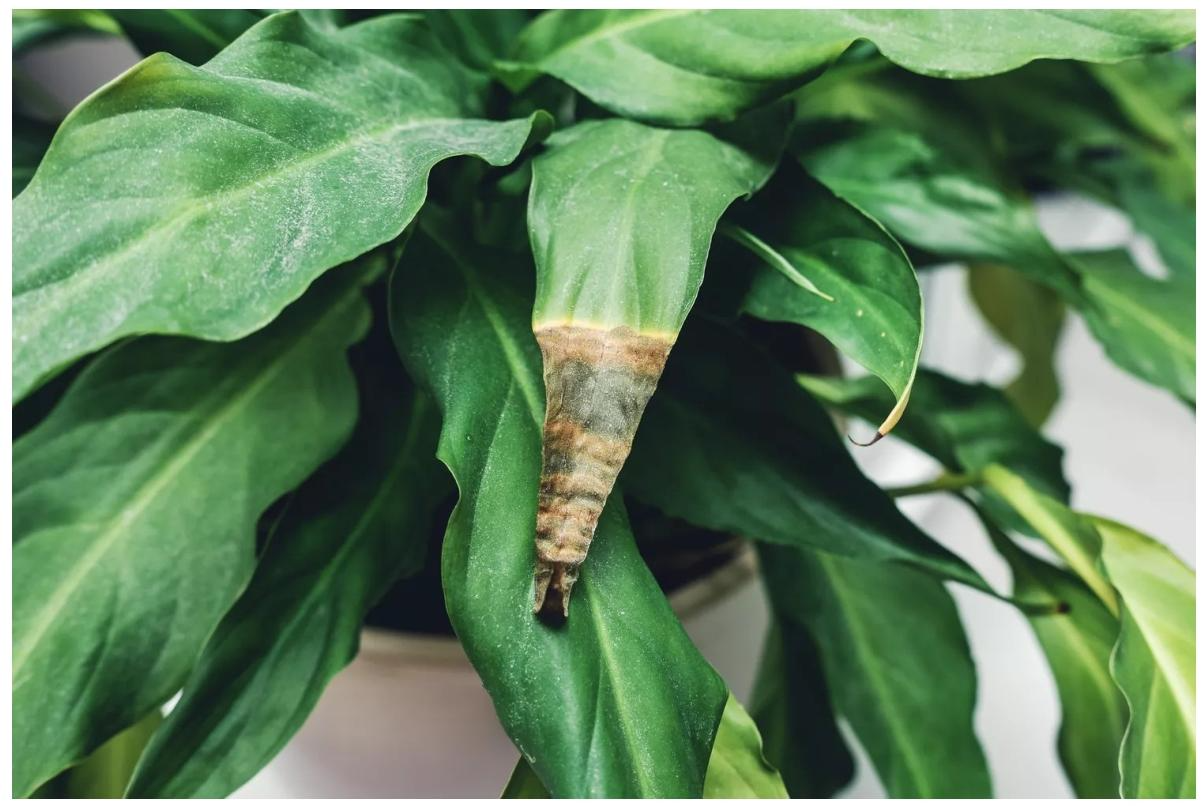
The Peace Lily (Spathiphyllum) is a beloved houseplant known for its elegant white spathes and lush foliage. However, when leaves begin to turn black, it is a distress signal that the plant’s biological processes are being compromised. Blackening is typically a result of tissue death, known as necrosis, which can be triggered by systemic issues within the root zone or environmental toxicity.
Distinguishing Between Edges and Spots
Understanding the pattern of the blackening is key to diagnosis. Black tips usually indicate water quality or humidity issues, while random black spots across the leaf blade often point toward fungal pathogens or severe over-fertilization.

Addressing Moisture Imbalance and Root Health
Overwatering remains the number one cause of black leaves in Spathiphyllum. When the soil remains constantly saturated, the roots are deprived of oxygen, leading to the development of root rot. Without healthy roots, the plant cannot transport nutrients, leading to the rapid decay of leaf tissue.
How to Inspect Your Roots
- Gently remove the plant from its pot.
- Examine the root system for mushy, dark, or foul-smelling roots.
- Trim away any decaying roots using sterilized shears.
- Repot in fresh, well-draining potting mix to restore aeration.

Managing Chemical Toxicity and Environmental Stress
Peace Lilies are highly sensitive to the chemicals found in tap water, specifically chlorine and fluoride. Accumulation of these minerals in the soil can cause “tip burn,” where the edges of the leaves turn black and crispy. Furthermore, excessive fertilization can lead to salt buildup, which draws moisture out of the roots.
| Factor | Symptom | Recommended Action |
|---|---|---|
| Tap Water Sensitivity | Black, crispy leaf tips | Use filtered or distilled water |
| Over-Fertilization | Dark spots with yellow halos | Flush soil with clean water |
| Low Humidity | Brownish-black dry edges | Use a pebble tray or humidifier |
Frequently Asked Questions (FAQ)
- Should I cut off the black leaves?
- Yes, once a leaf has turned black, it will not recover. Trimming the damaged foliage helps the plant redirect energy toward healthy growth and improves air circulation.
- Does low light cause black leaves?
- While low light usually causes yellowing or stunted growth, it can indirectly lead to blackening by slowing down the plant’s transpiration rate, making it more susceptible to overwatering.
- How often should I water my Peace Lily?
- Water when the top 1-2 inches of soil feel dry to the touch. Always ensure your pot has adequate drainage holes to prevent standing water.
- Can pests cause black spots?
- Yes, sap-sucking pests like spider mites or thrips can damage leaf tissue, which may turn black as the plant dies in those specific areas.